

How to Get Mobile App Leads That Convert Into Paying Clients
Mobile app agencies share a specific frustration. For more on mobile app development leads that convert. You build great products. Your portfolio shows apps with clean UI and solid engineering. But the pipeline feeding those clients is inconsistent, and the leads you do find have already spoken to two other agencies before they reply to you. The agencies winning mobile app clients are not the ones with the best portfolio. They are the ones targeting companies at the exact moment when hiring an app development agency becomes unavoidable.
Most lead generation advice for mobile app agencies is generic. It tells you to post on Dribbble, attend startup events, run Google Ads. Those channels work slowly and feed you cold prospects who may or may not need what you sell. The companies that become your best clients are the ones already showing signals that they are ready to invest. Your job is to find them before your competitors do.
This guide covers the specific signals that indicate a business is ready to hire a mobile app agency, the channels where those prospects are visible, the outreach approach that gets responses, and the criteria you use to qualify leads so you do not waste time on tire-kickers.
What Makes Mobile App Leads Different From Other Agency Leads
Mobile app development is a high-commitment purchase. A business does not decide to build an app lightly. The project typically costs between $50,000 and $300,000 depending on scope. That kind of investment requires internal alignment across founders, product managers, and whoever controls the budget. Mobile app leads are not impulse purchases, and they are not the same as a business that needs a landing page or a monthly SEO retainer. our guide to mobile app development leads
What makes mobile app leads distinct is the trigger event. Most app projects start because something specific happened in the business. The company raised funding. A competitor launched an app. The team outgrew their no-code tool. Customer demand for a mobile experience crossed a threshold. Understanding those triggers lets you identify companies before they post a project brief on Upwork or Clutch.
The second difference is the buyer profile. Mobile app projects usually involve a founder or VP of Product making the decision, not a marketing manager. That means your outreach needs to speak to business outcomes, not marketing jargon. A founder cares about revenue impact, user acquisition, and competitive positioning. They do not care about your agile process or your design awards.
The third difference is the sales cycle length. A mobile app deal can take three to six months from first contact to signed contract. That means you need a pipeline with enough volume to stay consistent. One or two warm leads per month will not sustain an agency. The agencies that scale in this vertical build systems that feed the pipeline continuously, not campaigns that spike and drop.
Where the Best Mobile App Leads Are Right Now
The companies that need mobile app development services are not hiding. They are visible if you know where to look and what to look for.
Recently Funded Startups
Startups that have raised a seed or Series A round within the last 90 days are the single highest-intent mobile app lead segment available. New funding creates a mandate to spend, and mobile is often one of the first places that money goes. A seed-stage startup that raised $2 million needs to prove traction, and a mobile app can be central to that proof.
You can identify these companies through funding announcement databases, press releases, and news aggregators. When a company announces a raise, that is your window. The team is planning their roadmap, they have budget available, and they are evaluating vendors. If you reach out within two to four weeks of the funding announcement with a relevant proposal, you are entering the conversation at exactly the right moment.
The signal to prioritize is stage. Pre-seed startups usually lack the budget or the urgency. Series B and beyond often have in-house teams already. Seed and Series A are the sweet spot. That is where companies have the money but not the internal capability to build at the scale they need.
Companies Running Broken Mobile Experiences
Some companies already have a mobile app. The app is live. Users have downloaded it. But the app is broken. The rating on the App Store is below 3.5 stars. The last update was over six months ago. The reviews mention crashes, login failures, and features that do not work.
A company in this position is not looking for a new design agency. They are looking for a mobile app partner who can diagnose the problem and rebuild what is broken. That is a higher-value engagement than building an app from scratch because the company has already proven there is demand. They just need someone who can execute.
You can find these companies by scanning the App Store and Google Play Store for apps in your target verticals with poor ratings and outdated versions. Filter by category, sort by rating, and look for apps with consistent negative reviews mentioning technical issues. The company behind that app is a warm lead.
Businesses That Have Outgrown Their No-Code App
No-code tools like FlutterFlow, Bubble, and Adalo have created a new category of lead. Thousands of businesses launched apps on these platforms, proved the concept works, and now need a production-grade app to replace it. These companies have already validated the market. They have user data. They know what features matter. They just need someone to rebuild the app properly.
The trigger here is not funding or a broken app. It is growth. A company that started on FlutterFlow and now has 50,000 users is hitting the limits of what a no-code platform can handle. They need custom integrations, better performance, native features, and scalability. That is a mobile app agency project.
You can find these prospects by monitoring no-code community forums, looking for companies that publicly mention their no-code origins, and tracking apps built on FlutterFlow that have grown rapidly. When a company is ready to make the jump, they post about it. They ask for recommendations. They look for developers who understand their existing product.
Enterprise Teams Needing a Mobile Extension
Enterprises with web platforms often need a mobile app as an extension of their existing product. A SaaS company with a web dashboard needs an iOS and Android companion. A retail brand with an e-commerce site needs a shopping app. A fitness platform needs a mobile experience that matches their web offering.
The signal here is an existing web presence with no mobile option, or a web experience that is not optimized for mobile. Look at companies in your target industries that have strong web traffic but no mobile app, or an app that has not been updated to match their web feature set. That gap is your opening.
How to Approach Mobile App Leads Without Sounding Like Every Other Vendor
Most outreach to mobile app prospects fails because it focuses on the agency, not the prospect. Emails lead with case studies, design awards, and process descriptions. The prospect does not care about any of that in the first message. They care about whether you understand their specific problem.
The outreach structure that works for mobile app leads is:
Lead with the signal, not the pitch. Start by referencing the specific thing you noticed. If you found them through a funding announcement, mention it in the first sentence. If you noticed their app has a 2.8-star rating, say so directly. That proves you did research and that your outreach is not a template sent to five hundred companies.
Frame the business impact, not the technical fix. Do not lead with “we build cross-platform apps using Flutter.” Lead with “most apps in your category lose 40 percent of users during onboarding, and the reviews suggest that is happening to you.” Connect your capability to their business problem.
Ask a specific question, not a meeting request. “Would you be open to a 15-minute conversation about your mobile roadmap?” is a weak close. “Is the mobile experience something you are planning to prioritize this quarter, or is the web platform the main focus right now?” is a question that gets a reply.
Follow up with value, not persistence. Your second message should include something useful. A free 10-point audit of their current app. A list of three features their competitors have that they do not. A benchmark comparison of their app category. That positions you as someone who has already started the work, not someone who wants a meeting to discuss whether they could work together.
Qualifying Mobile App Leads So You Do Not Waste Time
Not every company that mentions needing an app is ready to buy. The qualification process for mobile app leads is more important than for other agency services because the deal sizes are larger and the sales cycles are longer. Here is how to separate warm leads from distractions.
Budget Threshold
A production mobile app project starts at roughly $50,000 for a minimum viable product. If a prospect does not have that budget available, they are not a real lead right now. They are a future opportunity when they have raised more money or when their revenue supports the investment.
Ask about budget early. Not in the first message, but in the second or third conversation. If they hesitate or give vague answers, they are not ready. Move on. Your time is worth more than nurturing a lead that cannot afford you for another twelve months.
Decision-Maker Access
Mobile app projects require a decision-maker who can approve a six-figure spend. If you are talking to a marketing manager who says they will need to run it by the founder, you are not speaking to the right person. Identify the decision-maker in your first outreach and aim your message at them directly.
Founders and VPs of Product are the people who approve app budgets. If you cannot reach them within three outreach attempts, the lead is not warm enough. Prioritize companies where you can get a direct line to the person who signs the check.
Timeline Alignment
A company that needs an app but has no timeline is not a lead. They have a wish. A company that says “we are planning to start this quarter” or “we want to launch by Q3” is a lead. The timeline creates urgency, and urgency moves deals forward.
Qualify timeline in your first call. Ask when they want the app live, not whether they are interested in building one. The answer tells you whether this is a project you can close in the next three months or a conversation that will drag on for a year without converting.
Technical Fit
Not every mobile app project is a fit for every agency. If you specialize in React Native and the prospect needs native iOS development with ARKit integration, the project is not right for you regardless of how much budget they have. Be honest about fit early. It saves both sides time.
Qualifying technical fit also means understanding the scope. Some companies need a full app built from scratch. Others need an existing app rebuilt or a specific feature added. The scope determines your pricing, your timeline, and whether you have the capacity to take the project on. Ask about scope before you pitch.
Lead Sources Ranked by Conversion Quality
Not all lead sources produce the same quality of mobile app clients. Here is how they rank based on conversion rate and deal quality.
Tier 1: Inbound From Existing Clients
Your highest-converting source is referrals from existing or past clients. A mobile app agency that has delivered good work has clients who know other founders and product managers. That referral carries trust, which eliminates the skepticism that cold outreach creates.
Prioritize asking for referrals at project milestones. When you deliver a successful app launch, ask the client if they know other teams building something similar. That conversation often leads to introductions that convert faster than any cold outreach campaign.
Tier 2: Internet-Verified Exclusive Leads
Buying verified mobile app leads from a provider that delivers exclusive, internet-verified contacts is the most reliable way to fill your pipeline consistently. The lead has already been qualified through online signals: funding events, hiring patterns, product announcements. You receive the contact along with the context that explains why they are a good fit.
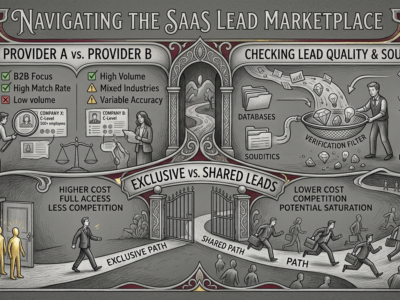
Exclusive leads are important here because mobile app deals take three to six months to close. If you share leads with three competing agencies, the prospect is already talking to someone else by the time you reach out. Exclusive access means you own the conversation from the first touchpoint. exclusive vs shared leads
When evaluating a lead provider, look for transparency about how leads are sourced. A provider that generates mobile app leads from funding announcements, App Store data, and hiring signals will deliver better results than one that sells generic business contact lists. The source determines whether the lead is actually ready for a mobile app conversation or just a random business contact.
Tier 3: Content and Organic
Writing content about mobile app development, sharing case studies, and building a reputation in the mobile development community generates inbound leads over time. The leads are usually well-qualified because they found you while researching a specific problem. The downside is timing. Organic inbound is slow to build and inconsistent in the early months.
The content that works for mobile app leads is not “why our agency is great.” It is specific, technical, and useful. Write about the decisions that product managers actually face: how to choose between native and cross-platform, what to expect from an app development budget, how to scope a minimum viable product. When a founder reads that content and recognizes their own situation, they reach out.
Tier 4: Outbound Cold Outreach
Cold outreach to mobile app leads works when it is targeted and relevant. The worst approach is a generic agency introduction sent to a list of tech companies. The best approach is a message that references a specific event or signal and proposes a specific conversation about a specific problem.
Cold outreach works at scale when you build a system. Research companies that match your ideal client profile. Find the decision-maker. Reference a recent event or observation. Send a message that is specific enough to read as personal. Follow up with value, not reminders.
The Lead Quality Test: Five Questions to Ask Before You Commit
Before you invest time in nurturing a mobile app lead, run through these five questions.
One: Does this company have a defined mobile app project? If they are just exploring the idea, they are not ready. Look for a project with a scope, a timeline, and a budget discussion already underway.
Two: Is the budget aligned with a real app project? A $10,000 budget is not a mobile app project. It is a prototype or a concept. Make sure the budget matches the scope before you invest serious time.
Three: Is the person you are speaking to the decision-maker? If they cannot approve the project, they are a influencer, not a buyer. You can build the relationship, but do not let it consume the time you could spend on warm leads.
Four: Is the timing real? A company that says they want to start “sometime next year” is not a near-term lead. Prioritize companies with a defined timeline over companies with vague interest.
Five: Is there a competitive reason to move now? The best mobile app leads have urgency. A competitor launched an app. A customer request crossed a threshold. A funding round just closed. Urgency is the difference between a deal that closes in three months and a deal that drags on for a year.
How Buying Mobile App Leads Compares to Building Your Own Pipeline
Building your own pipeline for mobile app leads (compare DIY vs DFY approaches) is possible, but it takes six to twelve months of consistent work before it produces reliable results. Content marketing, SEO, and referral building are long-term investments. They compound over time, but they do not fill your pipeline this month.
Buying mobile app leads from a provider that delivers internet-verified, exclusive contacts cuts that timeline down to days. Instead of spending three months building a content engine and waiting for inbound, you get a list of companies that have already shown signals of needing a mobile app. The lead comes with context: what triggered the signal, what stage the company is at, and why they are likely to be ready for a conversation.
The comparison between the two approaches is not about which one is better in theory. It is about which one gets you clients faster. If you have the runway to build organic channels, that creates compounding value over time. If you need pipeline consistency now, buying verified leads gets you there faster.
The mistake agencies make is treating these as either-or choices. You can build your content engine and SEO while buying leads to fill the gap in the short term. That combination gives you consistent pipeline today and compounding growth tomorrow. buying verified leads
FAQ
How do I find mobile app leads that are actually ready to buy?
Focus on the trigger events: recent funding rounds, apps with low ratings, companies that recently outgrew no-code platforms. These signals indicate companies that have budget, urgency, and a defined need for mobile development services.
What is the best outreach method for mobile app leads?
Direct email or LinkedIn message to the founder or VP of Product. Reference the specific signal that identified them. Lead with their business problem, not your agency capabilities. Follow up with a specific piece of value within a week.
How many mobile app leads do I need per month to stay consistent?
For a mobile app agency, aim for 15 to 25 qualified leads per month. Mobile app deals have longer sales cycles and higher values, so fewer leads are needed compared to low-ticket services. The key is quality, not volume.
Should I buy mobile app leads or build my own pipeline?
Buying leads gives you immediate access to qualified prospects with context about why they need your service. Building your own pipeline through content and SEO takes six to twelve months. The fastest approach is to buy leads for immediate pipeline while building organic channels for long-term compounding.
How do I know if a mobile app lead is high quality?
A high-quality mobile app lead has a defined project, a budget aligned with the scope, a decision-maker who can approve the project, a timeline within the next quarter, and a specific trigger event that created urgency. If three or more of these criteria are met, the lead is worth investing time in.
—
Mobile app agencies win clients by being at the right place at the right time. The companies that need what you sell are visible. They have funding announcements, app store reviews, and growth milestones that signal exactly when they are ready to talk. If you want a consistent source of mobile app leads without spending months building organic channels, internet-verified exclusive leads give you that pipeline directly.
Frequently Asked Questions
How do you find mobile app development clients?
Find clients through portfolio showing, app store case studies, tech meetups, LinkedIn outreach to startups, and offering free app audits for businesses with poor mobile presence.
What services do mobile app agencies provide?
Services include iOS/Android development, cross-platform (Flutter/React Native), app strategy, UI/UX design, app store optimization, and ongoing maintenance/support.