B2B Lead Generationcalendar_today
Sep 2, 2026 schedule
28 min read
SaaS Lead Generation: The Complete Guide for 2026
SaaS Lead Generation: The Complete Guide for 2026. Learn how to generate high-quality leads for your agency with proven strategies and expert guidance from LeadPot.
SaaS Lead Generation: The Practical guide for 2026
Your last three outreach campaigns to SaaS companies produced zero responses. You refined your messaging. You tested subject lines. You followed up at the right cadence. The problem was never your outreach execution. It was the leads themselves. Half the companies on your list had no active need for marketing services. A quarter were already working with an agency. The remainder had founders who never opened cold outreach. You spent weeks chasing a pipeline that was never going to convert.
SaaS is one of the fastest-growing B2B markets for agencies right now. Global SaaS revenue is projected to exceed $300 billion in 2026, with thousands of new software companies launching every quarter. Every one of them needs marketing help at some point in their lifecycle. Early-stage startups need to acquire their first customers. Growth-stage companies need to scale acquisition channels they have already proven. Mature SaaS businesses need to expand into new markets or launch new product lines. The total addressable market for SaaS marketing services is enormous and growing.
But the SaaS buying process is unlike any other vertical. Decision-makers are sophisticated. They research vendors extensively before engaging. They compare multiple alternatives in parallel. The average SaaS buyer touches seven to ten touchpoints before engaging with a vendor. A generic outreach approach fails against this level of buying sophistication.
SaaS lead generation is the systematic process of identifying, qualifying, and connecting with software companies that have demonstrated active interest in marketing, SEO, lead generation, or growth services. Done well, it fills your pipeline with high-retention, high-value clients. Done poorly, it wastes weeks of outreach time on companies that were never going to buy. In this guide, you will learn what SaaS lead generation involves, how it differs from traditional B2B lead generation, how to define a SaaS ICP, which channels produce the best results, which metrics matter, the mistakes that cost agencies the most, and how to decide whether to build your own pipeline or buy verified SaaS leads from a provider.
—
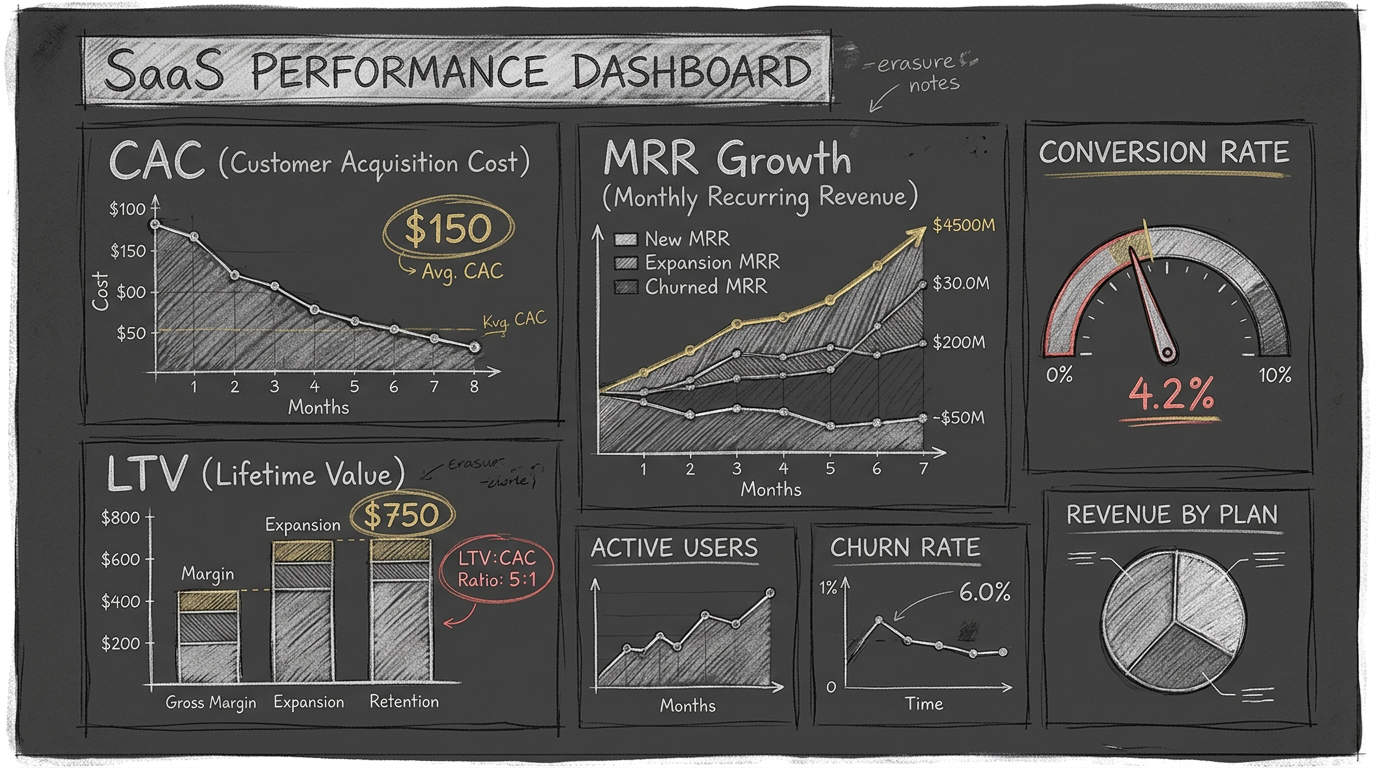
SaaS lead generation metrics dashboard showing product usage analytics, free trial conversions, and customer acquisition metrics
What Is SaaS Lead Generation and Why It Matters
SaaS lead generation is the systematic process of finding software companies that sell subscription-based products and have demonstrated active interest in marketing or growth services. The two components matter equally. A SaaS company without demonstrated need is a prospect, not a lead. A company with genuine need but no reachable contact is an opportunity you cannot act on. Real SaaS lead generation addresses both parts: identifying genuine demand and reaching the right person with the right message at the right moment.
The SaaS market has structural characteristics that make it uniquely attractive for agencies. SaaS companies operate on recurring revenue models, which means they have ongoing marketing budgets rather than one-off project spend. A SaaS company that invests in SEO sees compounding returns because organic traffic continues to drive trial sign-ups and demo requests month after month. This creates a long-term client relationship. Average SaaS SEO client lifespans run 18 to 24 months, compared to much shorter engagements in other verticals. SaaS companies also tend to have higher marketing budgets as they scale. A growth-stage SaaS company with Series B or C funding often allocates $10,000 to $30,000 per month to marketing, making them among the highest-value agency clients available.
SaaS buyer intent signals are unusually visible because SaaS companies are transparent about their growth trajectory. They publish product updates, hiring patterns, funding announcements, and growth metrics publicly. A lead provider that knows what signals to look for can identify companies actively investing in acquisition months before those companies start evaluating agencies. This early positioning separates agencies that consistently fill their SaaS pipeline from agencies that scramble for clients.
Higher response rates from exclusive internet-verified SaaS leads versus unverified shared lists, translating to significantly lower cost per acquired client
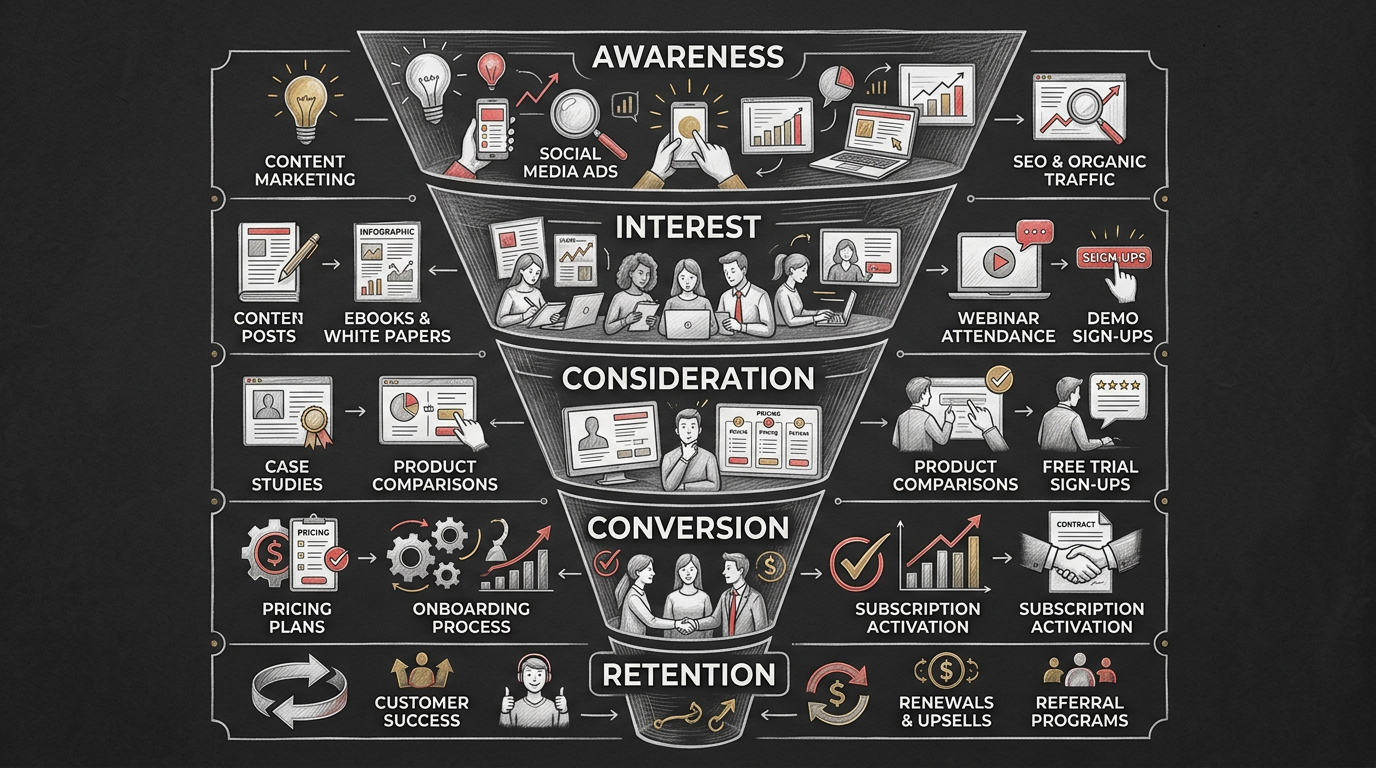
The SaaS lead generation funnel: how prospects move from awareness through trial to closed client across the buyer journey
—
How SaaS Lead Generation Differs From Traditional B2B Lead Generation
SaaS companies operate on a fundamentally different buying cycle than traditional B2B companies. Understanding these differences is what separates an outreach campaign that converts from one that disappears into the void.
Traditional B2B buyers often have simpler evaluation processes. A manufacturing company evaluating a new logistics vendor might compare three options and decide within a month. SaaS buyers operate differently. They research extensively. They compare multiple alternatives in parallel. They read reviews, test free trials, evaluate case studies, and consult their network. The average SaaS buyer touches seven to ten touchpoints before engaging with a vendor. Your outreach is competing with a mountain of existing research and vendor evaluation.
SaaS decision-makers are also more technically sophisticated than most B2B buyers. A VP of Growth at a SaaS company knows what good marketing looks like. They have run experiments, analyzed data, and evaluated agencies before. Generic outreach that lacks specificity about their growth context gets filtered out immediately. You have roughly three seconds to demonstrate that you understand their business before they move on.
The sales cycle itself is longer and more consultative. SaaS buyers want proof of results in similar contexts. They want case studies, before-and-after data, and a clear methodology. Agencies that approach SaaS with the same pitch they use for other verticals see dramatically lower close rates. The messaging, proof points, and offer design all need to be calibrated for SaaS buyer expectations.
—
Define Your SaaS ICP (Ideal Customer Profile)
Your ICP is the single most important lever in SaaS lead generation. A well-defined ICP tells you exactly which companies to target, which contacts to reach, what messaging resonates, and which channels to prioritize. Without a clear ICP, every outreach campaign is guesswork.
A SaaS ICP has four dimensions. Company stage is the first. Pre-seed and seed-stage SaaS companies have limited budgets but fast decision cycles. Series A and B companies have confirmed budgets and specific growth targets. Series C and later companies have mature marketing teams and clear procurement processes, often needing specialized support like competitive SEO or account-based marketing rather than full-service retainers.
The second dimension is growth model. Product-led growth SaaS companies depend on self-service sign-ups, free tiers, and organic discovery. They need SEO and content marketing expertise. Sales-led growth SaaS companies depend on demos, enterprise sales cycles, and account-based outreach. They need LinkedIn outreach, ABM strategies, and executive-level relationship building.
The third dimension is buyer role. In early-stage companies, the founder makes marketing decisions directly. In growth-stage companies, the VP of Growth or Head of Marketing is the decision-maker. In enterprise SaaS, a director-level manager often evaluates vendors for the CMO. Each role requires different messaging and proof structures.
The fourth dimension is geography. SaaS companies targeting the US market have different SEO requirements than those targeting Europe or Southeast Asia. LeadPot’s internet-verified leads include geographic context so you can segment your outreach by market from day one.
For a broader framework on defining ICPs and evaluating lead sources, see our guide to B2B leads.
—
Product-Led Growth: Using Freemium to Generate SaaS Leads
Product-led growth is the default acquisition model for most modern SaaS companies. PLG SaaS products offer free tiers, free trials, or freemium plans that let users experience value before committing money. For agencies, PLG SaaS companies represent a distinct opportunity with specific outreach requirements.
PLG SaaS companies live and die by their organic acquisition channels. They need SEO that drives trial sign-ups. They need comparison pages that outrank competitors. They need review site optimization that converts researchers into users. Agencies that understand PLG dynamics can position themselves as the growth partner that accelerates the entire acquisition engine, not just a vendor providing one service.
The buyers at PLG SaaS companies are often data-obsessed. They track trial-to-paid conversion rates, activation rates, and time-to-value alongside dozens of other product metrics. Outreach to these buyers needs to be data-driven from the first message. Reference their current organic traffic. Analyze their ranking gaps against competitors. Show them exactly where they are leaving growth on the table. A message like “your top competitor ranks for 17 keywords you do not appear for in the top 20 results” gets a response because it is specific, relevant, and immediately useful.
PLG companies also tend to have shorter sales cycles than enterprise SaaS. If they can see clear ROI, the decision to engage can happen within two to four weeks. The risk for agencies is scope expansion. A retainer that started as SEO-only can expand into content, paid search, and CRO within months. Build scope flexibility into your pricing from the start.
—
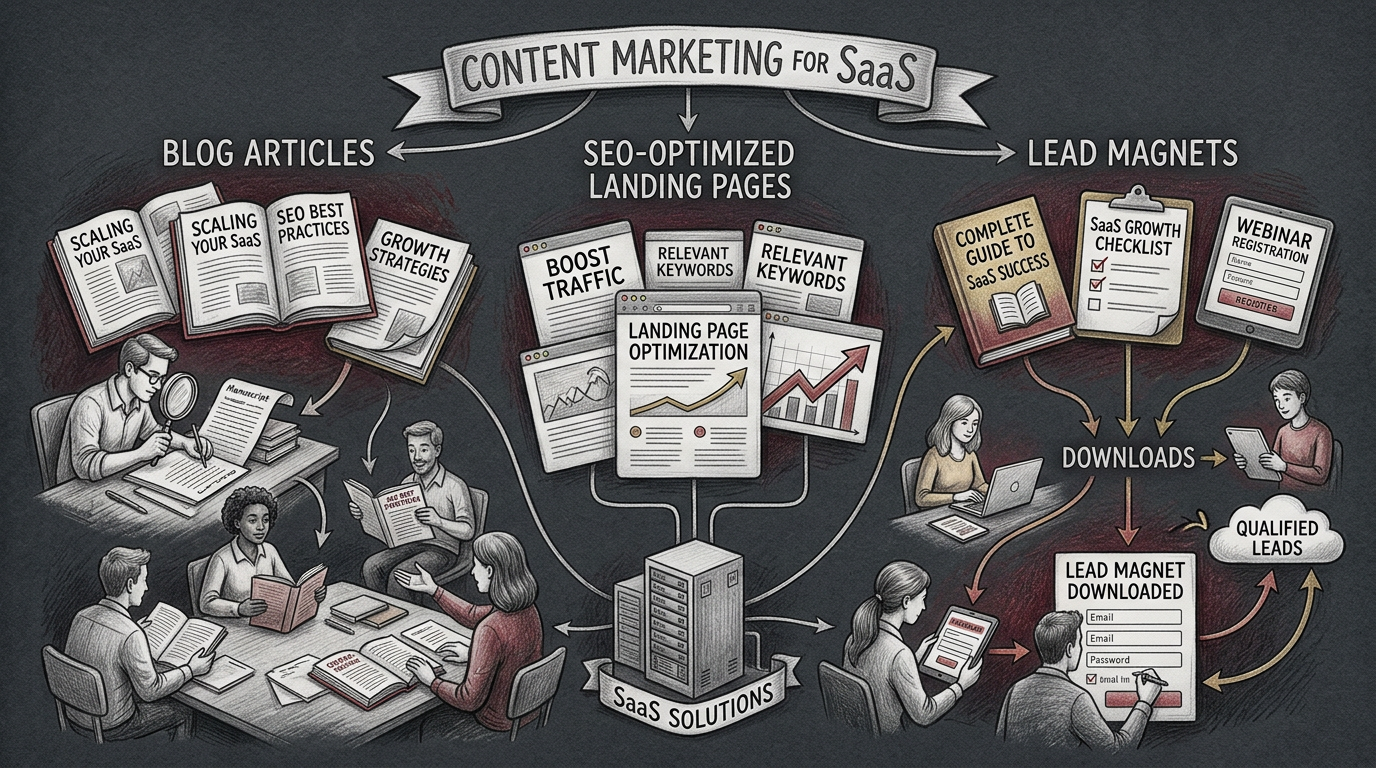
Content Marketing and SEO for SaaS Lead Generation
Content marketing and SEO are the highest-ROI channels for SaaS lead generation over the long term. SaaS companies need content at every stage of the buyer journey. Top-of-funnel content attracts users researching solutions. Middle-of-funnel content converts researchers into trial users. Bottom-of-funnel content converts trial users into paying customers. This content dependency creates a continuous demand for agencies that understand SaaS content strategy.
For agencies, the content you produce for your own brand is also your most effective lead generation tool. A guide to SaaS SEO, a benchmark report, or a case study showing organic traffic growth for a SaaS client all attract inbound interest from SaaS founders actively researching agencies. Every piece of SaaS-specific content you publish works as a lead magnet while you sleep.
SaaS SEO has unique characteristics that distinguish it from other verticals. SaaS buyers search for comparison terms like “X vs Y” and problem-based terms like “how to reduce churn in SaaS.” Ranking for these terms requires understanding the SaaS buyer’s research journey, not just keyword difficulty scores. Agencies that produce SaaS-specific content build authority that generic SEO agencies cannot match.
SaaS companies also respond strongly to data-backed content. A study of SaaS pricing models or an analysis of SaaS churn benchmarks attracts inbound interest from founders actively researching their market. For agencies ready to purchase leads to complement their content strategy, our guide to buying SEO leads covers the available options.
—
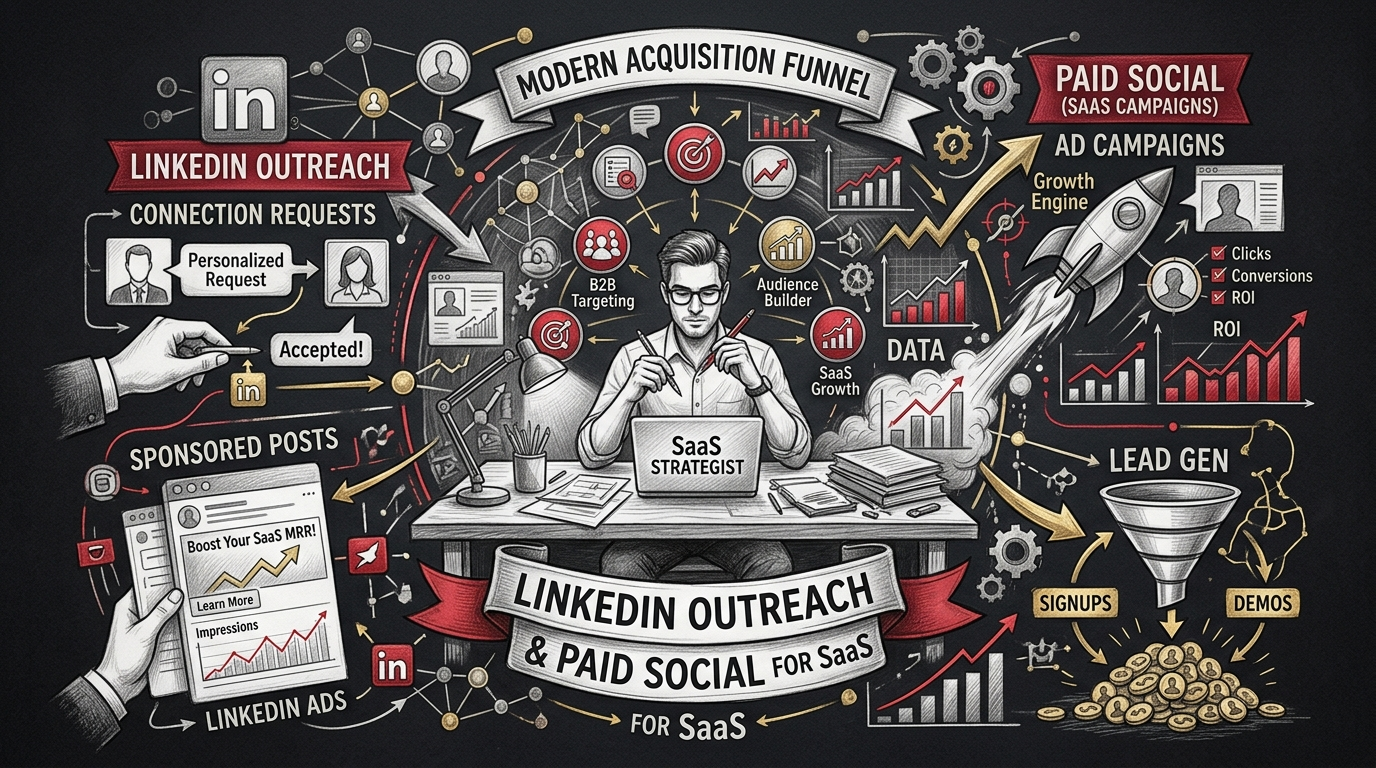
LinkedIn Outreach and Paid Social for SaaS
LinkedIn is the highest-ROI channel for reaching SaaS marketing and growth decision-makers. SaaS founders, VPs of Growth, Heads of Marketing, and CMOs are all active on the platform. They post about growth challenges, share product updates, and engage with SaaS growth content. The platform is where SaaS professionals do their professional networking and where they are most receptive to relevant outreach.
LinkedIn outreach for SaaS works when it is specific. Reference a post the prospect made about their growth goals. Comment on their recent product launch with a genuine insight. Connect with a message that shows you researched their company. Generic connection requests get ignored. Contextual outreach that references their Series B funding or hiring pattern gets responses because it proves you are not mass-blasting.
Paid LinkedIn Ads accelerate SaaS lead generation when you target a tightly defined ICP. Lookalike audiences based on your existing SaaS clients, job title targeting for VP of Growth roles, and company size filters for Series A to C SaaS companies all produce strong results. The key is audience precision. Broad campaigns targeting “technology companies” waste budget. Campaigns targeting “Series B SaaS companies with 50 to 200 employees hiring growth roles” convert efficiently.
X (formerly Twitter) is effective for reaching SaaS founders who discuss growth publicly. Engaging with their content and sharing relevant insights creates inbound interest. Many SaaS agency relationships start on X, move to LinkedIn, and progress to email conversations.
—
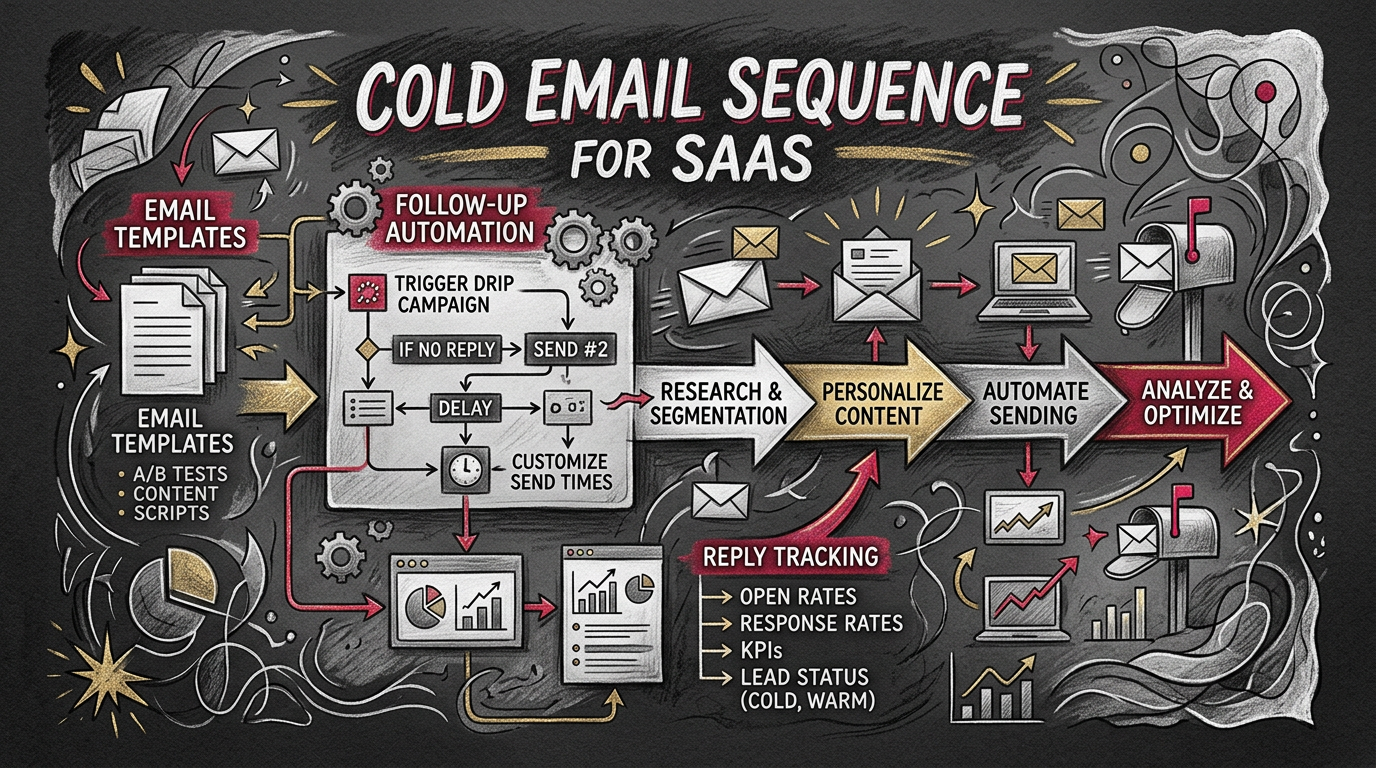
Cold Email Sequences for SaaS Founders and Decision-Makers
Cold email works for SaaS when every message demonstrates specific knowledge of the company’s actual growth situation. SaaS buyers receive dozens of generic agency pitches every week. Most follow the same formula: “we help companies grow through digital marketing.” None reference the specific company’s recent signals. Your message stands out by being the one that does.
A high-converting SaaS cold email has four parts. The opening references a specific, recent signal: a funding round, a product launch, a hiring pattern, or expansion into a new market. This proves you have done actual research. The second part connects that signal to a specific growth challenge. The third part offers value: a free analysis, a relevant case study, or a benchmark comparison. The fourth part is a low-friction call to action: a 15-minute call or a shared document with initial findings.
Email deliverability matters enormously. LeadPot’s internet-verified leads include email addresses confirmed as deliverable within the last 30 days, reducing bounce rates and protecting your sender reputation. Learn more on our how it works page.
Follow-up cadence for SaaS is longer and more consultative than other verticals. A five-touch sequence spread over two to three weeks, with each touch adding a new insight, outperforms aggressive daily follow-up that annoys prospects into ignoring you.
—
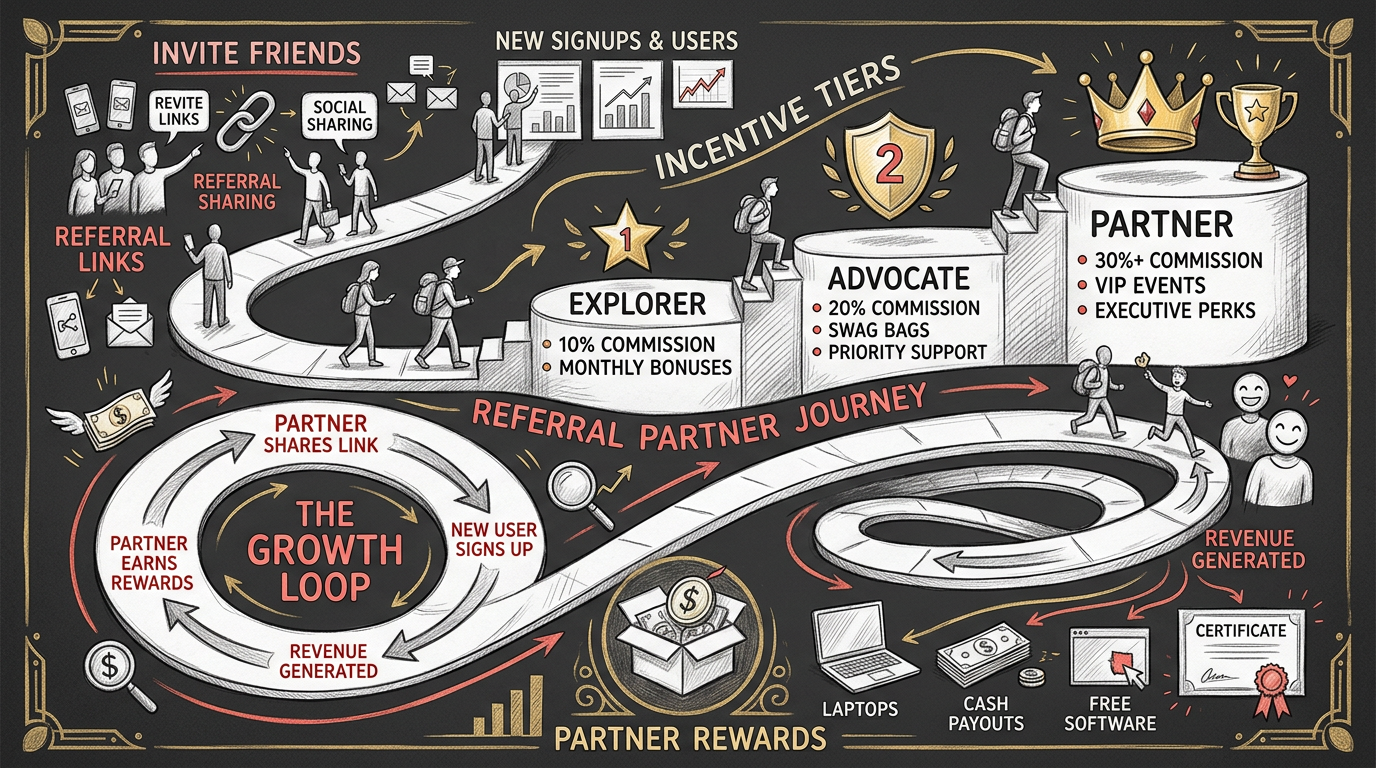
Referral Programs and Partner Integrations
Referrals are one of the highest-quality SaaS lead sources and largely untapped by most agencies. SaaS founders talk to each other constantly in Slack groups, on X threads, and in private communities. If you deliver results for one SaaS client, that client will mention you to other founders within weeks.
A simple referral program works. Existing SaaS clients who refer companies that become paying clients receive a month of free service or a referral bonus. Make it easy for clients to refer you by mentioning it in check-in calls and including it in monthly reporting.
Partner integrations create a second referral channel. If your agency is listed as a partner on platforms like HubSpot or Salesforce, you become visible to SaaS companies at the moment they are evaluating their growth tool stack. These directories generate inbound leads from companies already investing in growth infrastructure.
Content partnerships with SaaS tools put your agency in front of that platform’s audience. A joint webinar or podcast interview with a complementary SaaS platform carries more weight than cold outreach because SaaS companies trust recommendations from tools they already use.
—
Webinars and Demos That Convert SaaS Prospects
Webinars are one of the highest-converting lead generation formats for SaaS audiences. A webinar on “SaaS SEO Benchmark Report for 2026” attracts SaaS companies actively working on the exact problem you are addressing. Unlike cold outreach, webinar attendees have opted in to learn from you. They are already in a buying mindset.
A high-converting SaaS webinar has three parts. The first 15 to 20 minutes deliver standalone value: a framework, data analysis, or case study. This builds trust before any pitch. The middle section bridges to your agency’s capability with a specific client result. The final five minutes include a low-friction offer: a free audit or consultation call.
Live demos convert even better for warm leads. Offering a free 20-minute “SaaS SEO snapshot” where you walk through their organic performance and identify specific opportunities converts at 20 to 30 percent for warm inbound leads. This approach delivers value regardless of whether they become a client, building goodwill that often leads to referrals.
—
Measuring SaaS Lead Generation: CAC, LTV, and Conversion Metrics
SaaS lead generation is measurable, and the metrics that matter most are cost per acquisition, customer lifetime value, and conversion rates between each pipeline stage.
Cost per acquisition (CAC) measures what it costs to acquire one new SaaS client. Divide total lead generation spend by new clients acquired. SaaS CAC benchmarks vary by stage. Early-stage SaaS clients might have CAC of $500 to $1,500. Growth-stage clients can have CAC of $2,000 to $8,000. The metric matters less in isolation than in comparison to LTV.
Customer lifetime value (LTV) measures total revenue a SaaS client generates over their relationship with your agency. A $3,000 per month SaaS SEO retainer retained for 18 months generates $54,000 in revenue. The LTV to CAC ratio for a healthy SaaS client should be at least 3:1 and ideally 5:1 or higher.
Pipeline conversion metrics track performance at each stage. From lead to qualified conversation: aim for 5 to 15 percent for verified exclusive leads. From conversation to proposal: aim for 40 to 60 percent. From proposal to closed client: aim for 20 to 40 percent. Low performance at any stage tells you exactly where to fix. Low lead-to-conversation rates point to lead quality problems. Low proposal-to-close rates point to pricing or positioning problems.
—
Common Mistakes SaaS Companies Make in Lead Generation
SaaS lead generation has recurring failure patterns that cost agencies thousands in wasted outreach time. Avoiding these mistakes is easier than recovering from them.
The most common mistake is treating all SaaS companies identically. A pre-seed startup with three founders is not the same opportunity as a Series C company with 200 employees. They have different budgets, decision processes, and expectations. Generic outreach that does not account for stage differences gets ignored.
The second mistake is outreach without demonstrating SaaS knowledge. SaaS buyers are research-heavy. They know what good marketing looks like. Outreach that opens with “we help companies grow through digital marketing” gets deleted immediately. Reference SaaS-specific metrics: MRR, churn rate, LTV, CAC, product-led growth. Show you understand their business before asking for their time.
The third mistake is prioritizing lead quantity over lead quality. A list of 50 verified SaaS leads with documented growth signals outperforms a list of 500 generic technology contacts every time. Quality compounds: high-intent leads produce more revenue faster than low-intent contacts.
The fourth mistake is ignoring the founder in early-stage SaaS. Reaching a marketing manager at a 15-person SaaS company is a waste of time. The founder is the decision-maker. Target founders directly at early-stage companies.
“SaaS clients are among the highest-retention clients an agency can have. Once a SaaS company sees the impact of SEO and lead generation on their MRR, they rarely cut the budget. Average SaaS client lifespan for growth-focused SEO retainers runs 18 to 24 months.”
—
When to Buy SaaS Leads vs Build Your Own Pipeline
Every agency hits a decision point where building your own pipeline feels too slow and buying leads feels too expensive. The right choice depends on your situation and growth timeline.
Building your own SaaS pipeline through content, SEO, and social selling takes six to twelve months of consistent effort before the inbound flow is reliable. During that build period, you are investing time that does not immediately produce clients. For agencies with an established client base and time to invest in long-term development, building is the right approach.
Buying SaaS leads is the right choice when you need pipeline volume now. A new agency entering the SaaS market needs clients fast to build case studies. An agency at capacity needs outreach execution support. An agency scaling into a new market needs targeted accounts quickly.
The hybrid approach works for most agencies. Build your pipeline through content and SEO for long-term inbound flow. Buy leads for immediate volume and to test messaging in new segments. Many agencies start with bought leads to build initial case studies, then transition to inbound as those case studies attract referral business.
The choice comes down to time horizon and current capacity. If you need clients this quarter, buying leads is faster. If you can build over six to twelve months, invest in content and SEO. The agencies that win long-term do both. For a detailed look at sourcing options, see our guide to buying SEO leads.
DIY vs DFY: Which Model Fits Your Agency
Factor
DIY Model
DFY Model
What you receive
Verified SaaS lead list with company context, growth signals, and decision-maker contacts
Booked conversations with qualified SaaS decision-makers delivered to your calendar
What you do
All outreach: emails, LinkedIn, social selling, calls, follow-ups, proposals, closing
Attend calls and close deals; provider handles outreach, qualification, and booking
Best for
Agencies with SaaS knowledge, outreach capacity, and desire for messaging control
Agencies without prospecting time, entering SaaS market, or wanting predictable pipeline
Minimum commitment
Per-list or per-lead purchase with flexible volume
3-month campaign minimum with monthly retainer
Cost structure
Lower direct spend; team time invested in SaaS-specific outreach execution
Higher retainer; saves 10 to 20 hours per week on prospecting and campaign management
Time to first conversation
Depends on your team’s SaaS outreach experience and execution speed
Typically 2 to 3 weeks from campaign launch
Scalability
Limited by your team’s capacity for sophisticated SaaS outreach
Scalable across SaaS segments without adding headcount
—
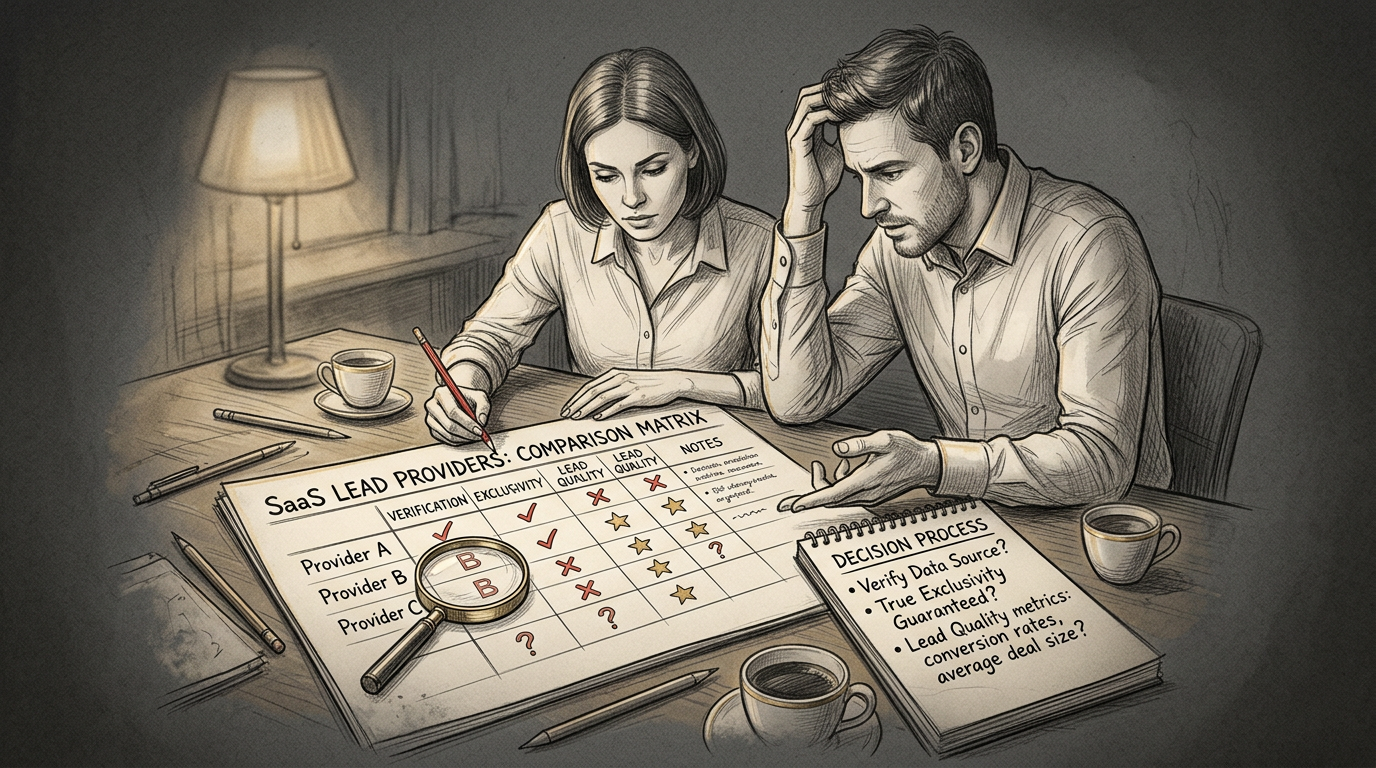
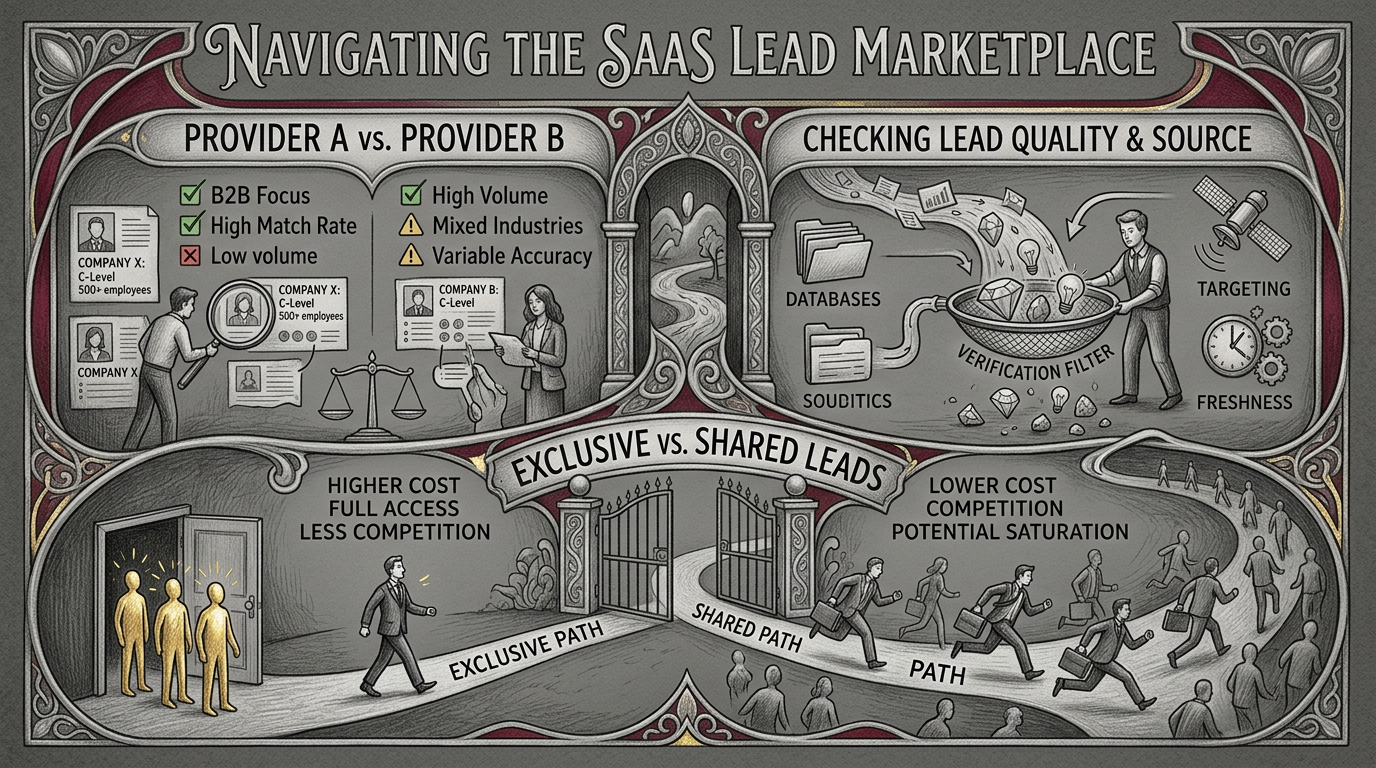
How to Choose a SaaS Lead Provider
Choosing a SaaS lead provider is one of the most consequential decisions for your pipeline. A bad provider delivers stale contacts and recycled lists. A good provider delivers internet-verified, exclusive accounts with context that makes your outreach specific from day one.
Verification methodology is the first criterion. Ask exactly how the provider verifies that a company is a genuine SaaS business with active need. Internet-verified means the provider has checked the company’s website, social profiles, and recent activity to confirm they are actively operating. If a provider cannot describe their verification process in detail, their data quality is suspect.
Exclusivity is the second criterion. Shared leads are sold to multiple agencies. The moment the first agency contacts a shared lead, that lead becomes less responsive to every subsequent pitch. SaaS founders talk to each other. When two agencies contact the same founder with similar offers, both lose credibility. Exclusive leads are assigned to your campaign only. For SaaS buyers who recognize when they are being mass-contacted, exclusivity is a prerequisite for credible outreach, not a premium feature.
Company context is the third criterion. The best SaaS leads come with context about recent activity: funding rounds, product launches, hiring patterns. This context is what lets you write outreach that demonstrates research rather than generic interest. A provider that delivers a spreadsheet of company names and email addresses without context is delivering raw data, not qualified leads.
Compliance is the fourth criterion. SaaS companies are subject to GDPR and CCPA. Your lead provider should source data compliantly and provide documentation of their compliance posture. For a complete walkthrough of how LeadPot sources and verifies leads, visit our how it works page.
—
FAQ: SaaS Lead Generation Questions Answered
What makes SaaS leads different from other B2B leads?
SaaS leads are software companies with subscription revenue models and active growth challenges. They are more research-heavy than most B2B buyers. They evaluate multiple agencies in parallel and want proof of results in similar SaaS contexts. They respond to messaging that demonstrates understanding of SaaS metrics like MRR, churn rate, and LTV.
How do I identify SaaS companies actively seeking marketing help?
Look for growth signals: recent funding rounds, aggressive hiring for marketing or growth roles, new product launches, expansion into new markets, or public statements about growth targets. Companies that raised Series A or later funding almost always need external marketing support within six months. Our guide to buying SEO leads covers how to evaluate lead sources.
What is the difference between exclusive and shared SaaS leads?
Exclusive leads are sold only to your agency. You are the only team contacting that SaaS company with your offer. Shared leads are distributed to multiple agencies. SaaS founders talk to each other. If multiple agencies contact the same founder with similar pitches, the first outreach loses credibility. Exclusive leads deliver three to five times higher response rates.
How long does the SaaS sales cycle take?
SaaS deals typically close within three to six weeks of first contact, assuming relevant case studies and a clear proposal. Early-stage founders can decide faster with a low-risk pilot offer. Growth-stage companies take longer but close at higher retainers.
What pricing can I expect from SaaS clients?
SaaS SEO retainers typically range from $2,000 to $10,000 per month. Growth-stage SaaS companies often invest $5,000 to $15,000 per month. Enterprise retainers can exceed $20,000 per month. SaaS clients tend to stay 18 to 24 months, making them among the highest-LTV agency clients.
Which channels work best for reaching SaaS decision-makers?
LinkedIn is the most productive channel for reaching SaaS marketing and growth decision-makers. Cold email works when messages are specific to the company’s growth situation. Content and SEO produce the highest-LTV inbound leads. Webinars and educational content attract inbound interest from SaaS companies researching growth services.
—
Get Started With Verified SaaS Leads
SaaS lead generation rewards agencies that reach the right software companies at the right moment with targeted, well-researched outreach. Generic outreach fails. Verified, exclusive SaaS accounts convert at three to five times the rate of generic approaches.
LeadPot delivers internet-verified, exclusive SaaS company accounts with growth signal context so your team can start outreach immediately. No list recycling. No shared leads. No wasted hours on companies that were never going to respond. Every account is verified for SaaS legitimacy and accompanied by company context.
LeadPot dashboard preview: verified SaaS company accounts with growth signals and decision-maker contacts ready for outreach
Ready to Fill Your SaaS Pipeline?
Get internet-verified, exclusive SaaS company accounts with growth signal context delivered to your agency. No list recycling. No shared leads.
Lead source mix balances inbound (content, SEO) and outbound (outreach, purchased leads)
Referral program exists and is actively communicated to existing SaaS clients
Frequently Asked Questions
What is B2B lead generation?
B2B lead generation is the process of identifying and attracting potential business clients who need your agency’s services. It involves prospecting, qualifying, and nurturing decision-makers at target companies.
How do you find B2B leads for agencies?
Effective B2B lead sourcing includes LinkedIn prospecting, industry databases, cold outreach, referral programs, and content marketing. Focus on decision-makers like marketing directors and CEOs.
What makes a qualified B2B lead?
A qualified B2B lead has decision-making authority, budget availability, a genuine need for your services, and a realistic timeline. Qualification frameworks like BANT help prioritize prospects.
Priya
Priya Sharma is a Lead Generation Strategist at LeadPot with 8+ years of experience helping agencies find high-quality B2B leads across SEO, PPC, web design, and digital marketing services.