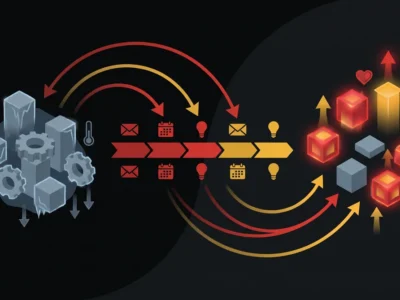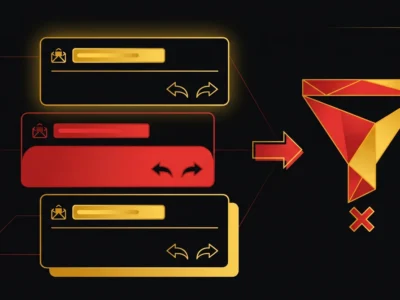

What are exclusive leads? Exclusive leads are prospects who are contracted to a single buyer. One agency gets first rights, one named decision-maker, and a 24 to 72 hour window to work the lead before it expires. That one contract clause is what separates exclusive from shared files, and it is the reason exclusive pricing runs 3 to 5 times higher per lead while closing 3 to 5 times better per deal.
This article unpacks the contract terms, the math, the verification documents, the red flags, and the vertical differences. You will also get a compact signal model for building your own exclusive pipeline instead of buying one.
What Exclusive Actually Means (Contractual vs De facto Exclusivity)
There are two kinds of exclusivity in lead generation, and vendors blur them on purpose. The first is contractual exclusivity: a written clause that names you, or your firm, as the sole buyer of a specific lead, with a defined window (typically 24 to 72 hours) and a refund or credit if the lead is shared with anyone else during that window. The second is de facto exclusivity: the vendor simply does not sell the lead to anyone else, usually because they generated it themselves and sold it outright. De facto is rarer and worth more, because there is no fine print to parse.
Contractual exclusivity is the version you can actually buy at scale, and it is what the pricing language in this article refers to. De facto exclusivity shows up in the boutique case studies. Both beat shared files, and the gap is measurable: a shared batch of 100 leads means 40 to 80 other agencies working the same list in the same hour. By the time you call, most of them have already made the first contact. The lead sees you as option number six, and options get lower bids and slower closes.
Two more terms to nail down before you pay for anything. Sold-once means the underlying demand signal (the form fill, the outbound reply, the job post) is sold to exactly one buyer, period. Windowed exclusive means you are the only buyer for 24 to 72 hours, after which the lead can be resold on a shared basis. Windowed exclusive is the default on most B2B lead products, and it is why follow-up speed is the single most important variable in closing purchased leads.
For the deeper breakdown of how vendors construct the exclusivity story, see The Exclusive Leads Illusion: What Vendors Will Not Tell You. It covers the three ways “exclusive” gets quietly redefined between the sales call and the invoice.
The Math: Why Exclusive Leads Cost 3-5x and Close 3-5x Better
The premium is not arbitrary. It follows from the economics of a shared file. A shared lead is sold to 5 to 10 buyers for a price that keeps it cheap enough to move volume. Each buyer’s expected value is therefore divided across every other buyer in the file. The exclusive lead is sold to one buyer at a price that reflects the full value of the underlying demand, because no one else will take it away. Do the arithmetic on a $2,000 average web design deal:
| Model | Cost per lead | Close rate on lead | Cost per close |
|---|---|---|---|
| Shared file, 10 buyers | $50 to $100 | 0.5 to 1.5% | $400 to $2,000 |
| Windowed exclusive, 72h | $250 to $400 | 5 to 12% | $250 to $800 |
| Sold-once exclusive | $600 to $1,500 | 15 to 40% | $300 to $1,000 |
The spread in cost per close is where the model lives. Shared files look cheaper in the spreadsheet, but they burn sales time on leads that are 60 to 80 percent likely to have been pre-contacted by a cheaper competitor. Exclusive leads cost more upfront and close better per call, which means the total cost per signed client is comparable or lower once you count labor. The B2B Lead Benchmark Report (2026) and the vertical case studies (web design, SEO) show the same shape: the agencies that moved to exclusive tiers cut cost per close by 30 to 60 percent even though per-lead pricing went up.
One number that anchors the entire vertical: a 72 hour windowed exclusive on a web design signal closes at roughly 3 to 5 times the rate of the same signal in a shared file. The window matters because web design demand is reactive. The buyer filled out the form because they hit a problem this week. Call them inside the window and you get the problem while it is still urgent. Call them in week three and the problem has been solved by a faster competitor, or has gone quiet.

How To Verify Exclusivity Before You Pay (The 4 Documents To Request)
1. The exclusivity clause itself. The actual language, not a paraphrase. You need to see the word “sole,” “single,” or “only” tied to your account, the lead identifier (or cohort definition), and the window in hours. Vague clauses (“no other agencies will be contacted”) do not protect you, because they describe behavior, not ownership.
2. The sold-once certificate or the cohort manifest. For sold-once products, the manifest should identify the exact demand signal that was sold to you: the source, the timestamp, and the buyer’s expressed scope. For windowed exclusive, it should show the start and end of your window. If the vendor cannot produce a per-lead artifact, the exclusivity is marketing language, not contract.
3. The breach remedy. What happens if the lead does turn out to be shared? A credit per shared instance is the standard remedy. If the remedy is “we will look into it,” treat the product as shared. The remedy is what makes the clause enforceable, and it is the line you check first when a claim sounds too clean.
4. The close-rate baseline for the last 90 days. Not the blended historical average, but the trailing 90 days for your vertical and your lead tier. This is the number the 3 to 5x claim should be compared against. A vendor that will not share a 90 day baseline is asking you to underwrite the gap between their marketing and their file.
The verification checklist below is the version to run against any vendor, including the exclusive products we list on exclusive SEO leads:
1. Written clause names “sole”/”single”/”only” + your account + window in hours
2. Per-lead artifact: sold-once certificate or window manifest with timestamp
3. Breach remedy stated: credit per shared instance, not “we will look into it”
4. 90 day close-rate baseline for your vertical, not blended history
5. Window start is the delivery timestamp, not the signal timestamp
6. No geographic or industry carve-outs in the fine print
Red Flags: When A Vendor Is Selling Shared Lists As Exclusive
The rebranding happens in predictable ways. Here is the list to run against any “exclusive” offer, starting with the most common:
Price per lead that is too low for exclusivity. In most B2B verticals, a genuinely exclusive lead costs at least 2x a shared one. If the per-lead price sits at shared-file levels while the label says exclusive, one of the two claims is false. The price is the lie detector.
“Exclusive access” instead of “exclusive lead.” The phrase “exclusive access to our lead database” describes a shared list with a subscription wrapper. Access is not ownership. Ownership language (“sold to you,” “your window”) is what you are paying for.
Windows measured in days. A 7 day “exclusive” window on a demand signal is a shared file with a slow drip. Exclusive demand decays fast. Windows longer than 72 hours are usually the vendor’s way of saying the signal is old, not that it is protected.
No breach remedy in the contract. Exclusivity without a remedy is a promise. If the lead leaks to another buyer and the only recourse is a support ticket, the product behaves like a shared file on the day it matters.
Vertical-agnostic exclusivity claims. A vendor that sells “exclusive leads” across web design, SEO, PPC, and mobile app with one pricing sheet is applying shared-file economics to every vertical and slapping the exclusive label on the top tier. Genuine exclusivity is priced per vertical, because the signal quality and the close curve differ by industry.
The full breakdown of vendor framing tactics is in The Exclusive Leads Illusion. Read it before your first negotiation, because it names the exact sentences that appear on the call.
Vertical Differences: Exclusivity Premiums Across Web Design, SEO, PPC, Mobile App
Not all exclusivity is priced the same, and the premium varies by how fast the underlying demand decays and how many buyers compete for the same signal. Four verticals, in order of premium:
Mobile app leads. Highest premium, slowest close. App development is a low-frequency, high-intent purchase. A genuine exclusive signal (funded round, job post, App Store update) is rare enough that the sold-once price clears at a steep multiple of the shared file, and the window can run to 5 to 7 days because the buyer’s decision cycle is long. For the mechanics, see our mobile app development leads page.
Web design leads. High premium, fast decay. The signal is a website rebuild or a new launch, and the buyer decides in 1 to 3 weeks. The 72 hour window is the operative variable: agencies that call inside the window close at 3 to 5x the shared-file rate. Our web design case study, 3 signed projects in 30 days, ran almost entirely on windowed exclusive signals. The shared-vs-exclusive comparison for this vertical is in Exclusive vs Shared Web Design Leads.
SEO leads. Moderate premium, medium decay. SEO is a retainer business, so the exclusive signal (a site that has been quietly losing traffic for months) stays hot for 2 to 4 weeks. The premium is real but compressed, because the signal set is larger and more buyers can be qualified. Our buy SEO leads guide covers the pricing bands and the verification pass for this vertical.
PPC leads. Lowest premium, fastest decay. PPC demand is high-volume and the signal is a budget decision that can be made in hours. The exclusive price sits closer to the shared file than in any other vertical, which is why PPC buyers usually buy shared and reserve exclusive for their highest-intent campaigns.
Building Your Own Exclusive Pipeline Instead (Signal Model, In Brief)
Buying exclusivity is one input. The agencies that hold costs down run a parallel pipeline of self-generated exclusive signals, because the cost per close on owned signals is a fraction of the purchased price. The signal model has four layers, and the layers matter in order:
Layer 1: Demand signals. Job posts, funding rounds, App Store updates, new domain registrations, and Google Ads budget bumps. Each one is a leading indicator of a purchase that has not happened yet. The signal is exclusive by construction: you found it, you work it first.
Layer 2: Content triggers. The content that makes the buyer reach out first. A benchmark report, a case study, a pricing page with “pricing quoted to your brief.” The lead that arrives through content has already done the research. Your job is to convert, not to qualify from zero.
Layer 3: The 72 hour response system. Whatever signal you catch, the close rate is a function of response speed. The agencies that win on purchased exclusive leads also win on self-generated ones, because they have a 72 hour follow-up system in place. If you do not have one, the purchased lead is wasted the same way.
Layer 4: The nurture track. The signals that did not convert in 72 hours are not dead. They move to a 30, 60, and 90 day nurture sequence until the next demand trigger fires. This is where the owned pipeline compounds, and it is the piece most agencies skip.
For the outbound side of the model, see our outbound sales strategies guide. The signal model and the outbound sequence are the two halves of the same system: one finds the demand, the other converts it.

FAQ: Exclusive Leads
What is the difference between exclusive and shared leads?
Shared leads are sold to 5 to 10 buyers at a low per-lead price. Exclusive leads are sold to one buyer, either outright (sold-once) or for a 24 to 72 hour window, at a per-lead price 3 to 5 times higher. The exclusivity contract is what stops the other buyers from contacting the same person.
How much do exclusive leads cost in 2026?
Pricing varies by vertical and signal quality. Windowed exclusive B2B leads in web design and SEO run $250 to $400 per lead. Sold-once exclusive signals in mobile app and funded-signal tiers run $600 to $1,500. The benchmark report we published in 2026, B2B Lead Benchmark Report (2026), carries the per-vertical bands.
How do I verify a vendor is actually selling exclusive leads?
Request the four documents: the written exclusivity clause, the per-lead artifact (sold-once certificate or window manifest), the breach remedy, and the 90 day close-rate baseline for your vertical. Any vendor that will not produce item 2 in writing is selling shared lists with exclusive branding.
Are exclusive leads worth the premium for a small agency?
Yes, with a caveat. The premium pays off when your follow-up system can work the lead inside the window. If your response time is measured in days, the exclusive lead decays the same way a shared one does, and you pay the premium for nothing. Fix the 72 hour response system first, then buy exclusive.
What happens if my exclusive lead gets shared with another agency?
It should not, and the contract is where that is enforced. The breach remedy (a credit per shared instance) is the line that makes the clause work. If your contract has no remedy, the “exclusivity” is a promise, and the realistic expectation is that the lead will behave like a shared file the day it matters.
Buy exclusive leads with the contract in front of you
Exclusive B2B leads, windowed or sold-once, with the clause, the artifact, and the breach remedy in the agreement. Pricing quoted to your brief.