
# B2B Leads Australia: The Practical guide for 2026
Finding good B2B leads in Australia requires more than a generic list of company names and email addresses. It demands a deep understanding of the local market, the industries that matter, and the signals that indicate a prospect is genuinely ready to buy. This guide covers everything you need to know about sourcing, qualifying, and converting B2B leads in Australia, from solo founders scaling their SaaS to enterprise sales teams targeting ASX-listed organisations.
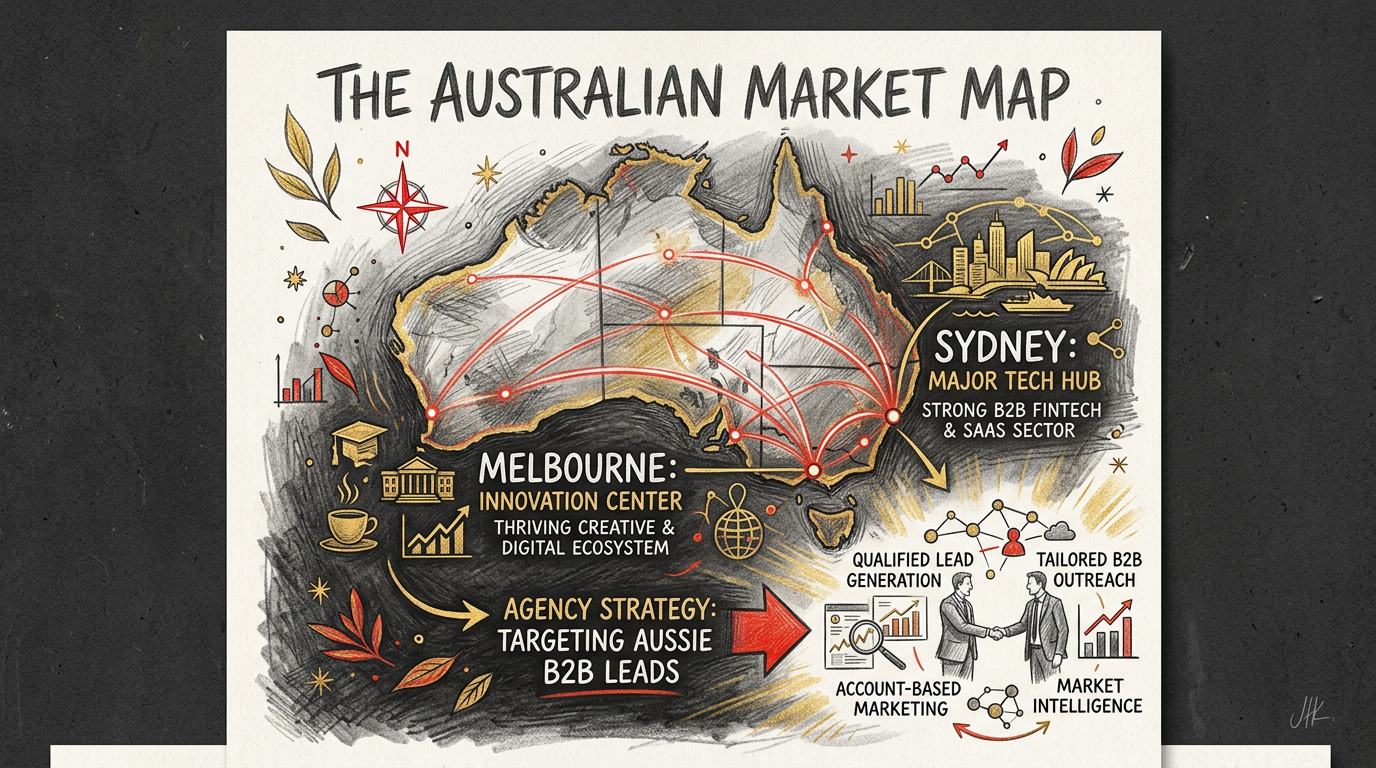
Australian B2B buyers operate in a market that is both sophisticated and geographically concentrated. With a population of around 27 million people spread across a vast continent, Australia punches well above its weight in sectors like financial services, mining technology, healthcare software, and logistics. Sydney and Melbourne alone account for a significant share of national business activity, while Perth, Brisbane, and Adelaide host lively industry-specific ecosystems. Understanding these dynamics is the first step toward building a reliable pipeline.
Whether you are exploring buy-seo-leads as a fast-track option or building a custom b2b-leads strategy from scratch, this guide will help you make smarter decisions about how, where, and when to reach Australian decision-makers.

The Australian B2B Market Overview
Australia’s B2B market is shaped by several macro forces. The country maintains strong economic ties with Asia-Pacific markets, which has made the services sector highly competitive. Digital transformation spending has accelerated across industries ranging from construction to education, creating a receptive audience for B2B products of all kinds.
main Industries Driving Demand
The sectors most actively purchasing B2B products and services in Australia include:
- Financial services and fintech – Sydney remains the dominant financial hub in the Asia-Pacific region outside of Hong Kong and Singapore. Australian banks, wealth managers, and insurance providers are investing heavily in compliance software, customer data platforms, and automation tools.
- Mining and resources technology – Despite commodity price cycles, the Australian resources sector consistently invests in operational technology, safety systems, and supply chain management software.
- Healthcare and aged care – An aging population and government policy changes have created sustained demand for healthcare management platforms, telehealth solutions, and aged care compliance tools.
- Logistics and supply chain – Australia’s geographic isolation makes logistics a high-stakes industry. Local businesses are hungry for solutions that improve visibility, reduce costs, and manage cross-border compliance.
- Professional services – Law firms, accounting practices, and consulting agencies across the country are upgrading their tech stacks at a steady pace.
This market concentration means that B2B leads Australia professionals target are often clustered in specific verticals rather than spread evenly across every industry. A targeted approach yields far better results than broad outreach.
Market Size and Growth
The Australian B2B market continues to expand as digital adoption accelerates. According to recent data on business technology spending, Australian enterprises allocate a growing share of their budgets to cloud infrastructure, cybersecurity, and customer relationship management platforms. For lead generators, this translates into a market where decision-makers are actively seeking vendors and solutions.
Buyer Intent Signals That Actually Matter
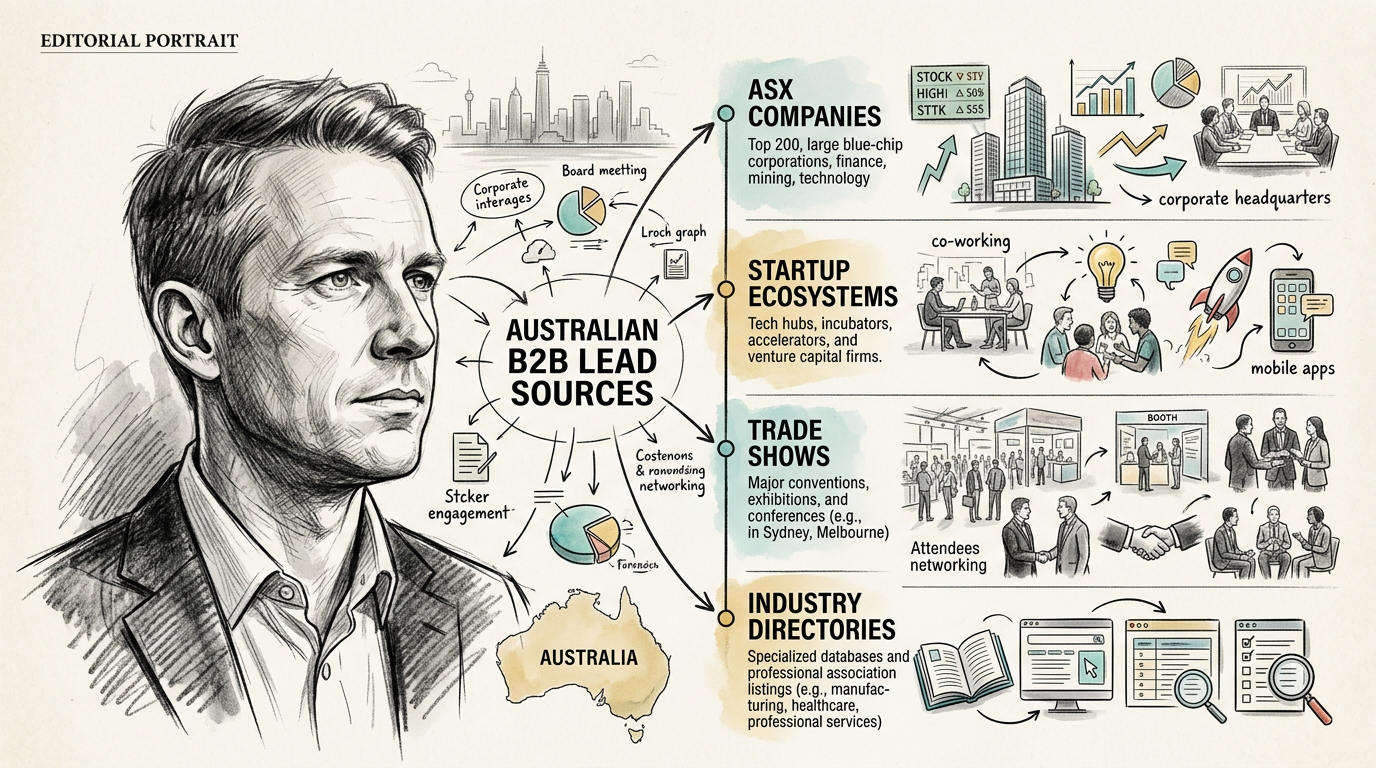
Not every contact in a B2B leads Australia database carries equal weight. The best leads share identifiable signals that suggest genuine buying intent. Savvy sales and marketing teams know how to read these signals and prioritize accordingly.
ASX-Listed Companies and Procurement Cycles
ASX-listed companies operate with formal procurement processes. These organisations typically have annual budget cycles, multi-stakeholder approval chains, and defined vendor evaluation frameworks. When targeting ASX-listed prospects, timing matters enormously.
Look for signals such as:
- Quarterly earnings calls mentioning technology investment priorities
- ASX announcements related to digital transformation programs or new CIO appointments
- Tender releases on procurement portals for software or services in your category
- Leadership changes in IT, operations, or commercial teams that often precede new vendor evaluations
ASX-listed companies tend to have larger average deal sizes and longer sales cycles, but they also represent some of the most valuable B2B leads Australia vendors can pursue. The main is aligning your outreach with their budget windows and decisions calendars.
The Aussie Startup Ecosystem
Australia’s startup scene has matured rapidly over the past decade. Sydney and Melbourne now host hundreds of seed-to-Series B companies across SaaS, proptech, fintech, and climate tech. These organisations move fast, make decisions quickly, and often lack the internal resources to build out go-to-market functions from scratch.
Startup buying signals include:
- Recent funding announcements on platforms like Crunchbase or local equivalents
- Job postings for roles related to your solution category
- Active presence on LinkedIn with founders or CTOs sharing growth challenges
- Attendance at or sponsorship of startup-focused events
For agencies and SaaS vendors, the Australian startup ecosystem is a goldmine of early adopters who are predisposed to trying new tools and platforms. These buyers often convert faster than enterprise prospects, making them ideal for testing messaging and offer positioning.
Trade Events and Industry Gatherings
Trade events are one of the most underrated sources of buyer intent data in Australia. Events like the Australian FinTech Conference, Resources Technology Show, and CeBIT Australia bring together decision-makers who have actively chosen to invest time and money in learning about solutions in your space.
Attending, sponsoring, or simply monitoring these events gives you a curated list of prospects who are already in a problem-aware state. People who pay to attend industry conferences are rarely passive observers. They come looking for answers, vendors, and partnerships.
If you want a more hands-off approach, building a b2b-leads pipeline from event attendee data, speaker lineups, and sponsor lists can deliver pre-qualified contacts without the travel overhead.
Verification Methods for Australian B2B Data
Data quality is make-or-break for B2B leads Australia campaigns. Poor data wastes budget, damages sender reputation, and frustrates sales teams. Australian B2B data requires specific verification steps due to the market’s unique characteristics.
Email Verification Best Practices
Australian business email addresses follow standard corporate naming conventions, but a few quirks exist. Government departments and some publicly funded organisations use.gov.au domains with specific formats. Private companies may use.com.au,.net.au, or increasingly, just.com.
Run every list through multi-step verification before outreach:
- Syntax and domain validation to catch malformed entries
- MX record checks to confirm the domain accepts mail
- SMTP verification to confirm the mailbox exists
- Catch-all domain detection to flag domains that accept all emails regardless of validity
Australian catch-all domains are more common than in some other markets due to the prevalence of small-to-medium enterprises using shared hosting. Catch-all detection prevents wasted sends and protects deliverability.
Phone and Decision-Maker Verification
Email alone is not enough for high-value B2B leads Australia campaigns. Phone verification adds a layer of confidence, especially for enterprise prospects where direct dials to decision-makers dramatically improve connect rates.
Verify phone numbers against current Australian directory data and confirm that the contact still holds the relevant title. ASX-listed companies publish annual reports with leadership information that cross-references well against your database. Startups change roles frequently, so cross-checking LinkedIn profiles against your contact records is important.
Company Data Validation
Beyond individual contacts, verify that target companies still exist and operate in the sectors you expect. The Australian Securities and Investments Commission (ASIC) maintains a public register of registered companies. Use this to confirm active ABNs (Australian Business Numbers) and check registration status. Disused or deregistered companies waste outreach budget and skew your pipeline metrics.
DIY vs DFY: Which Approach Suits Your Business?
One of the most important strategic decisions when building a B2B leads Australia pipeline is whether to handle lead generation in-house or outsource it to a specialist agency. Both approaches have merit, and the right choice depends on your team size, budget, timeline, and expertise.
DIY Lead Generation: Build It Yourself
The DIY approach gives you full control over targeting, messaging, and data hygiene. You build the lists, qualify the contacts, run the outreach campaigns, and measure the results yourself.
Advantages of DIY:
- Complete ownership of data and processes
- Lower ongoing cost once systems are in place
- Deep institutional knowledge of your ideal customer profile
- Flexibility to pivot targeting and messaging quickly
- No dependency on third-party timelines or availability
Disadvantages of DIY:
- Significant time investment to set up and maintain
- Steep learning curve for outreach optimization
- Requires ongoing tool subscriptions for data, verification, and outreach
- Scaling beyond a certain volume demands dedicated headcount
For teams with at least one dedicated marketer or SDR, the DIY approach can deliver strong results. Start by purchasing a verified list from a reputable provider or exploring exclusive-seo-leads options for high-intent prospects in your niche.
DFY Lead Generation: Done-For-You Campaigns
DFY (Done-For-You) lead generation hands the entire process to an external agency. You provide your ideal customer profile and goals. The agency handles research, list building, outreach execution, follow-up, and lead handoff.
Advantages of DFY:
- Immediate access to expertise and established processes
- No need to hire, train, or manage outreach staff
- Faster time-to-first-lead for teams without SDR experience
- Agencies bring refined messaging and proven sequences
- Risk is capped to the campaign fee rather than headcount commitments
Disadvantages of DFY:
- Higher cost per lead compared to DIY at scale
- Less direct control over messaging and targeting nuances
- Dependency on agency capacity and responsiveness
- Data ownership terms vary between providers
DIY vs DFY: Side-by-Side Comparison
| Factor | DIY Lead Generation | DFY Lead Generation |
|---|---|---|
| Setup time | 4-12 weeks | 1-3 weeks |
| Ongoing time commitment | 10-20 hours per week | 2-5 hours per week |
| Cost per lead | Low at scale | Higher but predictable |
| Control over messaging | Full control | Shared with agency |
| Data ownership | Full ownership | Varies by contract |
| Scalability | Requires headcount growth | Agency-led scaling |
| Best for | Teams with dedicated SDRs | Founders, small teams, fast timelines |
There is no universal answer. Many successful B2B operators start with DFY to prove out messaging and ICP fit, then transition elements to DIY as they scale. If you are evaluating providers for outsourced campaigns, reviewing case studies and requesting references from Australian clients will give you the clearest picture of fit.
Channels for Reaching Australian B2B Leads
The channels that work best for reaching B2B leads Australia decision-makers reflect both the market’s digital maturity and its cultural preferences.
LinkedIn Outreach
LinkedIn dominates B2B outreach in Australia, particularly for enterprise and mid-market segments. Australian professionals are active on the platform, and the professional context makes cold outreach more acceptable than on other social channels.
Effective LinkedIn strategies for the Australian market include:
- Personalizing connection requests with references to shared connections, groups, or industry events
- Sharing original insights about the Australian market to build credibility before pitching
- Using LinkedIn Sales Navigator to filter by ASX listing status, company size, and geography
- Engaging with prospects’ content before initiating direct outreach
The main LinkedIn success in Australia is authenticity. Australian business culture tends to be skeptical of overtly salesy approaches. Lead with value, demonstrate market understanding, and build relationships before pushing for meetings.
X / Twitter for B2B Engagement
X (formerly Twitter) has a surprisingly active B2B community in Australia, particularly in tech, finance, and startup circles. Australian tech founders, investors, and operators are highly engaged on the platform, making it a useful channel for top-of-funnel awareness and relationship building.
Use X to:
- Monitor industry conversations and identify prospects discussing relevant pain points
- Share thought leadership content that positions your brand as knowledgeable about the Australian market
- Engage in live conversations around trade events and industry news
- Build personal brands for your SDRs that attract inbound interest
Email Outreach at Scale
Cold email remains one of the most affordable channels for B2B leads Australia campaigns when executed well. Australian prospects respond to well-researched, concise emails that acknowledge their specific context.
Best practices for Australian cold email:
- Keep subject lines direct and relevant to their industry or role
- Reference Australian-specific context such as local regulations, market trends, or industry events
- Personalize with company name, role, and recent news
- Keep body copy short – Australian professionals value brevity
- Include a clear, low-friction call to action
Reddit and Online Communities
Australian-specific subreddits and industry forums can be fertile ground for identifying prospects and building brand awareness. Communities like r/AusFinance, r/AustralianBusiness, and vertical-specific forums often feature discussions where decision-makers seek recommendations for tools and services.
Rather than using these communities purely for outreach, participate genuinely. Answer questions, share insights, and establish credibility. Over time, this approach generates warm inbound interest that converts at higher rates than cold outreach.
Qualifying B2B Leads the Right Way
Generating leads is only half the battle. The other half is separating genuine prospects from tire-kickers. A disciplined qualification process ensures your sales team spends time on contacts that have both the authority and the intent to buy.
The BANT Framework for Australian Prospects
BANT (Budget, Authority, Need, Timeline) remains the gold standard for lead qualification. Adapt it to the Australian market with these considerations:
Budget – Australian enterprise budgets often follow financial year cycles (July-June) rather than calendar years. Understanding when your prospect’s budget is being planned and approved helps you time outreach for maximum relevance. ASX-listed companies may have mid-year budget reviews as well.
Authority – In Australian enterprises, purchasing authority can be distributed across procurement teams, department heads, and executive sponsors. Map the full buying committee before investing heavily in a single contact’s journey.
Need – Australian businesses face specific regulatory, geographic, and market challenges that create differentiated needs. A company operating in Perth’s mining sector has different pain points than a Melbourne-based fintech startup. Qualify against context-specific needs, not generic problem statements.
Timeline – Procurement timelines vary significantly by company size and sector. Government and quasi-government entities can take months. Startups may decide in days. Ask directly about timelines and respect the answers.
Firmographic and Technographic Filters
Beyond BANT, filter your B2B leads Australia database using firmographic criteria that matter in the local market:
- Company size brackets – Micro (1-9), small (10-49), medium (50-199), large (200+) employees have dramatically different buying processes
- Revenue bands – Revenue ranges help estimate deal size and budget availability
- Industry classification – Use ANZSIC (Australia and New Zealand Standard Industrial Classification) codes for precise industry filtering
- Geographic concentration – State and city-level targeting matters for field sales and local service delivery
- Technology stack – Knowing what tools a company already uses helps position your solution against incumbents
Common Mistakes When Buying B2B Leads in Australia
Every market has its own set of pitfalls, and Australia is no exception. Avoiding these mistakes will save you budget, protect your brand reputation, and improve your conversion rates.
Mistake 1: Buying Generic Lists Without Local Context
Lists built for global or US audiences often perform poorly in Australia. Naming conventions, company structures, and even the industries that matter differ enough that a list optimized for another market will have low relevance in Australia. Always source data specifically curated for the Australian market.
Mistake 2: Ignoring the Verification Step
Skipping email and phone verification is the fastest way to waste a lead generation budget. Australian business data ages faster than many realise due to company restructuring, domain changes, and staff turnover. Budget at least 10-15 percent of your campaign cost for verification.
Mistake 3: Overlooking Small Businesses
Australian SMEs (small-to-medium enterprises) make up the overwhelming majority of the business market. Many lead generators focus exclusively on large enterprises, missing the faster sales cycles and growing budgets of mid-market and small business segments.
Mistake 4: Failing to Segment by State
Australia’s states have distinct economic profiles. Western Australia’s economy is dominated by mining. Victoria has a strong manufacturing and agricultural technology sector. Queensland leans into resources, tourism, and infrastructure. New South Wales leads in financial services and technology. A one-size-fits-all approach across all states misses these nuances.
Mistake 5: Neglecting Compliance Requirements
Australia has specific privacy and data handling requirements under the Privacy Act and the Australian Privacy Principles (APPs). When buying or using B2B data, ensure your provider complies with these regulations and that your outreach activities align with the Spam Act 2003. Non-compliance carries financial penalties and reputational damage.
Checklist: What to Verify Before Buying B2B Leads Australia
Use this checklist to evaluate any B2B leads Australia provider before focused on a purchase.
- Data sourced specifically for the Australian market with ABN validation
- Multi-step email verification (syntax, MX, SMTP, catch-all detection)
- Phone numbers verified against current directory data
- Decision-maker titles validated (not just generic company contacts)
- Company status confirmed via ASIC public register
- Industry classification using ANZSIC codes for precise targeting
- Geographic segmentation available by state, city, and region
- Data refreshed within the last 30 days
- Provider compliant with Privacy Act and Australian Privacy Principles
- Sample data available for quality review before purchase
- Replacement or refund policy for invalid contacts
- Provider can segment by ASX listing status for enterprise targeting
How to Qualify Your Own B2B Leads Australia Pipeline
Generating a list is one thing. Building a pipeline that consistently produces qualified, convertible leads is another. Here is a structured approach to qualifying your Australian B2B leads.
Step 1: Define Your Ideal Customer Profile
Start with clarity on who your best customers are. For Australian B2B specifically, define:
- Industry verticals that align with your solution
- Company size range where your pricing and product fit best
- Geographic focus (national, state-specific, metro-only)
- Revenue bands that indicate budget availability
- Technology environments compatible with your offering
Step 2: Score Leads by Intent Signals
Assign scores to leads based on observable buying signals. Higher scores go to contacts at companies that have:
- Recently announced technology investments
- Posted job openings in your solution category
- Engaged with your content or brand
- Attended relevant industry events
- Changed leadership in relevant departments
Step 3: Enrich and Verify
Before any outreach, enrich your leads with additional context. Use LinkedIn to confirm job titles and company affiliation. Cross-reference against ASIC data for company status. Verify email addresses and phone numbers. Remove any contacts that cannot be confirmed.
Step 4: Segment for Personalization
Group your qualified leads into segments that share similar characteristics. For example, ASX-listed companies in the financial services sector in Sydney form one segment. Growth-stage startups in Melbourne’s tech ecosystem form another. Segment-specific messaging consistently outperforms batch-and-blast campaigns.
Step 5: Monitor and Iterate
Track conversion rates by segment, channel, and messaging variant. Australian B2B buyers respond differently depending on the context. Test subject lines, value propositions, and call-to-action language across segments and optimize toward what works.
The Lead Generation Funnel for Australian B2B
A well-structured funnel converts more prospects and shortens sales cycles. Here is how to build one for the Australian market.
Top of Funnel: Awareness
At the top of the funnel, your goal is to reach as many relevant decision-makers as possible without overspending. Use channels like LinkedIn content, industry event monitoring, and thought leadership publishing to build awareness among Australian B2B prospects.
Content that resonates with Australian audiences includes:
- Analysis of local market trends and regulatory changes
- Case studies featuring Australian companies
- Commentary on industry events and local business dynamics
- Practical guides addressing Australian-specific challenges
Middle of Funnel: Consideration
In the consideration stage, prospects are actively evaluating solutions. Nurture them with:
- Detailed product comparisons relevant to their industry
- Demo sessions tailored to Australian use cases
- ROI calculations based on local market data
- Reference calls or testimonials from Australian customers
Bottom of Funnel: Decision
At the decision stage, reduce friction by:
- Offering local payment terms and currency options
- Providing references from similar Australian companies
- Addressing compliance questions specific to Australian regulations
- Including implementation timelines that account for local business practices
Scaling Your B2B Leads Australia Pipeline
Once you have a working lead generation process, scaling is about systematically increasing volume while maintaining quality.
Invest in Data Infrastructure
As your lead volume grows, manual verification and list building become bottlenecks. Invest in tools that automate data enrichment, email verification, and CRM synchronization. The right infrastructure lets you scale outreach without proportionally scaling headcount.
Diversify Your Channel Mix
Relying on a single channel creates risk. If your email deliverability drops or LinkedIn changes its algorithm, your pipeline suffers. Maintain a diversified mix of channels so that underperformance in one area can be offset by others.
Prioritize List Hygiene
Data decay is constant. Australian B2B contacts change roles, companies merge, and email addresses become invalid. Schedule regular list cleaning cycles to maintain hygiene. Remove bounced emails, update changed contacts, and prune dormant records. A clean list outperforms a large, dirty one every time.
Measure What Matters
Track metrics that reflect pipeline health, not just vanity numbers. main metrics for B2B leads Australia campaigns include:
- Contact accuracy rate after verification
- Email open and reply rates by segment
- Conversion rate from outreach to qualified meeting
- Cost per qualified meeting
- Pipeline value generated per dollar spent
Building a Repeatable Lead Generation System
The organisations that win in the Australian B2B market treat lead generation as a system, not a campaign. They build repeatable processes that improve over time.
Document Your Process
Write down every step of your lead generation workflow, from initial targeting through to lead handoff. Documenting your process makes it possible to train new team members, identify bottlenecks, and measure improvements over time.
Automate Where Possible
Automate repetitive tasks such as email verification, CRM data entry, and follow-up scheduling. Automation frees your team to focus on high-value activities like relationship building and strategic outreach.
Create Feedback Loops
Establish regular feedback loops between your sales and marketing teams. Sales teams know which leads convert and which do not. Use that intelligence to refine targeting criteria, adjust messaging, and improve list quality over time.
Stay Current with Market Changes
The Australian B2B market evolves continuously. New regulations, emerging industries, and shifting buyer expectations all change the lead generation market. Stay informed through industry publications, event participation, and direct conversations with prospects.
If you want to accelerate your timeline, exploring buy-seo-leads options can give you access to pre-qualified, intent-rich contacts while you build your own systems.
The Role of Exclusivity in Lead Quality
One factor that separates high-performing lead generation campaigns from mediocre ones is lead exclusivity. Non-exclusive leads are sold to multiple buyers, meaning your prospects are also being contacted by your competitors. Exclusive leads are sold once and only once.
For B2B leads Australia campaigns, exclusivity matters because:
- Decision-makers are less likely to respond to multiple outreach sequences from different vendors
- Exclusive leads typically have higher response and conversion rates
- Brand perception improves when prospects encounter your outreach without competing messages from similar vendors
- Sales teams can build more genuine relationships when contacts have not been oversold
When evaluating lead providers, ask directly about exclusivity models. Some providers offer exclusive-seo-leads that are reserved for a single buyer, dramatically improving campaign performance.
Conclusion: Building Your Australian B2B Advantage
Generating B2B leads Australia businesses can rely on is not about finding a shortcut. It is about understanding the market deeply, targeting the right decision-makers, verifying your data rigorously, and running outreach that respects how Australian professionals prefer to be engaged.
The Australian market offers exceptional opportunities for B2B vendors who invest in quality and specificity. The country’s business environment rewards vendors who understand local industries, respect procurement cycles, and deliver genuinely releva
nt messaging.
Whether you build your pipeline in-house or partner with an agency, the principles remain the same: know your ideal customer, verify your data, personalize your outreach, and measure what matters. Apply these fundamentals consistently, and your B2B lead generation in Australia will deliver sustainable, scalable results.

Ready to Build Your Australian B2B Pipeline?
Leadpot helps businesses generate qualified B2B leads Australia-wide through verified lists and done-for-you campaigns. Whether you need a one-time list of decision-makers or an ongoing lead generation partnership, we deliver the contacts and context your sales team needs to close more deals.
Explore our services: Buy SEO Leads | Exclusive SEO Leads | B2B Leads
Keywords: B2B Leads Australia, Australian B2B leads, ASX lead generation, Australian startup leads, B2B lead verification Australia, DIY vs DFY lead generation, Australian B2B market, buy B2B leads Australia
Frequently Asked Questions
What is B2B lead generation?
B2B lead generation is the process of identifying and attracting potential business clients who need your agency’s services. It involves prospecting, qualifying, and nurturing decision-makers at target companies.
How do you find B2B leads for agencies?
Effective B2B lead sourcing includes LinkedIn prospecting, industry databases, cold outreach, referral programs, and content marketing. Focus on decision-makers like marketing directors and CEOs.
What makes a qualified B2B lead?
A qualified B2B lead has decision-making authority, budget availability, a genuine need for your services, and a realistic timeline. Qualification frameworks like BANT help prioritize prospects.