# B2B Leads Canada: The Practical guide for 2026
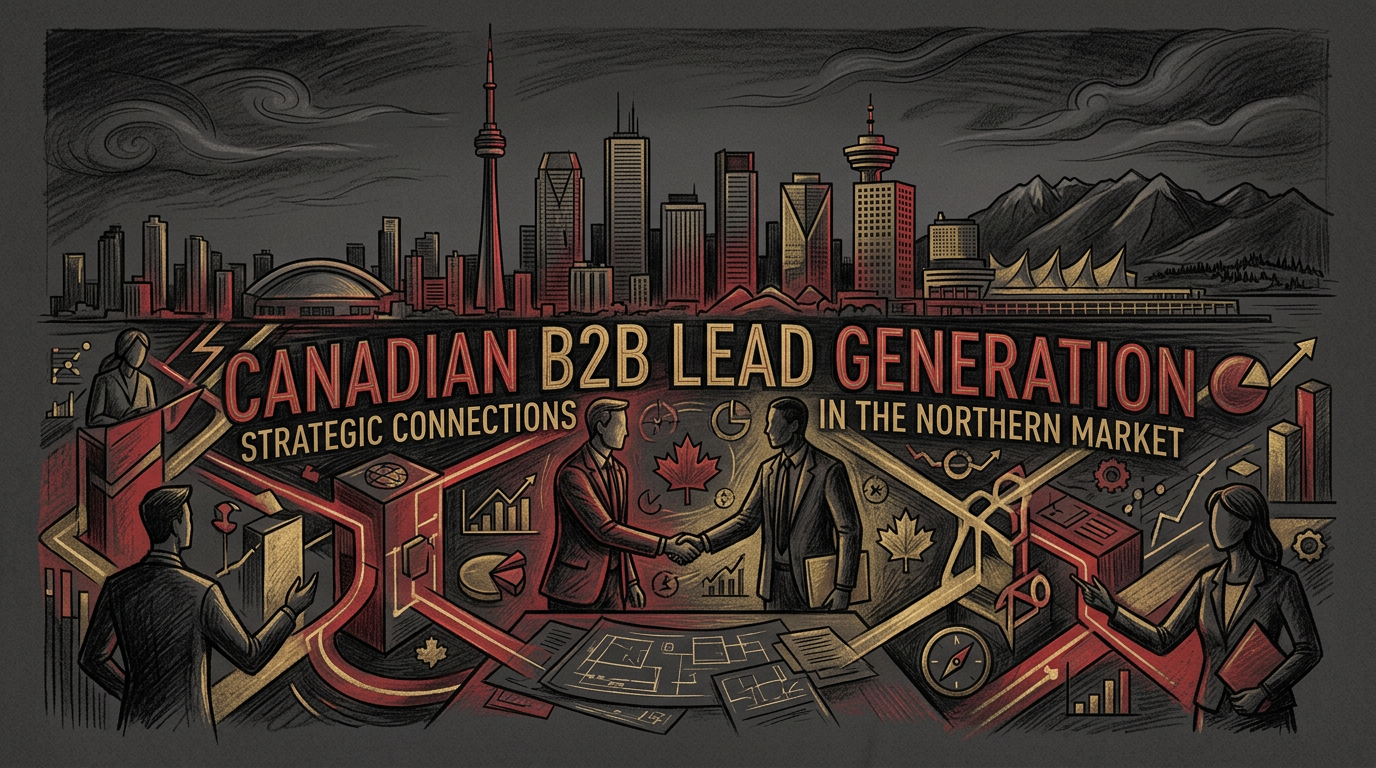
Generating good B2B leads Canada requires a detailed understanding of a market that spans six time zones, two official languages, and one of the most diverse business environments in the world. Canadian B2B buyers operate across distinct regional hubs, each with its own economic character, regulatory environment, and buyer culture. This guide will walk you through everything you need to know about sourcing, verifying, and converting B2B leads in Canada, from Toronto SaaS founders to Vancouver-based clean tech operators and Montreal manufacturing executives.
Canada’s business market is defined by its proximity to the United States, its resource-rich geography, and its reputation as a stable, innovation-friendly market. These factors create a B2B environment where international vendors compete alongside domestic players, where data sovereignty and privacy regulations shape purchasing decisions, and where relationship-based selling still holds significant sway.
Whether you are exploring buy-seo-leads as a rapid-entry strategy or building a bespoke b2b-leads engine for long-term growth, this guide will help you handle the Canadian market with confidence.

The Canadian B2B Market Overview
Canada’s economy is the tenth-largest in the world by nominal GDP, with a business market that spans traditional industries like natural resources and agriculture alongside fast-growing sectors in technology, clean energy, and financial technology.
Regional Economic Hubs
Canada’s B2B market is not monolithic. The country’s vast geography creates distinct regional business ecosystems:
Toronto and the Greater Toronto Area (GTA) – Toronto is Canada’s undisputed financial and technology capital. The GTA hosts the country’s largest concentration of enterprise headquarters, venture capital firms, and SaaS companies. Financial services, real estate technology, health tech, and enterprise software are the dominant B2B sectors here.
Vancouver and Western Canada – Vancouver is the gateway to Asia-Pacific trade and hosts a thriving clean technology, gaming, and natural resources software sector. The broader Western Canadian market, including Calgary and Edmonton, is heavily influenced by energy and agricultural industries that consistently invest in operational technology and supply chain solutions.
Montreal and Quebec – Montreal is a global leader in artificial intelligence research and life sciences. The Quebec market has a distinct French-language business culture, specific privacy regulations, and strong manufacturing and aerospace sectors.
Ottawa and the National Capital Region – Government contracting and telecommunications dominate this market. Ottawa’s concentration of federal agencies and Crown corporations creates unique B2B selling opportunities, particularly for cybersecurity, cloud infrastructure, and professional services vendors.
Atlantic Canada – Halifax, Moncton, and St. John’s are emerging as tech hubs with lower operating costs and growing startup ecosystems. Ocean technology, digital health, and cybersecurity are standout sectors in the region.
Understanding which regions align with your product and ICP is the foundation of any successful Canadian B2B lead generation strategy.
main Sectors and Spending Patterns
Canadian B2B technology spending is distributed across several main verticals:
- Financial services – Canada’s banking sector, dominated by the Big Five banks (RBC, TD, Scotiabank, BMO, CIBC), is among the most stable and profitable in the world. These institutions invest heavily in cybersecurity, regulatory technology, customer experience platforms, and data analytics.
- Natural resources and mining – Canada is a global leader in mining, forestry, and energy. The sector demands operational technology, geospatial software, environmental compliance tools, and supply chain management platforms.
- Agriculture and agri-tech – As one of the world’s largest agricultural exporters, Canada has a sophisticated agri-tech sector focused on precision farming, supply chain traceability, and farm management software.
- Clean technology and cleantech – Canada has focused on ambitious climate targets, creating sustained demand for clean energy management software, carbon accounting tools, and sustainability platforms.
- Healthcare and life sciences – Canada’s publicly funded healthcare system creates unique opportunities for digital health solutions, patient management platforms, and pharmaceutical technology vendors.
Buyer Intent Signals in the Canadian Market

Identifying prospects who are actively evaluating solutions requires reading the right signals. Canadian B2B buyers express intent through a combination of public actions, corporate announcements, and market dynamics.
Toronto and Vancouver Startup Hubs
Toronto’s startup ecosystem is one of the fastest-growing in North America. The city hosts thousands of tech companies, from early-stage ventures to scale-ups that have reached unicorn status. Vancouver complements this with its own lively tech scene, particularly strong in gaming, AI, and clean technology.
Startup buying signals in these hubs include:
- Funding rounds announced through press releases, Crunchbase, or local tech publications
- Rapid headcount growth reflected in job postings on LinkedIn, Indeed, and Wellfound
- Active participation in local startup events such as Collision (Toronto), Vancouver Startup Week, and local demo days
- Founder and executive activity on LinkedIn and X/Twitter discussing growth challenges and technology evaluations
These startup hubs are ideal for vendors selling tools that help early and growth-stage companies scale. Startup buyers in Toronto and Vancouver tend to evaluate solutions quickly, value transparency, and appreciate vendors who understand the unique challenges of building a company in Canada.
Trade Corridors and Cross-Border Commerce
Canada’s trade relationship with the United States, formalized through USMCA (the successor to NAFTA), creates a dynamic cross-border commerce environment. Canadian businesses that import, export, or operate on both sides of the border face specific compliance, logistics, and technology challenges.
Trade-related buyer intent signals include:
- Announcements of new cross-border expansion or US market entry
- Investment in customs compliance software and cross-border logistics platforms
- Participation in trade shows focused on North American commerce
- Hiring for roles related to international trade, customs, or cross-border operations
Vendors targeting cross-border commerce companies should emphasize their understanding of USMCA regulations, customs processes, and the technology infrastructure that supports smooth North American operations.
CRM Regulations and Data Sovereignty
Canada’s privacy market includes some of the most stringent data protection rules in the world. The Personal Information Protection and Electronic Documents Act (PIPEDA) governs how businesses collect, use, and protect personal information. Quebec’s Act Respecting the Protection of Personal Information in the Private Sector (Bill 64) adds additional requirements for companies operating in the province.
These regulations create specific buyer intent signals:
- Announcements of data residency requirements or sovereign cloud investments
- RFPs that specifically request Canadian data hosting or compliance certifications
- CIO and CISO hires with privacy or data governance backgrounds
- Investment in privacy-enhancing technologies and consent management platforms
For CRM vendors, data analytics platforms, and cloud service providers, positioning your solution around Canadian data sovereignty and compliance can be a significant differentiator in the market. Canadian B2B buyers are increasingly prioritizing vendors who can demonstrate alignment with PIPEDA and Bill 64 requirements.
Verification Methods for Canadian B2B Data
Data quality is the backbone of any successful B2B leads Canada campaign. Canadian business data has its own characteristics that require targeted verification approaches.
Email Verification
Canadian business email domains use.ca,.com, and increasingly,.io and.ai extensions for tech companies. Government and educational institutions use.gc.ca and.ca extensions respectively. Run every list through the standard verification sequence: syntax check, MX record validation, SMTP verification, and catch-all detection.
Canadian catch-all domains are common among smaller businesses and startups using shared email infrastructure. Flagging these domains prevents wasted outreach and protects sender reputation. Given Canada’s smaller population and tighter business community, maintaining a clean sender reputation is particularly important for long-term campaign success.
Phone Number Verification
Canadian phone numbers follow the North American Numbering Plan (NANP) format. Area codes are province and city-specific, which can help validate geographic data in your list. Verify phone numbers against current directory data and confirm that contacts still hold their listed titles.
Corporate Registry Verification
Every Canadian province maintains a corporate registry with publicly accessible information about registered businesses. These registries confirm active business registrations, director information, and corporate status. Cross-referencing your list against provincial corporate registries catches defunct or renamed companies before they waste outreach budget.
DIY vs DFY: Building Your Canadian Lead Generation
The choice between building lead generation capabilities in-house and outsourcing to a specialist agency is a strategic decision that affects cost, speed, and control.
DIY Lead Generation
Running lead generation internally gives you complete control over targeting, messaging, and data management. For Canadian B2B specifically, DIY is well-suited to teams with existing market knowledge and the capacity to invest in tools and processes.
When DIY makes sense:
- You have a dedicated marketer or SDR on the team
- Your ideal customer profile is well-defined and relatively stable
- You want full ownership of your data and processes
- You are building long-term market penetration in Canada
- Your sales cycle is long enough to justify the setup investment
The DIY toolkit for Canadian B2B:
- LinkedIn Sales Navigator for targeted prospecting
- Email verification tools for list hygiene
- CRM integration for pipeline management
- Outreach automation platforms for scaling campaigns
- Canadian corporate registry access for data validation
DFY Lead Generation
Outsourcing to a done-for-you agency accelerates time-to-lead and removes the operational burden of running campaigns. For teams entering the Canadian market for the first time or those without dedicated SDR resources, DFY can be the fastest path to results.
When DFY makes sense:
- You need leads quickly to hit revenue targets
- You lack the internal capacity or expertise to run outreach campaigns
- You are testing product-market fit in Canada before investing in infrastructure
- You want to validate messaging and ICP assumptions before scaling
- You prefer predictable costs over variable headcount investments
What to expect from a DFY provider:
- ICP consultation and targeting strategy development
- List building and verification using Canadian-specific data sources
- Multi-channel outreach execution across LinkedIn, email, and other channels
- Lead qualification and handoff with CRM-ready contact information
- Regular reporting on campaign performance and pipeline metrics
DIY vs DFY: Side-by-Side Comparison for Canadian B2B
| Factor | DIY Lead Generation | DFY Lead Generation |
|---|---|---|
| Time to first lead | 6-16 weeks | 2-4 weeks |
| Ongoing time requirement | 15-25 hours per week | 3-8 hours per week |
| Cost structure | Tool subscriptions + labor | Fixed campaign fee |
| Market expertise required | High – you build the knowledge | Moderate – agency brings expertise |
| Data ownership | Complete ownership | Varies by provider agreement |
| Flexibility to pivot | High – you control every lever | Moderate – depends on agency process |
| Best suited for | Established Canadian market presence | Market entry or rapid scaling |
Many successful Canadian B2B operators use a hybrid model: they start with DFY to validate their ICP and messaging, then transition to DIY for ongoing campaigns once they have proven what works. This approach minimizes risk while building internal capability over time. If you are exploring outsourced options, reviewing buy-seo-leads and exclusive-seo-leads models can help you understand what to expect from a quality provider.
Channels for Reaching Canadian B2B Leads
The Canadian B2B buyer is active across multiple digital channels. A multi-channel approach that respects regional and linguistic differences performs best.
LinkedIn for Canadian B2B Outreach
LinkedIn is the primary channel for Canadian B2B outreach, particularly in Toronto, Vancouver, and Montreal. Canadian professionals on LinkedIn tend to be well-connected, research-oriented, and receptive to professional value exchange.
Canadian-specific LinkedIn strategies:
- Reference Canadian market events, regulatory changes, or industry news in connection requests
- Respect bilingual considerations for Quebec-based prospects
- Use Sales Navigator filters to target by Canadian province, city, and industry
- Engage with Canadian tech publications and business influencers to build credibility
- Mention Canadian case studies or customer logos when relevant
Canadian B2B buyers appreciate vendors who demonstrate understanding of the local market context. A pitch that references Toronto’s tech ecosystem or Vancouver’s clean tech cluster will always outperform a generic global message.
Email Outreach with Canadian Context
Cold email is a high-performing channel for Canadian B2B leads when executed with local relevance. Canadian professionals value concise, respectful communication that acknowledges their specific context.
Canadian cold email best practices:
- Acknowledge the prospect’s Canadian company and location specifically
- Reference Canadian industry trends, regulatory changes, or market events
- Keep subject lines direct and free of hype
- Respect time zones across Canada’s six time zones
- Offer meeting times that accommodate Eastern, Central, or Pacific time zones
Canadian business culture tends toward formality compared to US counterparts. Politeness, professionalism, and genuine interest in the prospect’s challenges go a long way.
X / Twitter for Canadian Tech Engagement
X has a strong Canadian B2B community, particularly in Toronto’s tech ecosystem and Vancouver’s startup scene. Canadian tech founders, investors, and operators are active on the platform, and it is a valuable channel for building relationships and monitoring buyer signals.
Use X to:
- Track conversations around Canadian tech events like Collision, Elevate, and local startup weeks
- Identify prospects discussing relevant challenges in your solution category
- Share Canadian market insights to build authority
- Engage with Canadian tech media and influencers
Qualifying Canadian B2B Leads
Qualification ensures your sales team focuses on contacts with both the authority and intent to buy. Canadian B2B leads should be evaluated through a framework that accounts for the market’s specific characteristics.
BANT for Canadian Prospects
Budget – Canadian enterprise budgets often align with fiscal year cycles. Federally regulated industries and Crown corporations follow government fiscal timelines. Private sector budgets may follow calendar or fiscal year patterns depending on the company.
Authority – Canadian enterprises, particularly in regulated sectors like financial services and telecommunications, have formal procurement processes with multiple approvers. Identify all stakeholders in the buying committee, including legal, compliance, and procurement teams.
Need – Canadian businesses face unique challenges related to climate, geography, bilingual requirements, and cross-border commerce. Qualify leads against needs that reflect these realities rather than generic problem statements.
Timeline – Canadian procurement timelines vary by sector and company size. Government contracts can take 6-18 months from RFP to award. Private sector SaaS purchases may close in weeks. Understanding the likely timeline for your prospect type helps manage expectations and plan outreach accordingly.
Firmographic Filtering for Canada
- Company size – Canadian businesses range from micro-enterprises to multinational corporations. Size significantly impacts sales cycle length and deal complexity.
- Industry – Use NAICS or NOC codes for precise industry targeting. The Canadian market has sector-specific nuances that generic industry labels miss.
- Geography – Province-level targeting matters for compliance, logistics, and cultural alignment.
- Public vs private – Publicly traded Canadian companies on the TSX have formal procurement requirements. Private companies and subsidiaries of US multinationals have different buying patterns.
- Bilingual requirements – For Quebec-based prospects, assess whether your solution and outreach need to accommodate French-language requirements.
Common Mistakes When Buying B2B Leads Canada
Avoid these common pitfalls when sourcing and using Canadian B2B leads.
Mistake 1: Ignoring Quebec and French-Language Requirements
Quebec represents one of Canada’s largest provincial economies, with distinct regulatory requirements and a French-language business culture. Excluding Quebec from your targeting or failing to accommodate French-language needs in your outreach dramatically reduces your addressable market.
Mistake 2: Using US-Focused Lists and Messaging
Canada is not the United States. Business structures, regulations, market dynamics, and buyer culture all differ. Lists built for US markets will contain irrelevant companies, wrong regulatory assumptions, and messaging that does not resonate with Canadian prospects.
Mistake 3: Neglecting Data Sovereignty Concerns
Canadian businesses, particularly in financial services, healthcare, and government, are increasingly concerned about data residency and sovereignty. Vendors who cannot address where data is stored and processed will face additional scrutiny in the Canadian market.
Mistake 4: Overlooking Regional Differences
Canada’s regional economies are more distinct than many international vendors realize. A pitch that works in Toronto’s financial district may not resonate in Calgary’s energy sector or Halifax’s ocean technology cluster. Segment your outreach by region and tailor messaging accordingly.
Mistake 5: Underinvesting in Verification
Canadian business data, like all B2B data, degrades over time. Companies merge, rebrand, and restructure. Skipping verification wastes budget and damages deliverability. Invest in multi-step verification as a non-negotiable part of your Canadian lead generation process.
Checklist: What to Verify Before Buying B2B Leads Canada
Use this checklist to evaluate any B2B leads Canada provider before focused on a purchase.
- Data sourced specifically for the Canadian market with provincial business registry validation
- Multi-step email verification including catch-all detection for Canadian domains
- Phone numbers validated against Canadian NANP formatting
- Decision-maker titles verified against LinkedIn and corporate data
- Company status confirmed through provincial corporate registries
- TSX-listing status available for enterprise targeting
- Geographic segmentation by province, city, and time zone
- Data refreshed within the last 30 days
- Provider compliant with PIPEDA and applicable provincial privacy laws
- Bilingual option available for Quebec market targeting
- Sample records available for quality review
- Replacement policy for invalid or outdated contacts
Building a Canadian Lead Generation Strategy
A successful Canadian B2B lead generation strategy combines market understanding, data quality, and channel execution that respects the nuances of the Canadian business environment.
Define Your Canadian ICP
Start by defining your ideal Canadian customer profile with specific attention to:
- Which provinces and cities align with your solution
- Industry verticals where Canadian demand is strongest
- Company size ranges where your product-market fit is proven
- Bilingual requirements for Quebec prospects
- Public vs private company preferences
A well-defined ICP eliminates wasted outreach and focuses your team on prospects most likely to convert.
Select Your Channel Mix
Choose channels based on where your Canadian ICP is most active:
- LinkedIn – important for enterprise and mid-market segments across all provinces
- Email – affordable for broad outreach to Canadian SMEs and scale-ups
- X/Twitter – Effective for Toronto and Vancouver tech communities
- Industry events – Canadian trade shows and conferences generate good warm leads
- Referrals and partnerships – Canadian business culture values introductions from trusted contacts
Build Verification Into Your Process
Every Canadian B2B leads Canada campaign should include verification as a standard step. Verify email addresses, phone numbers, company status, and decision-maker titles before outreach begins. This investment protects your sender reputation and ensures your sales team spends time on qualified contacts.
Personalize for Canadian Context
Canadian B2B buyers respond to outreach that acknowledges their specific context. Reference Canadian market trends, provincial industry dynamics, and local regulatory requirements. A message that demonstrates understanding of the Canadian market will consistently outperform a generic global pitch.
Optimize Continuously
Track performance metrics by province, industry segment, and channel. Canadian B2B buyers in different regions and sectors respond to different messaging approaches. Use data to refine your targeting, improve personalization, and increase conversion rates over time.
If you need a shortcut to qualified Canadian contacts, exploring buy-seo-leads options can give you a head start while you build your own systems and processes.
Working with Canadian CRM and Data Regulations
Canada’s regulatory environment creates both constraints and opportunities for B2B vendors. Understanding and embracing these regulations can become a competitive advantage.
PIPEDA Compliance
The Personal Information Protection and Electronic Documents Act governs how businesses handle personal information in commercial activities. When buying B2B leads Canada data, ensure your provider collects and processes data in compliance with PIPEDA requirements.
main PIPEDA considerations for lead generation:
- Consent: Ensure you have appropriate consent for outreach activities
- Accuracy: Maintain accurate contact data and update records promptly
- Accountability: Be able to demonstrate compliance if questioned
- Transparency: Disclose how you collect, use, and protect contact data
Bill 64 (Quebec)
Quebec’s Act Respecting the Protection of Personal Information in the Private Sector introduces additional requirements beyond PIPEDA. If you are targeting Quebec-based B2B leads, ensure your data handling practices comply with Bill 64 requirements, including consent thresholds and data breach notification obligations.
Data Residency Considerations
Some Canadian enterprises, particularly in financial services, healthcare, and government, have data residency requirements that mandate Canadian data hosting. When selling solutions to these organisations, be prepared to address where data is stored and processed.
The Exclusive Leads Advantage in Canada
Lead exclusivity is a significant differentiator in the Canadian B2B market. Given Canada’s relatively compact business community, overselling leads to multiple vendors can damage relationships and reduce response rates.
Exclusive leads are sold to only one buyer, making sure that your prospects encounter your brand without competing outreach from similar vendors. This exclusivity delivers several advantages:
- Higher response and conversion rates due to reduced noise
- Better brand perception among Canadian prospects
- Stronger relationship-building opportunities for sales teams
- Improved ROI on lead generation spend
When evaluating lead providers for the Canadian market, ask about exclusivity models. Providers offering exclusive-seo-leads reserved for single buyers typically deliver stronger campaign performance than providers selling non-exclusive lists.
Conclusion: Your Canadian B2B Lead Generation Roadmap
Building a successful B2B leads Canada strategy is a marathon, not a sprint. It requires understanding the regional nuances of a diverse market, investing in data quality, and executing outreach that respects Canadian business culture.
The Canadian market offers compelling opportunities for B2B vendors who take the time to do it right. Strong economic fundamentals, a business environment that values trust and reliability, and growing technology adoption across industries create a fertile
market for lead generation.
Focus on the fundamentals: define your ICP clearly, verify your data rigorously, personalize your outreach for Canadian context, and measure what matters. Whether you build in-house or partner with an agency, these principles will guide you toward consistent, scalable results in the Canadian B2B market.

Ready to Generate Qualified B2B Leads Canada-Wide?
Leadpot delivers verified B2B leads Canada businesses trust. From startup hubs in Toronto and Vancouver to enterprise accounts across every province, we provide the data, outreach, and context your sales team needs to succeed in the Canadian market.
Explore our services: Buy SEO Leads | Exclusive SEO Leads | B2B Leads
Keywords: B2B Leads Canada, Canadian B2B leads, Toronto B2B leads, Vancouver B2B leads, PIPEDA lead generation, Canadian startup leads, B2B lead verification Canada, DIY vs DFY lead generation, Canadian B2B market, buy B2B leads Canada
“””
result = write_file(“/opt/data/workspace/leadpot/drafts/optimization/post-60-b2b-leads-canada.md”, content)
print(“Canada result:”, result)
Frequently Asked Questions
What is B2B lead generation?
B2B lead generation is the process of identifying and attracting potential business clients who need your agency’s services. It involves prospecting, qualifying, and nurturing decision-makers at target companies.
How do you find B2B leads for agencies?
Effective B2B lead sourcing includes LinkedIn prospecting, industry databases, cold outreach, referral programs, and content marketing. Focus on decision-makers like marketing directors and CEOs.
What makes a qualified B2B lead?
A qualified B2B lead has decision-making authority, budget availability, a genuine need for your services, and a realistic timeline. Qualification frameworks like BANT help prioritize prospects.