
# IT Services Leads: The Practical guide to Finding Qualified IT Decision-Makers
Your outreach team has been burning through contact lists for weeks. The emails go out. The LinkedIn messages get sent. The calls get dialled. And the response rate hovers around 0.8 percent. Most of those contacts are not decision-makers. Many are not even at companies that buy IT services right now. You are spending real money and real hours chasing leads that were never qualified in the first place.
That is the daily reality for agencies targeting the IT services market. The IT buying market is unlike any other vertical. Decision-makers are bombarded with vendor outreach. They have learned to filter aggressively. They rarely respond to generic cold messages. If your lead source is not built for this vertical, your pipeline will stall no matter how skilled your outreach team is.
The difference between agencies that fill their IT services pipeline consistently and agencies that burn through list after list comes down to one thing: lead quality. Not volume. Not price per contact. Quality. The right IT services leads are decision-makers at companies actively evaluating managed IT, cybersecurity, cloud migration, or IT staffing solutions. They are internet-verified, exclusive, and matched to your offer.
In this guide, you will learn what IT services leads really are, how to spot buyer intent before your competitors do, which verification methods matter most, how to decide between the DIY and DFY models, which channels produce the best results, how to avoid the mistakes that kill most IT outreach campaigns, and how to qualify leads that actually convert.

What Are IT Services Leads
IT services leads are contacts at businesses that have demonstrated active or near-term interest in purchasing IT services. That definition sounds simple, but the market is full of lists that do not meet it. A phone number from a random IT manager at a company with no budget and no pressing IT projects is not an IT services lead. It is a contact. There is a meaningful difference.
A real IT services lead has three components. First, the contact holds decisions authority or influence over IT purchasing decisions. Second, the company they work for has a documented need or project that aligns with what you sell. Third, the contact information is verified and current. When all three conditions are met, you have something worth outreach.
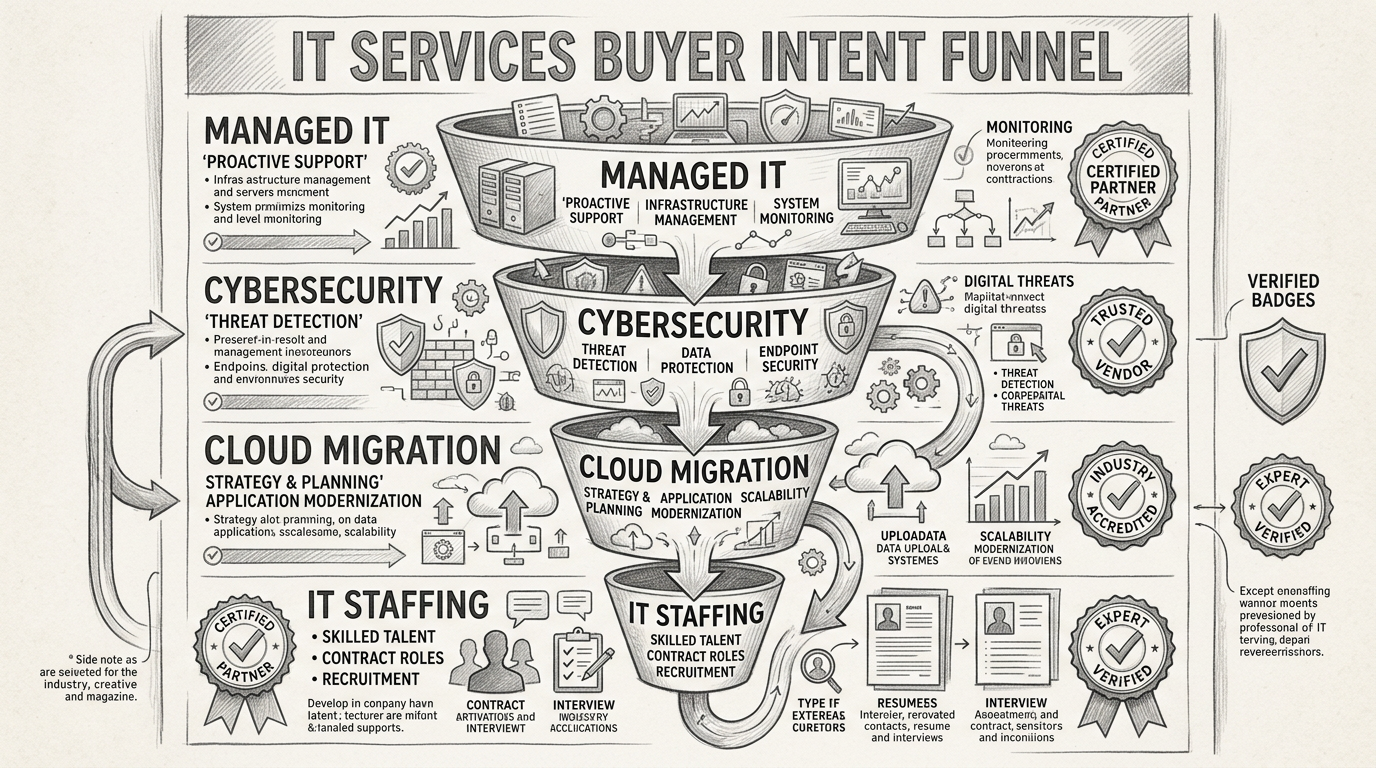
The IT services vertical covers several distinct sub-markets, each with its own buyer profiles and decision timelines. Managed IT services buyers tend to be small and medium business owners or COOs evaluating ongoing support contracts. Cybersecurity leads are often CISOs, IT directors, or compliance officers at regulated industries. Cloud migration leads sit with CTOs, infrastructure leads, and VPs of technology. IT staffing leads are typically heads of engineering, hiring managers, or CHROs at scaling companies. Each sub-market requires a different outreach approach and a different lead profile.
Understanding this distinction matters because most lead lists treat the entire IT sector as one homogenous audience. They are not. An IT services lead for a managed services provider looks very different from an IT services lead for a cybersecurity consultancy. The pain points, budgets, decision cycles, and messaging that resonates are all different. Qualified IT services leads respect those differences.
At LeadPot, we build lead lists that reflect these sub-market distinctions. Every account we deliver is internet-verified for current role, company context, and active buying signals. That verification step is what separates a list you can actually convert from a list that wastes your outreach budget.
Buyer Intent Signals That Separate Hot IT Leads From Cold Contacts
Not every IT contact is ready to buy. The main efficient outreach is identifying which contacts are showing active buyer intent and which are just names on a list. Here are the intent signals that matter most in the IT services market.
Managed IT Services Buying Signals
Companies evaluating managed IT services usually show one or more of these signals. They have recently posted IT job openings that suggest they are building an internal team rather than outsourcing. They have increased their technology budget in recent quarterly filings. They operate in a sector with complex IT requirements – healthcare, finance, legal, manufacturing – where the cost of downtime justifies managed support contracts. Their current IT setup is aging, evidenced by outdated tooling mentioned in job descriptions or public technical posts. Companies with 20 to 200 employees are the sweet spot for managed IT. They have outgrown break/fix support but do not yet have the scale for a full internal IT department.
Cybersecurity Buying Signals
Cybersecurity buyers are driven by urgency. Regulatory deadlines create hard buying windows. Companies preparing for SOC 2 certification, HIPAA compliance audits, or GDPR alignment need security solutions on a fixed timeline. Recent data breach headlines in their industry create reactive demand. Leadership changes – a new CISO or CTO – often trigger security reviews and vendor assessments. Companies expanding into new geographies face new compliance requirements that open security conversations. If you can identify these signals, you are reaching contacts at exactly the right moment.
Cloud Migration Buying Signals
Cloud migration leads are often visible through public infrastructure signals. Companies hiring cloud engineers, DevOps specialists, or AWS/Azure-certified staff are usually mid-migration or planning one. Job postings mentioning Kubernetes, Terraform, serverless architecture, or cloud-native platforms are strong indicators. Press releases about digital transformation initiatives, legacy system overhauls, or data center consolidation all point to cloud buying intent. Companies with large on-premise server estates and recent executive statements about cloud-first strategies are prime targets.
IT Staffing Buying Signals
IT staffing leads appear when companies are scaling their engineering teams aggressively. Consistent posting of multiple technical roles over 30 days or more signals hiring momentum. Companies that have recently raised funding – Series A or later – almost always expand their engineering headcount within six months. Startups that have crossed meaningful employee thresholds – 50, 100, 200 – typically formalize their hiring processes and engage external staffing partners. References to contractor-to-hire programs or temp-to-perm arrangements in job descriptions indicate openness to external staffing support.
How to Verify IT Services Leads Are Real and Reachable
Verification is the step most agencies skip and the step that most determines whether your outreach converts. An unverified list looks cheaper upfront. It costs far more in wasted outreach hours, damaged sender reputation, and missed opportunities.
The verification process for IT services leads should cover three layers. The first layer is contact verification. Decision-maker names, job titles, and email addresses must match current company records. People change roles. Companies restructure. A list from three months ago may already be partially stale. The best lead providers re-verify before delivery, not after.
The second layer is company verification. You need to confirm the company exists, operates in the vertical you target, and has the characteristics that make them a fit. A company that went out of business, merged, or pivoted to a completely different market is not a viable lead even if the contact details are accurate.
The third layer is intent verification. Has the company shown any recent signal that they are evaluating IT services? Job postings, press releases, technology blog posts, conference attendance, social media activity, and hiring patterns all provide intent signals. A contact at a company with no visible IT needs is harder to convert than a contact at a company that has demonstrated active interest in your type of service.
At LeadPot, our internet-verification process checks all three layers before a lead account is delivered. We do not recycle lists between clients. Every account in your list is exclusive to your campaign. That exclusivity is non-negotiable for agencies that want consistent close rates.
If you want to understand how verification works across the broader lead generation process, our guide on how to get SEO clients covers the full client acquisition journey from lead to signed contract.
DIY vs DFY: Which Model Works Best for IT Services Lead Generation
This is the fork in the road that every agency faces. You can buy verified IT services leads and run all outreach yourself. Or you can hand the entire campaign to a provider who runs it on your behalf. Both models work. The right choice depends on your team, your timeline, and your goals.
The DIY Model
With the DIY model, you receive a list of internet-verified, exclusive IT services leads with complete contact information and context. Your team handles everything from there. You write the emails. You manage the LinkedIn sequences. You make the calls. You run the follow-ups. You close the deals.
The DIY model works best if your agency already has an established outbound process and a team that can execute it consistently. It works if you want full control over messaging, timing, and cadence. It works if you are testing a new IT sub-niche and want to learn what resonates before focused on a full campaign. The cost per lead is lower than DFY, but your team’s time is the real investment. At five to ten leads per month, DIY is efficient. Beyond that, the time cost grows quickly.
The DFY Model
The DFY model is different. We run the entire campaign on your behalf for a minimum of three months. We handle the outreach across LinkedIn, X, Instagram, Reddit, email, and educational content lead magnets. We book conversations directly to your calendar. You attend the calls. You close the deals.
The DFY model works if you want to focus your team on client delivery rather than prospecting. It works if you are entering the IT services market without existing brand presence or relationships. It works if you tried DIY but could not maintain consistent execution. It works if you want predictable pipeline volume month after month without managing outreach campaigns internally.
If you are weighing whether to buy leads outright or invest in a full campaign, our guide on buying SEO leads breaks down the ROI math for both approaches in detail.
DIY vs DFY: Side-by-Side Comparison
| Factor | DIY Model | DFY Model |
|---|---|---|
| What you receive | Verified lead list with full contact info and business context | Booked conversations delivered directly to your calendar |
| What you do | All outreach: emails, LinkedIn touches, calls, follow-ups, proposals, closing | Attend calls and close deals; provider handles all outreach and follow-up |
| Best for | Agencies with established outbound teams, testing new niches, want full control | Agencies without time for prospecting, entering new markets, want predictable pipeline |
| Minimum commitment | Per-list or per-lead purchase | 3-month campaign minimum |
| Cost structure | Lower direct spend; team time is the real cost | Higher direct spend; saves significant team hours on campaign management |
| Channels used | Your team chooses and manages all channels | LinkedIn, X, Instagram, Reddit social selling plus email and educational content lead magnets |
| Time to first conversation | Depends on your team’s execution speed | Typically 2-3 weeks from campaign launch |
| Scalability | Limited by your team’s outreach capacity | Scalable without adding headcount |
For agencies that want the highest quality IT services leads with exclusivity guaranteed, exclusive SEO leads from LeadPot are built on the same verification principles that make our IT lead lists reliable.
The Best Channels for IT Services Lead Generation
IT decision-makers are not all on the same platform. A CISO at a healthcare company behaves differently from a startup CTO looking to hire cloud engineers. A multi-channel approach reaches more of them. Here are the channels that produce results for IT services lead generation.
LinkedIn Outreach
LinkedIn remains the most productive channel for reaching IT decision-makers. Engineers, CISOs, CTOs, and IT directors are active on the platform. They share technical content. They participate in industry discussions. They post about technology challenges and vendor evaluations. LinkedIn lets you engage with that activity rather than interrupt it with cold messages.
The main on LinkedIn is relevance. Generic connection requests get ignored. Comments on a prospect’s post about cloud security or infrastructure challenges get noticed. Building visibility before sending an outreach message dramatically improves response rates. Our social selling process on LinkedIn is built around this principle: earn attention before asking for time.
X (Twitter) Social Selling
X has a disproportionately active IT and technology community. CTOs, security researchers, DevOps engineers, and startup founders use X to discuss technical challenges, share insights, and evaluate tools. The format is faster and more conversational than LinkedIn, which makes it well-suited for building relationships with technical buyers.
The approach on X is similar: engage with content, provide value, build recognition. A thoughtful reply to a prospect’s post about a cloud migration challenge can open a conversation that a cold email never would.
Reddit Communities
Reddit hosts some of the most technically knowledgeable audiences online. Subreddits like r/sysadmin, r/cybersecurity, r/aws, and r/devops are full of IT professionals discussing real problems. Participating genuinely in these communities – answering questions, sharing knowledge, building credibility – creates inbound interest that converts far better than cold outreach.
Email Campaigns
Cold email still works for IT services, but it works differently than it did five years ago. IT buyers receive more vendor emails than any other professional group. Emails that lead with value – a relevant insight, a useful resource, a genuine observation about their technology stack – get opened. Emails that lead with a pitch get deleted.
Our email campaigns for IT services leads are built around educational content. We send useful information first. The pitch comes later, after the prospect has engaged with something valuable.
Instagram and Educational Content
Instagram is an underrated channel for IT services, particularly for reaching founders, operators, and small business owners who make IT purchasing decisions for their companies. Educational content – short-form videos explaining IT concepts, case study snippets, infographics about cybersecurity trends – builds authority and attracts inbound interest.
The common thread across all these channels is that they reward consistency and relevance over volume and frequency. Sending 500 generic messages a day produces fewer results than sending 50 thoughtful, well-researched outreach messages to genuinely qualified IT contacts.
For a deeper look at the outreach frameworks that work across all these channels, check out our guide on outbound sales strategies.
How to Qualify IT Services Leads: The Step-by-Step Checklist
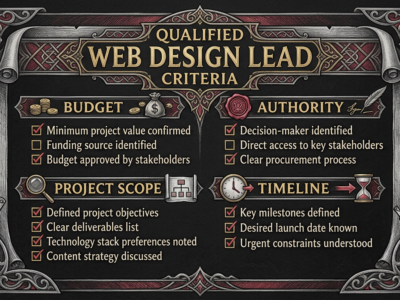
Not every verified IT contact is worth pursuing. Your outreach time is finite. The leads that deserve your attention are the ones that meet specific criteria. Here is the checklist we use to qualify IT services leads before anyone touches them.
IT Lead Qualification Checklist
- Contact holds decisions authority or influence over IT purchasing at their company
- Company operates in a target vertical with documented IT service needs
- Company size falls within your ideal customer profile (typically 20-500 employees for managed IT)
- Contact information verified within the last 30 days (email deliverable, phone current)
- Company shows at least one active buyer intent signal in the last 60 days
- Company geographic location matches your service coverage area
- No conflicting engagement flags (recently onboarded with a competitor)
- Contact role aligns with your service type (CISO for security, CTO for cloud, COO for managed IT)
- Company has budget indicators consistent with your pricing model
- Contact has professional social presence (LinkedIn profile active, relevant technical engagement)
A lead that passes all ten criteria is worth immediate outreach. A lead that fails three or more should be deprioritized. Your outreach budget is too valuable to spend on contacts that were never going to convert.
Common Mistakes That Kill IT Services Outreach Campaigns
Most IT services outreach campaigns fail for the same reasons. Here are the mistakes we see agencies make over and over, and how to avoid them.
Mistake 1: Targeting Job Titles Without Verifying Buying Context
A contact with the title “IT Manager” at a company with no IT projects and no budget is not a lead. It is a name. Yet most lists sold as IT services leads are built entirely around job titles. Title-based filtering is lazy. Intent-based filtering is what produces results. Always verify that the company has a documented reason to buy IT services before adding someone to your outreach list.
Mistake 2: Using the Same Message for Every IT Sub-Market
Managed IT outreach to a small business COO looks nothing like cybersecurity outreach to a healthcare CISO. Cloud migration outreach to a startup CTO is different again. Using one generic message across all IT segments guarantees low response rates. Segment your list. Write messaging that speaks directly to the specific pain points of each sub-market. The extra effort produces dramatically better results.
Mistake 3: Skipping Verification and Paying for It Later
Unverified leads look like a bargain. They are not. Every bounced email damages your sender reputation. Every call to a disconnected number wastes your team’s time. Every outreach to a contact who left the company three months ago is a wasted touch. Verification is not overhead. It is the foundation of campaign performance.
Mistake 4: Giving Up Too Soon on Multi-Touch Sequences
IT buyers are busy. They do not respond to the first outreach message. Most require five to twelve touches before they engage. Campaigns that stop after two or three touches miss the majority of conversions. Build sequences that span multiple channels and multiple weeks. Persistence pays off in the IT services market.
Mistake 5: Confusing Shared Leads With Exclusive Leads
Shared leads are sold to multiple agencies. When you call a shared lead, they have already heard from other agencies selling the same service. The response rate on shared leads is roughly one-third of exclusive leads. If you are serious about building a pipeline, shared leads are a false economy.
If you are exploring different lead generation approaches for IT services, our lead generation guide covers the full methodology for building qualified pipelines across verticals.
Frequently Asked Questions
What makes IT services leads different from regular business leads?
IT services leads are decision-makers at companies with active or near-term IT purchasing needs. Regular business leads may be any contact at any company. IT services leads require verification of role, company context, and buyer intent. The IT vertical also has distinct sub-markets – managed IT, cybersecurity, cloud migration, IT staffing – each requiring different lead profiles and outreach approaches. A qualified IT services lead reflects those distinctions.
How do I know if an IT services lead is internet-verified?
An internet-verified lead has been cross-checked against current public records, company websites, professional profiles, and recent online activity. The contact’s name, job title, company, and contact details all match current information. Internet verification also checks for buyer intent signals – recent job postings, technology investments, compliance requirements, or hiring patterns. Ask any lead provider for their verification process before purchasing.
What is the difference between DIY and DFY for IT services leads?
DIY means you receive verified lead lists and run all outreach yourself – emails, LinkedIn, calls, follow-ups, and closing. DFY means a provider runs the entire campaign on your behalf and books conversations directly to your calendar. DIY costs less per lead but requires your team’s time. DFY costs more but delivers qualified conversations without managing the campaign. Most agencies start with DIY and transition to DFY as volume grows beyond five to ten leads per month.
How many IT services leads do I need per month to fill my pipeline?
It depends on your close rate and average deal value. If your agency closes 10 percent of qualified IT leads and needs two new clients per month, you need roughly 20 qualified leads per month. Account for the fact that not every lead responds to outreach. A realistic outreach sequence to 50 verified leads might produce 10 to 15 conversations and two to four closed deals. Build your lead volume around those conversion benchmarks.
What channels work best for reaching IT decision-makers?
LinkedIn is the most productive single channel for reaching IT decision-makers, followed by targeted email and X (Twitter). Reddit communities like r/sysadmin and r/cybersecurity are effective for building credibility with technical buyers. Instagram works well for reaching small business owners who make IT purchasing decisions. The most effective approach combines multiple channels in a coordinated sequence rather than relying on any single channel.
Are exclusive IT services leads worth the higher cost?
Exclusive IT services leads are sold only to your agency. No other agency is calling the same contact with the same pitch. Response rates on exclusive leads are three to five times higher than shared leads. Close rates follow the same ratio. The cost per close on exclusive leads is lower from month one, even though the upfront price is higher. For agencies building a sustainable pipeline, exclusive leads are the right investment.
How long does it take to see results from IT services lead outreach?
Most agencies see their first qualified conversations within two to four weeks of launching outreach to a verified list. The timeline depends on your messaging quality, sequence design, and response management. DFY campaigns typically produce booked conversations within two to three weeks because the provider handles all execution. DIY campaigns depend on your team’s capacity and process. Consistent outreach across multiple touches over four to six weeks produces the strongest results.
Ready to Fill Your IT Services Pipeline
IT services leads are only valuable if they are real, verified, and exclusive. Lists built from job titles alone will waste your team’s time and damage your pipeline momentum. Internet-verified leads with documented buyer intent signals – managed IT evaluations, cybersecurity assessments, cloud migration planning, IT staffing expansion – are what convert.
Whether you choose the DIY model and run outreach yourself, or the DFY model and let us book conversations to your calendar, the quality of your leads determines everything that follows. Every email sent, every LinkedIn message delivered, every call made is only as good as the account behind it.
If you want to see what verified IT services leads look like for your agency, we can show you. No pressure. Just a look at what a qualified, exclusive lead list built for your specific IT sub-market looks like in practice.
Frequently Asked Questions
What is B2B lead generation?
B2B lead generation is the process of identifying and attracting potential business clients who need your agency’s services. It involves prospecting, qualifying, and nurturing decision-makers at target companies.
How do you find B2B leads for agencies?
Effective B2B lead sourcing includes LinkedIn prospecting, industry databases, cold outreach, referral programs, and content marketing. Focus on decision-makers like marketing directors and CEOs.
What makes a qualified B2B lead?
A qualified B2B lead has decision-making authority, budget availability, a genuine need for your services, and a realistic timeline. Qualification frameworks like BANT help prioritize prospects.