
# Marketing Automation Leads: How to Find and Nurture High-Intent Buyers
Marketing automation is no longer a luxury. It is the backbone of scalable demand generation for any business that wants to grow predictably. But there is one problem that keeps marketing leaders awake at night. They invest thousands of dollars in HubSpot, Marketo, or Pardot. They build elaborate workflows. They write thoughtful email sequences. And still, the leads never convert at the rate their team needs them to. The funnel fills with names, but revenue stays flat.
The missing piece is rarely the platform itself. It is the quality of the leads entering the top of the funnel. Poor quality marketing automation leads drain budget, waste sales hours, and erode confidence in automation as a growth lever. High quality marketing automation leads, on the other hand, compress sales cycles, improve conversion rates, and create a compounding return on automation investment.
This guide covers everything you need to know about identifying, qualifying, and closing marketing automation leads. We will cover what marketing automation leads are, the buyer intent signals that separate real buyers from tire-kickers, verification methods that protect your team from bad data, how to decide between a do-it-yourself model and a done-for-you approach, which channels drive the best results, how to qualify leads before they reach your sales team, the most common mistakes agencies and businesses make, and a clear action plan you can implement this quarter.
–

What Are Marketing Automation Leads?
Marketing automation leads are prospects who have demonstrated active interest in tools, platforms, or services related to automated marketing workflows, lead nurturing, email automation, and customer relationship management. These leads come from a specific buyer profile. They are not casual researchers. They are decision makers or influencers who are actively evaluating solutions that can automate and scale their marketing operations.
There are two broad categories of marketing automation leads. The first is platform leads. These are prospects who are evaluating or using marketing automation platforms such as HubSpot, Marketo, Pardot by Salesforce, ActiveCampaign, or Mailchimp. They may be looking for implementation support, integrations, or training. The second is agency leads. These are businesses that need a partner to set up, manage, or optimize their marketing automation infrastructure. They want someone to handle workflow design, email sequence creation, lead scoring models, and campaign analytics on their behalf.
Understanding the difference matters. Platform leads need technical expertise and platform certifications. Agency leads need process expertise and a track record of results. Both fall under the umbrella of marketing automation leads, but the sales approach, messaging, and qualification criteria for each are distinct.
Marketing automation leads also differ from general leads in their purchase intent. A general lead might have downloaded a whitepaper or signed up for a newsletter. A marketing automation lead has taken actions that signal active evaluation. They have requested a demo. They have searched for integration partners. They have compared pricing tiers. They have asked about implementation timelines. These are the signals that define a good marketing automation lead.
–
Buyer Intent Signals That Separate Real Leads From Noise
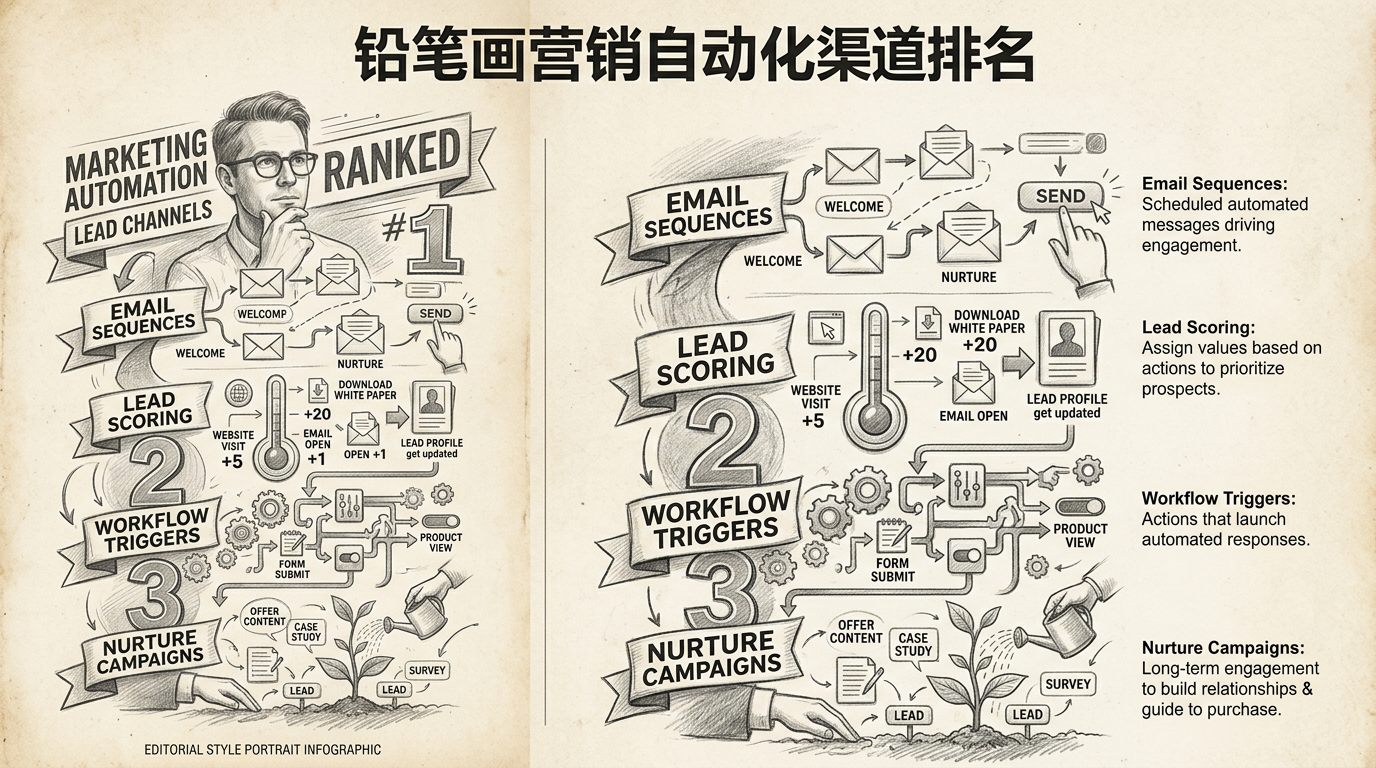
Not every person who visits a HubSpot landing page is a buyer. The main sourcing great marketing automation leads is understanding buyer intent signals. These are the digital behaviors and data points that reveal a prospect is actively in the market for a solution. Here are the most reliable buyer intent signals for marketing automation leads.
Platform Affiliation and Tool Usage
Prospects who already use HubSpot, Marketo, Pardot, or ActiveCampaign are warm marketing automation leads. Their tool usage data tells you they have already focused on marketing automation. They have budget allocated. They have a team assigned. What they need is support, optimization, or expansion services. Look for signals such as integration requests, add-on searches, and user count increases within their platform. These are reliable indicators that a prospect is actively investing in their automation stack.
Workflow Automation Interest
When a prospect searches for workflow automation solutions, reads blog posts about automation workflows, or asks about no-code automation builders, they are signaling a specific need. Workflow automation is a subset of marketing automation that focuses on connecting tools and triggering actions based on conditions. A prospect who is asking about workflow automation is typically evaluating how to streamline their existing processes. They are not just curious. They are actively planning an implementation. This makes them a high-value marketing automation lead.
Email Sequence Engagement
Prospects who engage deeply with email sequence content are signaling that they understand the power of automated nurturing. Look for behavior patterns such as repeated visits to email sequence template pages, downloads of email sequence guides, and attendance at webinars about drip campaigns. These signals indicate the prospect has moved past awareness and into evaluation. They know what email sequences are. They are now deciding how to implement them. This is the sweet spot for marketing automation leads.
Lead Scoring Interest
Lead scoring is one of the more advanced topics in marketing automation. Prospects who are researching lead scoring models, lead scoring tools, or lead scoring best practices have reached a level of sophistication that signals serious investment. They are no longer looking for basic automation. They are looking for optimization. A prospect who asks about predictive lead scoring, behavior-based scoring, or account-based scoring is a mature buyer. They understand the concept. They are evaluating solutions. These are among the highest quality marketing automation leads you can source.
Company Growth Signals
Buyer intent is not just about what a prospect does on your website. It is also about what is happening in their business. Company growth signals such as recent funding rounds, expansion into new markets, new CMO or VP of Marketing hires, and product launches all indicate that a prospect has budget and is looking for growth infrastructure. Marketing automation is almost always on the agenda when a company is scaling. A company that just raised a Series B and hired a new VP of Marketing is a prime marketing automation lead.
–
The Truth About Buyer Intent in 2026
The average B2B buyer completes 80% of their purchase journey before ever speaking to a sales rep. For marketing automation leads, that number is even higher. These buyers have done their homework. They have read the comparison posts. They have watched the demo videos. They have talked to their team. When they finally raise their hand, they are ready for a substantive conversation, not a generic discovery call.
This is why intent-based lead generation has become the dominant strategy for agencies and businesses selling marketing automation services. Rather than blasting cold emails to unqualified prospects, the modern approach is to identify prospects who are already showing signs of buying, and to reach them with relevant messaging at the right moment in their journey.
–
How to Verify Marketing Automation Leads
Verification is the process of confirming that a lead is real, reachable, and relevant before investing resources into outreach. Without verification, marketing automation leads quickly turn into marketing automation waste.
Email Verification
The first and most important verification step is email verification. Invalid emails cost money, damage sender reputation, and skew outreach metrics. Use email verification tools to check deliverability, catch role-based addresses, and flag disposable email domains. The best marketing automation leads have corporate email addresses that pass all verification checks. A bounce rate above 5% on an outreach campaign is a red flag that your list needs better verification.
Company Verification
Next, verify that the company behind the lead is real and relevant. Cross-reference the lead’s company name, website, LinkedIn presence, and employee count. A company with fewer than 10 employees may not have the budget or need for enterprise marketing automation. A company with no web presence may not be legitimate. Verify industry alignment. If you specialize in marketing automation for e-commerce, a lead in the construction industry is not a fit.
Job Title and Role Verification
Marketing automation leads need to come from people who can actually make buying decisions. Verify that the lead’s job title matches their role in the buying process. A “marketing manager” at a mid-size company may have influence but not budget authority. A “director of marketing” or “VP of marketing” is more likely to control budget. A “marketing operations manager” may be the primary evaluator of automation tools. Understanding the role hierarchy within your target accounts helps you qualify marketing automation leads more effectively.
Intent Data Verification
Intent data is the newest and most powerful layer of lead verification. Tools like Bombora, 6sense, and ZoomInfo Intent track what prospects are researching online. When a lead shows spikes in marketing automation-related research topics, you have confirmation that they are actively in the market. Intent data verification turns cold leads into warm leads by telling you exactly when to reach out and what to talk about.
–
DIY vs DFY: Which Model Is Right for You?
Once you have sourced and verified marketing automation leads, you need to decide how to engage them. The two primary models are DIY, do-it-yourself, and DFY, done-for-you. Each has distinct advantages and tradeoffs.
The DIY model gives you full control over the process. You receive verified lead lists and manage the outreach yourself. This model works well for teams that have the internal resources to handle outreach, follow-up sequences, and appointment setting. The cost is lower. You pay for the leads, not for the labor. But the time investment is significant. Your team will need to craft messaging, run campaigns, track responses, and book meetings. If you have a strong sales team and a proven outreach playbook, the DIY model can deliver excellent ROI on your marketing automation leads.
The DFY model hands the entire process to an agency. The agency handles lead sourcing, verification, outreach, follow-up, and appointment setting. You show up to meetings with qualified prospects. This model works well for teams that lack the bandwidth, expertise, or infrastructure to manage outreach at scale. The cost is higher. You are paying for the labor and expertise of the agency team. But the time savings are substantial. You can focus on closing deals instead of managing campaigns. For businesses that are scaling quickly and need predictable lead flow, the DFY model is often the better choice.
DIY vs DFY: Marketing Automation Lead Generation Compared
| Factor | DIY Model | DFY Model |
|---|---|---|
| Upfront cost | Lower – pay per lead or per list | Higher – monthly retainer for full service |
| Time investment | High – your team runs all outreach | Low – agency handles everything |
| Control over messaging | Full control | Shared control with agency |
| Scalability | Limited by your team capacity | Scales with agency resources |
| Speed to first meeting | Slower – depends on your setup | Faster – agency has infrastructure |
| Best for | Teams with strong outreach infrastructure | Teams that need predictable lead flow |
The right choice depends on your situation. If you have an experienced SDR team, a proven outreach sequence, and the bandwidth to manage campaigns, the DIY model can be very cost effective. You might use exclusive-seo-leads as your lead source and handle the rest in-house. If you are growing fast, need predictable pipeline, and want to focus your team on closing rather than prospecting, the DFY model is worth the premium. You can explore buy-seo-leads to see how a done-for-you approach compares to building everything internally.
–
The Best Channels for Marketing Automation Leads
Marketing automation leads can be sourced from multiple channels. The best results come from a multi-channel approach that combines inbound and outbound tactics. Here are the highest-performing channels for generating marketing automation leads.
LinkedIn Outreach
LinkedIn is the single most effective channel for B2B lead generation, and marketing automation leads are no exception. The platform’s professional context means that decision makers are already in a business mindset when they engage with your content or messages. Use LinkedIn to identify marketing directors, VPs of marketing, and marketing operations managers at companies that match your ideal customer profile. Send personalized connection requests followed by value-driven outreach. Share content about marketing automation best practices to build credibility before pitching. LinkedIn Sales Navigator is an important tool for finding and filtering marketing automation leads by company size, industry, and technology stack.
Email Outreach
Email remains the highest ROI channel for B2B lead generation. The main email success with marketing automation leads is personalization at scale. Segment your outreach by the prospect’s platform usage, company size, and industry. Write subject lines that reference their specific situation. For example, instead of a generic subject line, try something like “HubSpot workflow optimization for [Company Name]”. This level of personalization dramatically improves open rates and response rates. Use email sequencing tools to automate follow-ups while maintaining a personal touch. The best marketing automation leads respond to sequences that feel like one-to-one outreach, not mass mailings.
Content Marketing and SEO
Content marketing generates inbound marketing automation leads over time. Write blog posts, create video tutorials, and produce webinars about marketing automation topics that your target audience is searching for. Topics like “how to set up HubSpot lead scoring”, “Marketo workflow automation best practices”, and “Pardot vs ActiveCampaign comparison” attract prospects who are actively researching solutions. Optimize your content for search engines to capture organic traffic. As your content library grows, it becomes a compounding asset that continues to generate marketing automation leads month after month, without additional spend. Learn more about our approach to lead-gen-for-marketing-agencies for agencies that want to build a content-driven lead engine.
Paid Advertising
Paid advertising on LinkedIn and Google can generate marketing automation leads quickly. LinkedIn ads allow you to target by job title, company size, and industry with precision. Google Ads capture prospects who are actively searching for marketing automation solutions. Use search ads for high-intent keywords such as “HubSpot implementation partner” or “Marketo consulting services”. Use LinkedIn ads for brand awareness and lead generation campaigns targeting marketing decision makers. The main paid advertising success is tight audience targeting and continuous optimization based on conversion data.
Referrals and Partnerships
Referrals from existing clients and partners are among the highest quality marketing automation leads. A referral comes with built-in trust. The prospect has already heard about your results from someone they respect. Incentivize referrals through structured programs. Ask satisfied clients for introductions to their network. Partner with complementary service providers such as web development agencies, CRM consultants, and marketing technology platforms. These partnerships create a steady stream of qualified referrals that convert at higher rates than cold outreach leads.
–
How to Qualify Marketing Automation Leads
Not every lead that enters your pipeline is worth pursuing. Qualifying marketing automation leads ensures that your sales team spends time on prospects who are likely to convert. Here is a practical qualification framework.
The BANT Framework
BANT is a classic sales qualification framework that works well for marketing automation leads. Budget: Does the prospect have budget allocated for marketing automation? Authority: Is the person you are speaking with the decision maker or an influencer? Need: What specific problem are they trying to solve with marketing automation? Timeline: When do they plan to implement or expand their automation solution? A lead that checks all four BANT boxes is a strong candidate for immediate pursuit. A lead that misses two or more boxes should be nurtured, not prioritized.
The CHAMP Framework
CHAMP is a more modern alternative to BANT that prioritizes the prospect’s challenges first. Challenges: What specific challenges is the prospect facing with their current marketing setup? Authority: Who else needs to be involved in the decision? Money: What is the budget range? Prioritization: How does this project rank against other initiatives? CHAMP works particularly well for marketing automation leads because it starts with a problem-focused conversation. Instead of leading with price, you lead with understanding. This builds trust and uncovers the real buying criteria.
Behavioral Qualification
Behavioral qualification looks at what the prospect has done, not just what they have said. Has the prospect downloaded multiple resources about marketing automation? Have they attended a webinar or requested a demo? Have they engaged with your content on social media? Have they visited your pricing page multiple times? Behavioral signals are often more reliable than verbal signals. A prospect who has engaged repeatedly with your marketing automation content is further along in their buying journey than a prospect who filled out a single form.
Marketing Automation Lead Qualification Checklist
- Budget confirmed or likely available for marketing automation investment
- Decision maker identified and engaged in conversation
- Specific pain point or opportunity clearly articulated by the prospect
- Implementation timeline within the next 1-6 months
- Current platform or tools identified (HubSpot, Marketo, Pardot, etc.)
- Company size and industry match your ideal customer profile
- Multiple stakeholders identified for complex sales
- Competitors already evaluated or being considered
- ROI expectations discussed and aligned with your offering
- Post-pilot or expansion potential assessed
–
Common Mistakes When Working With Marketing Automation Leads
Even experienced teams make mistakes with marketing automation leads. Avoiding these common pitfalls will improve your conversion rates and protect your team’s credibility.
Mistake 1: Treating All Leads the Same
Not all marketing automation leads are equal. A lead from a Series C company with a dedicated marketing operations team is very different from a lead at a 10-person startup who just discovered HubSpot. Treating them the same means wasting time on poor fits and under-investing in high-value prospects. Segment your leads by company size, current platform, budget range, and buying stage. Tailor your outreach and sales process to each segment.
Mistake 2: Focusing on Features Instead of Outcomes
Marketing automation platforms are feature-rich. It is tempting to lead your pitch with feature lists. But marketing automation leads care about outcomes. They want to know how automation will reduce manual work, improve lead quality, and increase revenue. Frame every conversation around the business outcomes your solution delivers. A lead who understands the ROI of automation is far more likely to convert than one who has been dazzled by feature comparisons.
Mistake 3: Skipping the Verification Step
In the rush to fill a pipeline, teams sometimes skip lead verification. This leads to wasted outreach on fake emails, wrong contacts, and companies that are not a fit. Verify every lead before investing sales resources. A 10-minute verification process saves hours of wasted follow-up time. The cost of verification tools is minimal compared to the cost of a sales team chasing dead-end leads.
Mistake 4: Underestimating the Sales Cycle
Marketing automation is a significant investment. The sales cycle is typically 3-6 months for mid-market deals and 6-12 months for enterprise deals. Underestimating this timeline leads to frustrated teams and missed forecasts. Set realistic expectations. Nurture leads over time rather than pushing for a quick close. Use email sequences, content sharing, and event invitations to stay top of mind throughout the long sales cycle.
Mistake 5: Ignoring Post-Sale Engagement
The sale is not the end. Marketing automation leads who become clients need ongoing support, optimization, and expansion conversations. A client who receives great post-sale service becomes a referral source and a repeat buyer. Ignoring post-sale engagement means losing the compounding effect of client relationships. Assign an account manager. Schedule regular check-ins. Share relevant content and product updates. The best marketing agencies treat every client relationship as a long-term asset.
–
The Full Picture: Building a Marketing Automation Lead System
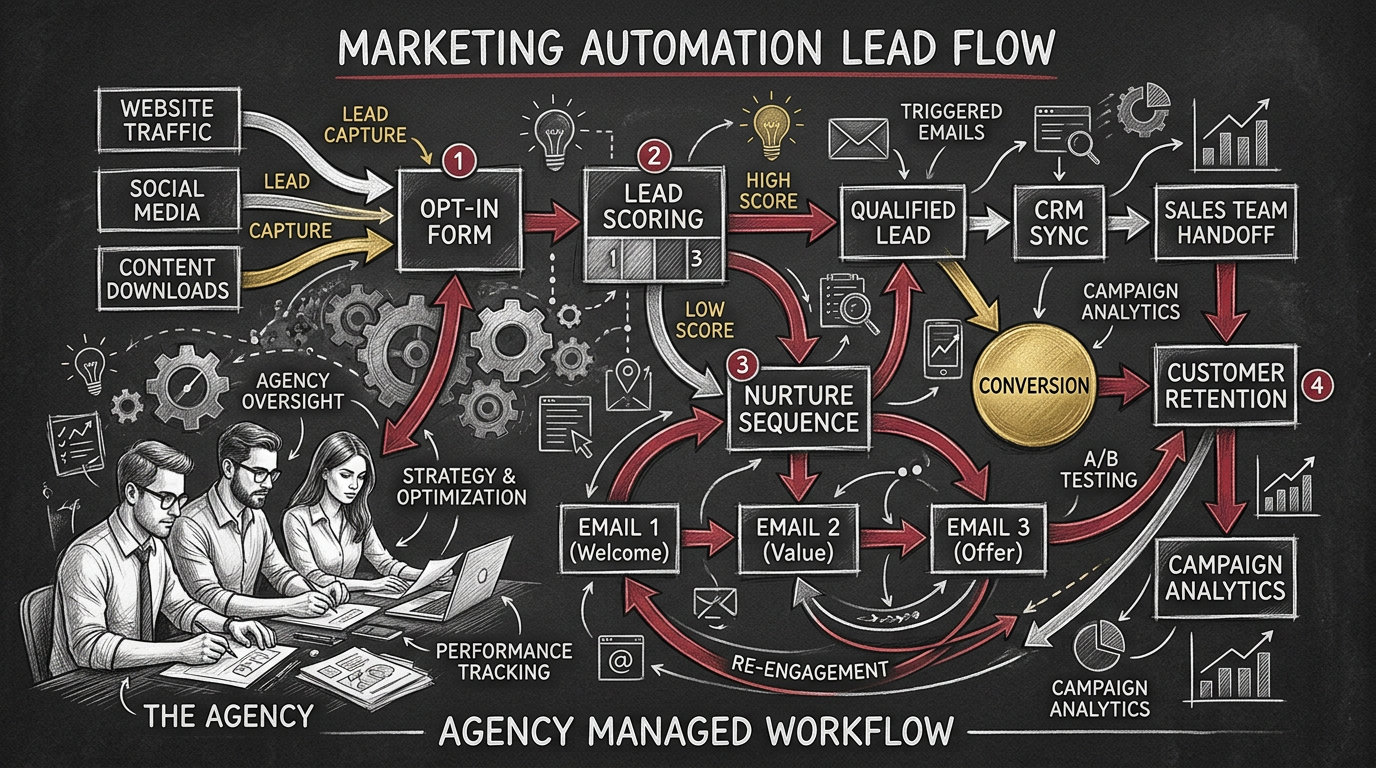
Generating marketing automation leads is not a one-time campaign. It is a system. A system that combines intent identification, lead verification, multi-channel outreach, and systematic qualification will produce consistent results over time. The teams that win in this space are the ones that treat lead generation as a repeatable process, not a series of one-off tactics.
Start by defining your ideal customer profile. Know exactly who your best marketing automation leads look like. Build a lead verification process that filters out bad data before it reaches your team. Choose the channels that align with your strengths. Invest in tools that make your team more efficient. Measure everything. Track conversion rates at each stage of the funnel. Optimize based on data, not assumptions.
–
Getting Started With Marketing Automation Lead Generation
If you are ready to start generating marketing automation leads for your agency or business, the first step is clarity on your ideal customer profile. Know which platforms your target leads use. Know their company size and budget range. Know their buying timeline and decisions process. This clarity makes every subsequent step more effective.
From there, you need a reliable source of verified leads. At Leadpot, we provide exclusive-seo-leads that are pre-qualified and verified for agencies and businesses selling marketing automation services. Whether you prefer the buy-seo-leads model for direct list access or a fully managed campaign, we have a solution that fits your growth stage.
If you are an agency that wants to build a sustainable lead generation engine, our lead-gen-for-marketing-agencies program provides the frameworks, tools, and support you need to generate a consistent flow of marketing automation leads month after month.
The businesses that take action now will be the ones with filled pipelines and growing revenue by the end of the quarter. The ones that wait will still be trying to figure out where their next lead is coming from.
–

Conclusion
Marketing automation leads are the lifeblood of any agency or business that sells automation services. They represent prospects who are already invested in the concept, who understand the value, and who are actively looking for solutions. The main winning with these leads is a systematic approach that combines intent identification, rigorous verification, multi-channel outreach, and careful qualification.
Avoid the common mistakes that derail lead generation efforts. Treat leads as segments, not as a monolith. Focus on outcomes, not features. Verify before you outreach. Set realistic timelines. And invest in post-sale relationships.
The market for marketing automation is growing. The demand for qualified marketing automation leads is growing with it. The question is whether your business will capitalize on that demand or watch competitors capture the best prospects while you struggle with unqualified inquiries.
Start building your marketing automation lead system today. Define your ICP. Verify your leads. Choose your channels. Execute with consistency. The results will follow.
Get Verified Leads Now
Explore Exclusive Lead Lists
Frequently Asked Questions
What is B2B lead generation?
B2B lead generation is the process of identifying and attracting potential business clients who need your agency’s services. It involves prospecting, qualifying, and nurturing decision-makers at target companies.
How do you find B2B leads for agencies?
Effective B2B lead sourcing includes LinkedIn prospecting, industry databases, cold outreach, referral programs, and content marketing. Focus on decision-makers like marketing directors and CEOs.
What makes a qualified B2B lead?
A qualified B2B lead has decision-making authority, budget availability, a genuine need for your services, and a realistic timeline. Qualification frameworks like BANT help prioritize prospects.