
PPC Lead Generation for Agencies: Finding Clients With Broken Paid Ad Campaigns
See also: How to Buy B2B Leads.
Most PPC agencies find new clients the same way their clients find new customers: by running ads. The agency runs Google Ads targeting “PPC agency” and “Google Ads management.” The competition is fierce, the cost per click is high, and the prospects who click are already talking to three other agencies. The PPC agencies that build consistent pipelines do not compete on the same channels as their clients. They compete on access to prospects at the moment when their paid advertising is failing. PPC leads for agency growth
This guide covers the specific signals that indicate a business is running broken paid ad campaigns, how to identify those companies at scale, the outreach approach that gets responses from frustrated marketing directors, and the qualification process that ensures you are talking to companies with both the problem and the budget to fix it.
Why PPC Agencies Struggle With Lead Generation
PPC agencies face a unique irony. PPC leads for agency growth require targeting at the right moment. They are experts at generating leads through paid advertising, but when they try to apply those same skills to finding their own clients, the results are mediocre. The reason is that the market for PPC agency leads is saturated with other PPC agencies running the same campaigns, targeting the same keywords, and using the same landing pages. The prospect who searches “Google Ads agency” is evaluating multiple options, not actively looking for help with a specific problem.
The second reason PPC agencies struggle with lead generation is that the buyers are marketing directors and growth leads who are already skeptical. They have been pitched by multiple agencies. They have been promised results that were not delivered. They have watched their ad budget disappear with nothing to show for it. When a PPC agency reaches out, the default response is not curiosity. It is caution.
The third reason is timing. A business does not wake up one morning and decide to hire a PPC agency. Something triggers that decision. Their ad spend increased while results decreased. Their in-house marketer left. Their competitor started outranking them in paid search. The agencies that reach the prospect at the moment of that trigger convert at five to ten times the rate of agencies that reach them during the research phase.
The Signals That Mean a Business Is Running Broken PPC Campaigns
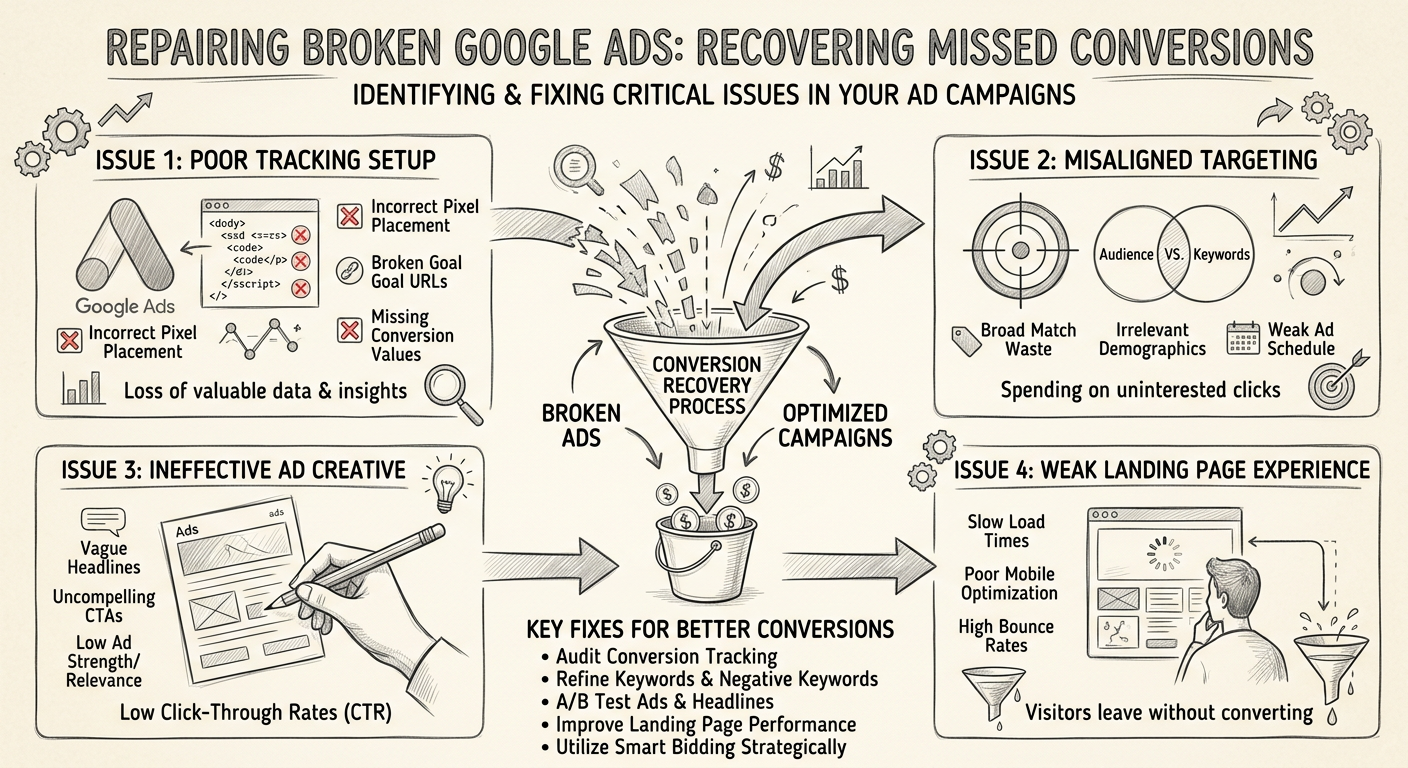
Their Ads Are Showing for Irrelevant Search Terms
A business running Google Ads with poor keyword management is paying for clicks from people who will never buy. The signs are visible if you know where to look. Run their ads through a keyword spy tool and check whether they are appearing for search terms unrelated to their product or service. A company selling enterprise CRM software showing up for “free CRM” is wasting budget on clicks that will never convert.
The marketing director managing that account may not realize the scope of the problem. They set up the campaign, launched it, and have been watching the spend without auditing the keyword quality regularly. When you show them the actual search terms their ads are appearing for, you are providing information they do not have. That positions you as someone who sees what they are missing.
Their Landing Pages Do Not Match Their Ad Copy
One of the most common PPC mistakes is a disconnect between the ad and the landing page. The ad promises one thing. The landing page delivers something different. The visitor arrives, does not find what they expected, and leaves. That disconnect kills conversion rates and wastes ad spend.
You can identify this problem by clicking the business’s ads and reviewing the landing page experience. If the messaging, offer, or call to action on the landing page does not match the ad, the campaign is underperforming. A PPC agency that identifies this mismatch during outreach has a concrete, observable problem to discuss. That is a much stronger opening than “we manage Google Ads accounts.”
Their Quality Score Is Low
Google Ads Quality Score is a rating from 1 to 10 that measures how relevant your ad, keyword, and landing page are to the person searching. A low Quality Score means you are paying more per click than competitors with higher scores, appearing lower in search results, and getting less value from the same budget.
Low Quality Scores are usually caused by poor keyword relevance, weak ad copy, or landing pages that do not match the search intent. A business with an average Quality Score below 5 is leaving money on the table. The fix is not necessarily more budget. It is better account management. That is exactly what a PPC agency sells.
Their Competitors Are Outbidding Them on Their Own Brand Terms
When a business searches for its own brand name and sees a competitor’s ad above its own, that is a clear signal that the competitor is outbidding them on brand keywords. This usually happens when the business paused or reduced its brand campaign budget, and a competitor moved in to capture the search traffic that belongs to them.
The impact is measurable. The business is losing clicks from people who are already familiar with their brand and actively searching for them. Those clicks have the highest conversion rate of any search traffic because the searcher already knows the company and is ready to take action. Losing those clicks to a competitor is expensive.
Where to Find PPC Leads at Scale
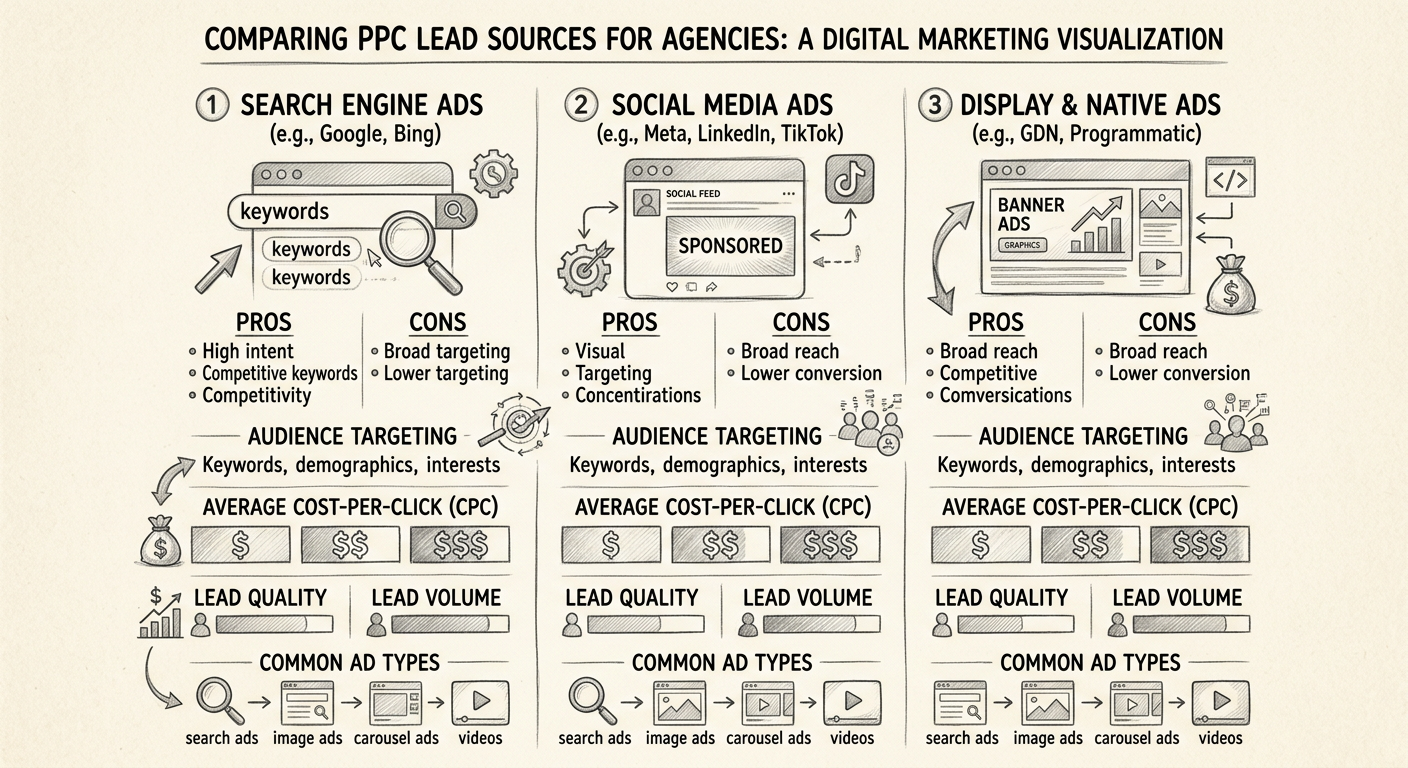
Spy Tools
SpyFu, SEMrush, and Ahrefs let you see what keywords any business is bidding on, how much they are spending, and how their ad copy performs. Filter by industry and look for businesses with high ad spend and low efficiency. A company spending $20,000 per month on Google Ads with a conversion rate below 2 percent is a warm lead. They are already invested in paid advertising and not getting results.
The outreach approach using spy tools is to reference the specific data you found. “I pulled your Google Ads account and noticed you are spending approximately $18,000 per month with a conversion rate of 1.8 percent. Based on benchmarks for your category, there is likely 30 to 40 percent of that spend that could be reallocated to higher-performing campaigns.” That message opens a conversation because it is specific and useful.
Google Ads Auction Insights
Google Ads Auction Insights show you which advertisers are competing for the same keywords you are targeting. If you see a business consistently appearing below your ad for keywords in your niche, they are a prospect. They are already spending on the channels you manage. They are losing to competitors. That is the definition of a warm lead.
You can use this data to build a targeted outreach list. Export the advertisers appearing in Auction Insights for your top keywords. Research each company. Identify the marketing director or growth lead. Send a message that references their competitive gap and proposes a conversation about closing it.
Ad Library and Social Platforms
Meta’s Ad Library lets you see what ads any business is currently running on Facebook and Instagram. A business running multiple ad creatives with low engagement rates is testing heavily without a clear winner. That pattern indicates a paid social strategy that is not working and a marketing team that is under pressure to improve it.
LinkedIn also provides visibility into ad activity for B2B businesses. A company running LinkedIn ads with low engagement or high cost per lead is a prospect for a PPC agency that specializes in B2B paid social. The signals are the same: high spend, low efficiency, visible competitive pressure.
The Outreach Approach That Gets PPC Directors to Respond
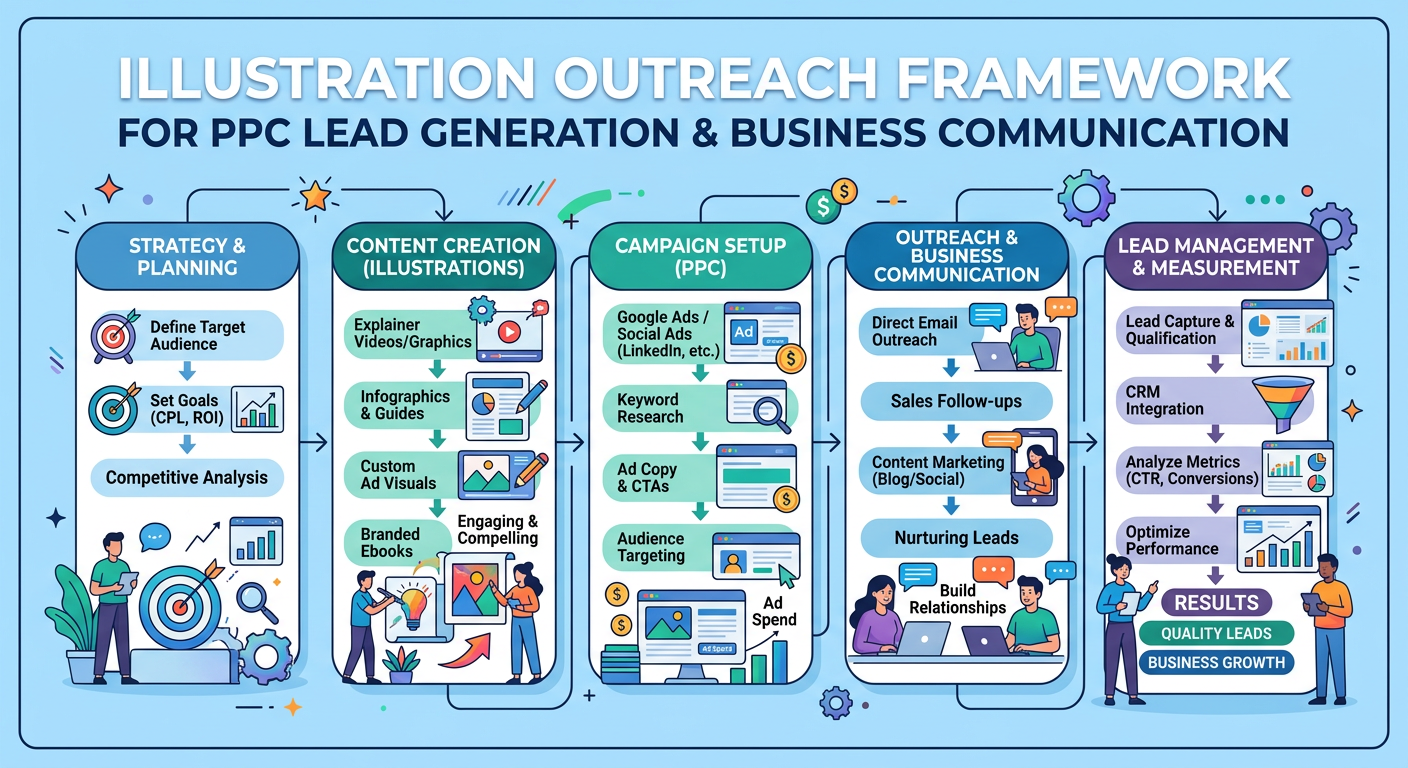
Reference Specific Data
The most effective outreach messages for PPC leads reference data that the prospect has not seen before. “Your Quality Score for [keyword] is 3. That is below the 7 average for your category.” “Your competitor is spending half what you spend and appearing above you in 60 percent of searches.” “Your landing page load time is 4.2 seconds, and Google recommends under 2 seconds.”
Specific data proves you did research. It also proves that your outreach is not a template. When a marketing director opens an email that references their actual Google Ads account performance, they read past the first sentence. That is more than most agency outreach achieves.
Focus on Their Problem, Not Your Solution
Lead with the gap you identified, not the service you sell. Do not say “we manage Google Ads accounts.” Say “your Quality Score on your top keyword is costing you approximately $3,000 per month in excess CPC.” The first is a capability statement. The second is a problem they can feel. The first gets a polite response. The second gets a reply.
Position Yourself as an Auditor, Not a Salesperson
The most effective first touch for PPC leads is a free audit. Not a full account management proposal. A brief analysis of their top three performance issues with estimated cost impact. When you give a prospect a free analysis of their problem, you shift the dynamic from “agency selling service” to “expert providing insight.” That shift is what gets meetings.
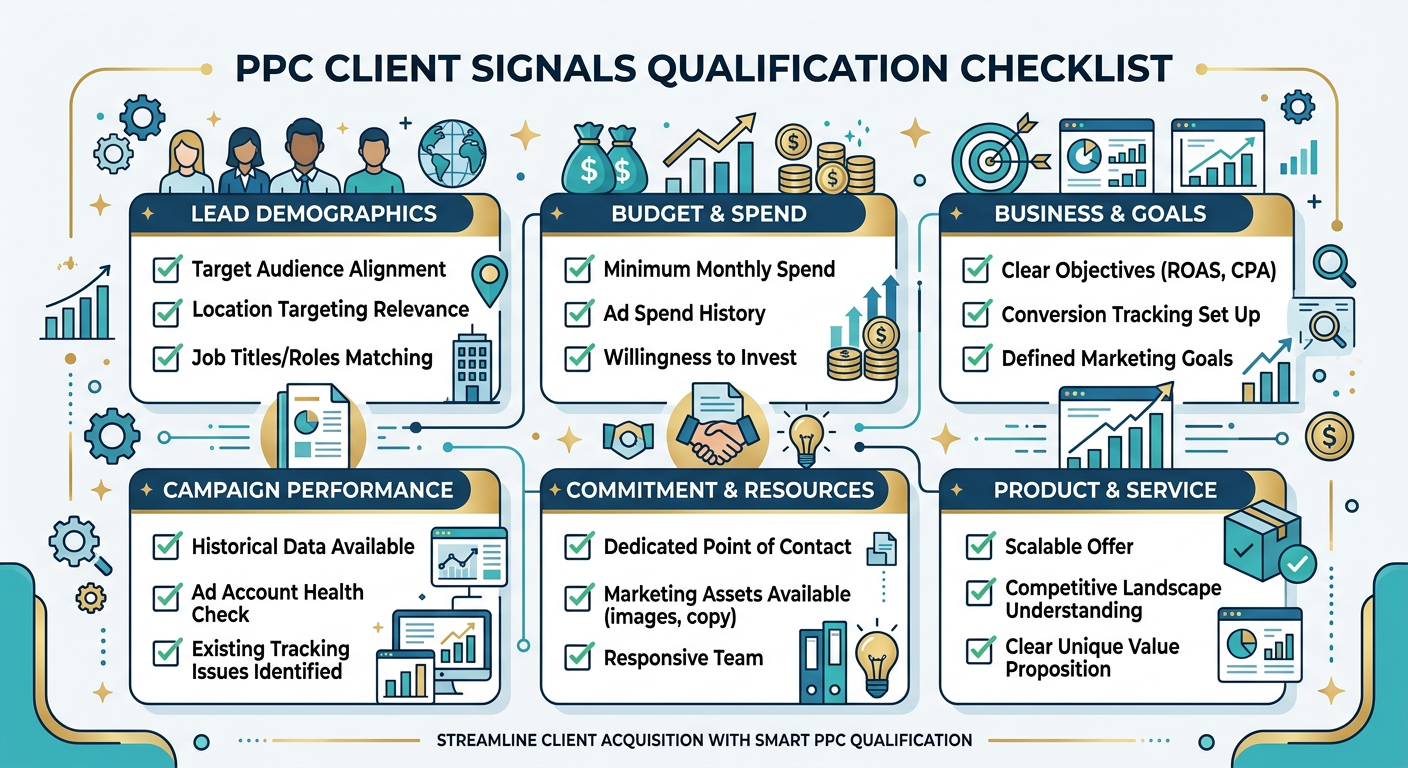
Qualifying PPC Leads
Ad Spend Threshold
A business spending less than $2,000 per month on paid advertising does not have enough budget for meaningful PPC management. A $500 monthly ad budget cannot support a $1,500 monthly agency fee. The math does not work for either side. Set a minimum ad spend threshold and filter out prospects below it.
The right threshold depends on your pricing model, but for most PPC agencies, the ideal client spends between $5,000 and $50,000 per month on paid advertising. That range provides enough budget for meaningful management fees and enough data for performance improvement.
Decision-Maker Access
PPC budget decisions are usually made by marketing directors, growth leads, or founders. In smaller companies, the founder makes the decision. In larger companies, it is a marketing director or VP of Marketing. You need access to the person who can approve both the ad spend and the agency fee.
If you are talking to a paid media coordinator who says they need to run it by the director, you are not at the decision-maker. Move up the chain or move to a different prospect. Time spent nurturing influencers instead of buyers is time that does not convert.
Technical Readiness
Some businesses have ad accounts in such poor shape that fixing them requires six months of cleanup before performance can improve. Other businesses have well-structured accounts that just need strategic optimization. The technical readiness of the account affects your ability to deliver results quickly, which affects the prospect’s perception of your value.
Assess technical readiness during the first call. Ask about their current setup, who managed the account previously, and what tools they are using. If the account is a mess, that is actually an opportunity because the quick wins will be obvious. If the account is already well-managed, the opportunity is in strategic improvements that require more expertise than the current manager has.
How Buying PPC Leads Compares to Building Your Own Pipeline
Building a pipeline for PPC agency clients through content, SEO, and referrals takes time (see SEO lead generation for agencies for a similar approach). You need to establish authority in a niche, produce content that demonstrates expertise, and wait for inbound leads to build. The result is a strong pipeline over time, but the early months are lean.
Buying verified PPC leads (marketing automation leads use similar signal-based sourcing) fills that gap immediately. You get a list of businesses with active paid advertising accounts, identified through spend data, performance signals, and competitive gaps. The lead comes with context about why the business is a good fit. You can start outreach the same day.
The agencies that win in this vertical combine both approaches. They buy leads for immediate pipeline consistency while building their content engine and referral network for long-term compounding. That combination gives them the best of both worlds: leads this month and increasing inbound over time.
FAQ
How do I find businesses with broken PPC campaigns?
Use spy tools to identify businesses with high ad spend and low conversion rates. Check for low Quality Scores, irrelevant keyword matches, and landing pages that do not match ad copy. Those signals indicate businesses where paid advertising is not working.
What is the best outreach message for PPC leads?
Reference specific data from their Google Ads account: Quality Score, conversion rate, cost per click, or landing page performance. Show them the gap between their spend and their results. Offer a brief audit as the first step, not a full proposal.
How many PPC leads do I need per month?
Ten to fifteen qualified PPC leads per month is enough to sustain a PPC agency. PPC management deals have shorter sales cycles than mobile app or enterprise projects, but the deal sizes are recurring, which makes pipeline consistency even more important.
Should I buy PPC leads or build my own pipeline?
Buying leads gives you immediate access to businesses with active paid advertising accounts. Building your own pipeline through content and outbound takes three to six months to produce consistent results. Buy leads for immediate pipeline while building organic channels for long-term compounding. buying verified leads
How do I know if a PPC lead is high quality?
A high-quality PPC lead has monthly ad spend above your minimum threshold, a decision-maker accessible, a visible performance gap in their paid advertising, and a timeline for improving results. If three or more of these criteria are met, the lead is worth investing time in.
—
PPC agencies that find clients through data and signals instead of ad auctions and keyword competition build pipelines that are both faster and more consistent. The businesses running broken paid campaigns are not searching for an agency. They are too busy managing the problem. But they will listen when you show them exactly what is wrong and what it is costing them. That is the opening. Everything else is execution.
Frequently Asked Questions
How do you find PPC management clients?
Find PPC clients by auditing businesses with broken campaigns, offering free Google Ads audits, networking at marketing events, and showing successful campaign case studies with clear ROI metrics.
What does PPC lead generation cost agencies?
PPC client acquisition costs vary by method: referrals ($0-200), content marketing ($500-2000/month), paid ads ($50-200 per lead), events ($500-5000 per event). Focus on LTV:CAC ratio above 3:1.
How do agencies charge for PPC management?
Common models include percentage of ad spend (10-20%), flat monthly fee ($500-5000), performance-based pricing, or hybrid models. Choose based on client size and campaign complexity.