digital-marketing-leads from LeadPot.
Running a digital marketing agency comes with a uniquely frustrating paradox: every day, you help your clients attract qualified prospects, close deals, and grow their revenue — yet when it comes to your own pipeline, many agencies find themselves in a perpetual feast-or-famine cycle. One month you’re overwhelmed with inquiries, and the next you’re scrambling to fill the calendar. Breaking this cycle isn’t about luck, personality, or being the best at what you do (though that helps). It’s about applying the same systematic, data-driven framework to your own lead generation that you’d recommend to any client. In this guide, we’ll walk through the proven strategies that top-performing digital marketing agencies use to build consistent, predictable lead pipelines — including how to define your ideal client, what channels actually move the needle, which service-specific leads to prioritize, and how to scale your outreach without burning out.

The Lead Generation Challenge Digital Agencies Actually Face
Before diving into tactics, it helps to understand why so many agencies struggle with this problem in the first place. Marketing agencies are, by definition, in the business of generating results for others. Their teams are composed of strategists, creatives, media buyers, and analysts — people who spend their days optimizing other companies’ growth. But when it comes to their own business development, many agencies default to reactive, ad-hoc approaches: responding to inbound inquiries, relying on referrals, or sending occasional cold emails.
The problem with these approaches is that they create exactly the inconsistency agencies hate for their clients. A pipeline that depends on referrals will fluctuate with your clients’ satisfaction levels and their willingness to refer. Inbound inquiries will spike when you publish a viral piece of content and dry up during quiet months. Cold outreach, when done inconsistently, rarely builds the trust required for high-value agency relationships.
The agencies that build sustainable growth are the ones that treat their own lead generation with the same strategic rigor they bring to client campaigns. They build multi-channel systems, define clear ideal client profiles, segment their outreach by service line, and measure everything. This guide shows you exactly how to build those systems.
Defining Your Ideal Client Profile
You cannot generate consistent leads if you don’t know exactly who you’re trying to attract. This sounds obvious, but most agencies define their ideal client too broadly — “any business that needs marketing help” — and then wonder why their messaging resonates with no one. A well-defined Ideal Client Profile (ICP) is the foundation of every effective lead generation system.
Industry Fit and Vertical Expertise
Top-performing agencies don’t try to be everything to everyone. They specialize in industries where they have a proven track record, understand the customer journey deeply, and can speak the language of decision-makers. If your agency has delivered strong results for SaaS companies, e-commerce brands, or healthcare providers, those are the sectors to target — not industries where you’d be starting from scratch. Vertical expertise becomes a competitive advantage because prospects in those industries recognize your authority immediately, and your case studies become directly relevant to their situation.
Beyond industry, pay close attention to marketing budget levels. An agency targeting companies with revenues between $2M and $50M in the mid-market segment is working with a fundamentally different prospect profile than one targeting enterprise accounts with six-figure marketing budgets. Each requires a different outreach approach, sales cycle, and value proposition.
Company Characteristics That Signal Readiness
Not every company in your target industry is ready to buy agency services. Look for specific signals that indicate both the need and the capacity to invest:
- Revenue trajectory: Companies experiencing 20%+ year-over-year growth are often investing heavily in marketing to support expansion.
- Marketing team size: A team of 2-5 marketers at a $10M+ revenue company is a strong signal they need external strategic support.
- Recent leadership changes: A new CMO or VP of Marketing often comes in looking to make an impact quickly — and frequently hires agencies to accelerate results.
- Current agency dissatisfaction: Companies nearing the end of a contract with an underperforming agency are actively seeking alternatives.
Decision-Maker Profiles
Your lead generation efforts need to target actual decision-makers, not just influencers. At most companies, the person who signs agency contracts is the CMO, VP of Marketing, Director of Marketing, or — in smaller companies — the CEO or founder. Understanding their priorities, pain points, and communication preferences will dramatically improve your outreach effectiveness. CMOs care about ROI and attribution. CEOs care about revenue growth and competitive positioning. Founders care about speed and cost-efficiency. Tailor your messaging accordingly.
Agencies with a documented Ideal Client Profile convert 3x more leads than those using a generic outreach approach — and their clients stay 40% longer on average.
Source: Internal agency benchmark data, 2024–2025
Multi-Channel Lead Generation Strategies
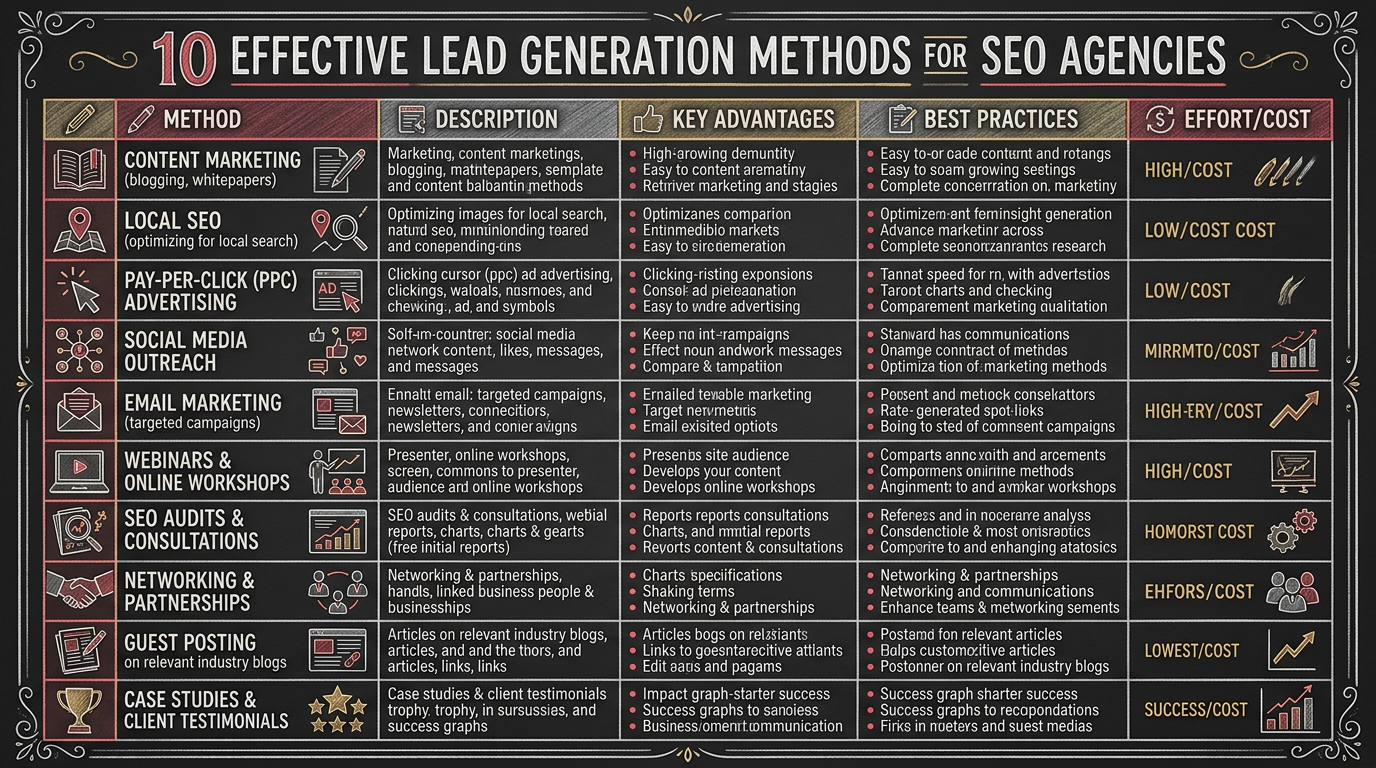
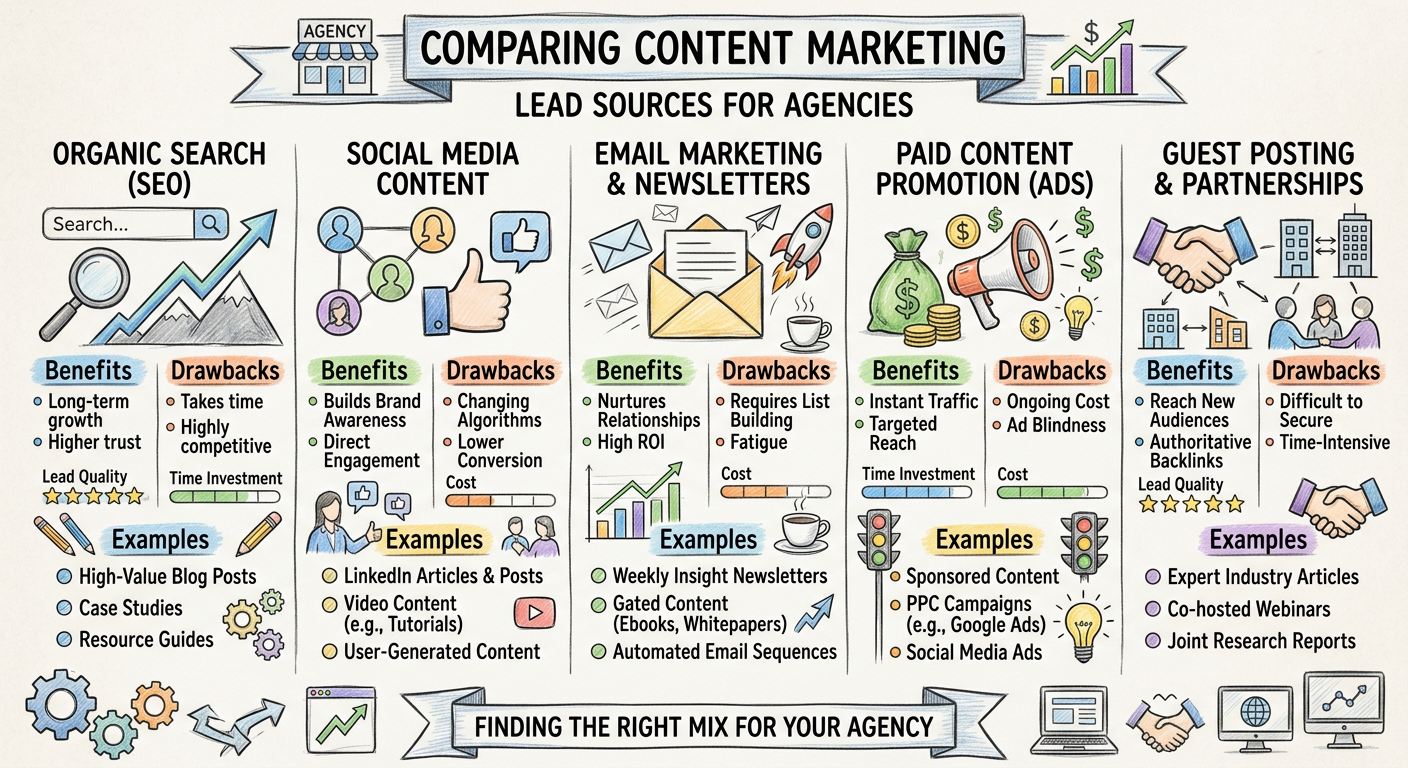
No single channel delivers consistent agency leads on its own. The agencies that build predictable pipelines use a coordinated multi-channel approach, where each channel feeds into and reinforces the others. Here are the channels that deliver the strongest results for digital marketing agencies.
Content Marketing as a Lead Magnet
Content marketing is the most scalable lead generation channel for agencies because it works 24/7 — long after you’ve published it. When done well, it positions your agency as an authority, educates prospects on the problems you solve, and creates a natural entry point for conversations. The most effective agency content includes detailed case studies that walk through specific challenges, strategies, and results; thought leadership pieces on industry trends and predictions; and practical guides that demonstrate your expertise. For agencies offering content marketing leads, publishing consistently on your own blog is not just a marketing exercise — it’s proof of capability that prospects can evaluate firsthand.
Content marketing also has compounding returns. An article you publish today will continue to attract organic traffic and generate inquiries for years. Every case study you publish becomes a sales asset that shortens future deal cycles. Every trend report positions you as a go-to voice in your space. Over time, this creates a content flywheel that becomes one of your most valuable lead generation assets.
SEO: Capturing Active Buyer Intent
Search engine optimization is one of the highest-ROI channels for agency lead generation because it captures prospects at the exact moment they’re actively researching solutions. When someone searches for “best digital marketing agency for SaaS” or “how to improve organic traffic for my e-commerce store,” they’re not casually browsing — they have a specific need and are evaluating options. By optimizing your agency’s website and content for relevant search queries, you position yourself in front of prospects precisely when they’re ready to engage.
The key to SEO success for agencies is targeting commercial and informational keywords with buying intent. Focus your content on questions prospects ask during the evaluation phase — things like “how much does SEO cost for a small business,” “what to expect from a PPC agency,” or “how to choose a social media marketing agency.” These queries indicate prospects in active research mode who are much closer to making a hiring decision. Over time, ranking for these terms creates a steady stream of SEO leads that are self-qualifying because they come to you with a specific problem you solve.
Social Media Marketing for Agency Visibility
LinkedIn, in particular, has become the most powerful social platform for B2B agency lead generation. It’s where decision-makers spend professional time, share insights, and evaluate potential partners. The agencies that excel on LinkedIn don’t just post promotional content — they build personal brands for their founders and senior team members, share authentic insights from client work (with permission), and engage in relevant industry conversations. This approach builds trust far more effectively than traditional advertising because it humanizes your agency and demonstrates expertise in context.
Beyond LinkedIn, platforms like Twitter/X and YouTube can be powerful for agencies with strong visual or educational content. Twitter is excellent for real-time commentary on industry news and trends. YouTube works well for agencies that create tutorial content, campaign walkthroughs, or interview-style thought leadership. The key is consistency — a well-executed presence on one platform consistently beats sporadic activity across five. If you’re looking to build a systematic approach to social channels, understanding how to generate social media marketing leads through structured outreach and content is critical for long-term pipeline health.
Outbound Prospecting at Scale
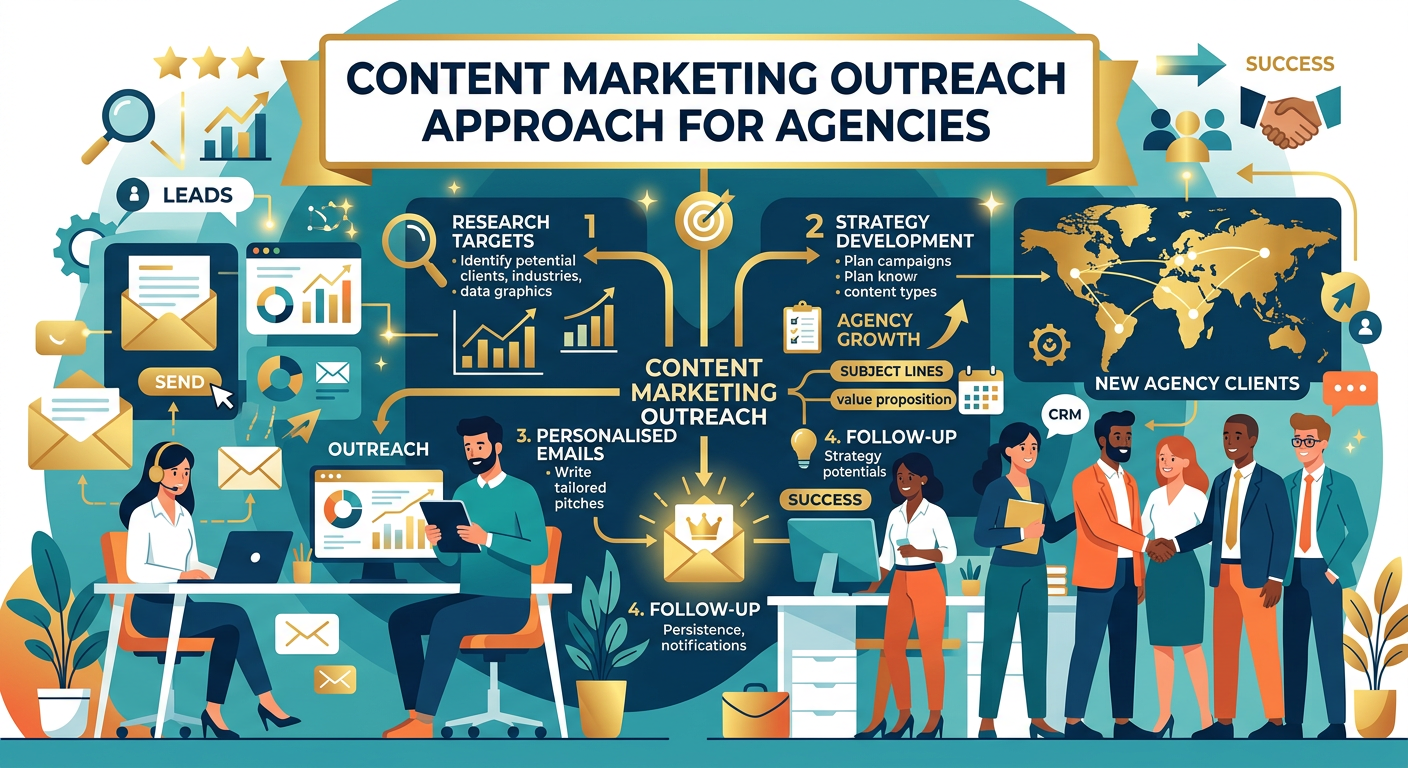
While inbound and content channels build long-term assets, outbound prospecting delivers faster results by putting your agency directly in front of qualified prospects. The most effective outbound approach for agencies combines personalized email sequences, strategic LinkedIn outreach, and account-based marketing (ABM) for high-value targets. Personalization is non-negotiable — referencing a prospect’s recent blog post, their company’s latest product launch, or a specific marketing challenge they’ve publicly discussed will dramatically increase response rates compared to generic templates. The best agencies treat outbound as a research-driven process where each outreach is informed by the prospect’s actual situation, not just their job title.
Referrals and Partnerships
Perhaps the highest-converting lead source for agencies is the referral — a warm introduction from a trusted source carries significantly more weight than cold outreach or even strong content. Building a formal referral program that incentivizes current clients, complementary service providers, and industry contacts to send qualified prospects your way can create a consistent, low-friction lead stream. Complementary businesses — web developers, CRM consultants, business coaches — are particularly valuable referral partners because they serve the same audience you do but don’t compete for the same services.
Agencies using 3+ lead generation channels report 68% higher revenue growth than agencies relying on a single channel — and experience 45% fewer months with no new client inquiries.
Source: Digital Marketing Agency Benchmark Report, Q4 2024
Qualifying Leads Effectively
Generating leads is only half the battle. The other half — and the part that most agencies neglect — is qualifying those leads so your team spends time with prospects who are actually ready to buy. Not every inquiry is worth a discovery call. Implementing a basic qualification framework ensures your agency’s limited business development bandwidth goes to the right opportunities.
The BANT Qualification Framework
The BANT framework — Budget, Authority, Need, and Timeline — remains one of the most effective qualification tools for agencies. Here’s how to apply it:
- Budget: Does the prospect have a realistic marketing budget and can they afford your services? A company with no allocated marketing budget, or one expecting full-service agency work for a few thousand dollars a month, is not a viable client.
- Authority: Are you speaking with the person who makes the hiring decision? If you’re talking to a marketing manager who needs executive approval for any new vendor, your deal will stall regardless of how well the conversation goes.
- Need: Does the prospect have a clearly defined problem that your agency solves? “We need better marketing” is vague. “Our organic traffic dropped 40% in six months and we need to rebuild our SEO strategy” is a clear, actionable need.
- Timeline: When does the prospect want to start? A “someday maybe” timeline is a classic stall signal. Prospects with a genuine need and budget typically have some urgency around solving it.
Red Flags That Waste Your Team’s Time
Not all leads are worth pursuing. Watch for these warning signs that a prospect is unlikely to convert: they can’t articulate what they want from an agency, they’ve already worked with three agencies this year and blame all of them for failures, they want you to guarantee specific results without understanding the variables involved, or they’re shopping purely on price with no interest in strategic value. Learning to disqualify bad-fit prospects quickly is just as important as qualifying good ones — it frees your team to focus on the opportunities that deserve their full attention.
“The agencies that scale fastest aren’t the ones that close every lead — they’re the ones that know which leads are worth pursuing and have the discipline to walk away from the rest.”
Service-Specific Lead Generation Tactics
Different agency services attract different types of prospects, and each service line benefits from tailored lead generation tactics. Understanding which tactics work best for each service helps you build more targeted, effective campaigns.
SEO Leads
Prospects seeking SEO help are often in a state of measurable pain — their organic traffic has declined, their competitors are outranking them, or they’ve invested in content without seeing results. These are some of the best-qualified leads in the agency world because the problem is concrete and the value of solving it is clear. To generate SEO leads, publish full SEO audit frameworks and templates that prospects can use to evaluate their own sites; create content around specific SEO pain points like algorithm updates, technical SEO issues, and ranking plateaus; and offer free mini-audits as a lead capture mechanism. The prospects who download your audit framework or request a free site review are self-qualifying — they have an SEO problem and are actively looking for solutions.
Social Media Marketing Leads
Social media leads tend to come from businesses that prioritize brand awareness, community building, or direct response through social channels. These prospects range from DTC brands that live and die by Instagram and TikTok performance to B2B companies that use LinkedIn for lead generation and thought leadership. To generate social media marketing leads, show your team’s expertise through published social strategies and campaign breakdowns; create content around platform-specific best practices and algorithm changes; and demonstrate your ability to build engaged communities through case studies and before/after metrics. Since social media results are highly visible, strong visual case studies and campaign showcases are particularly effective at converting these prospects.
Content Marketing Leads
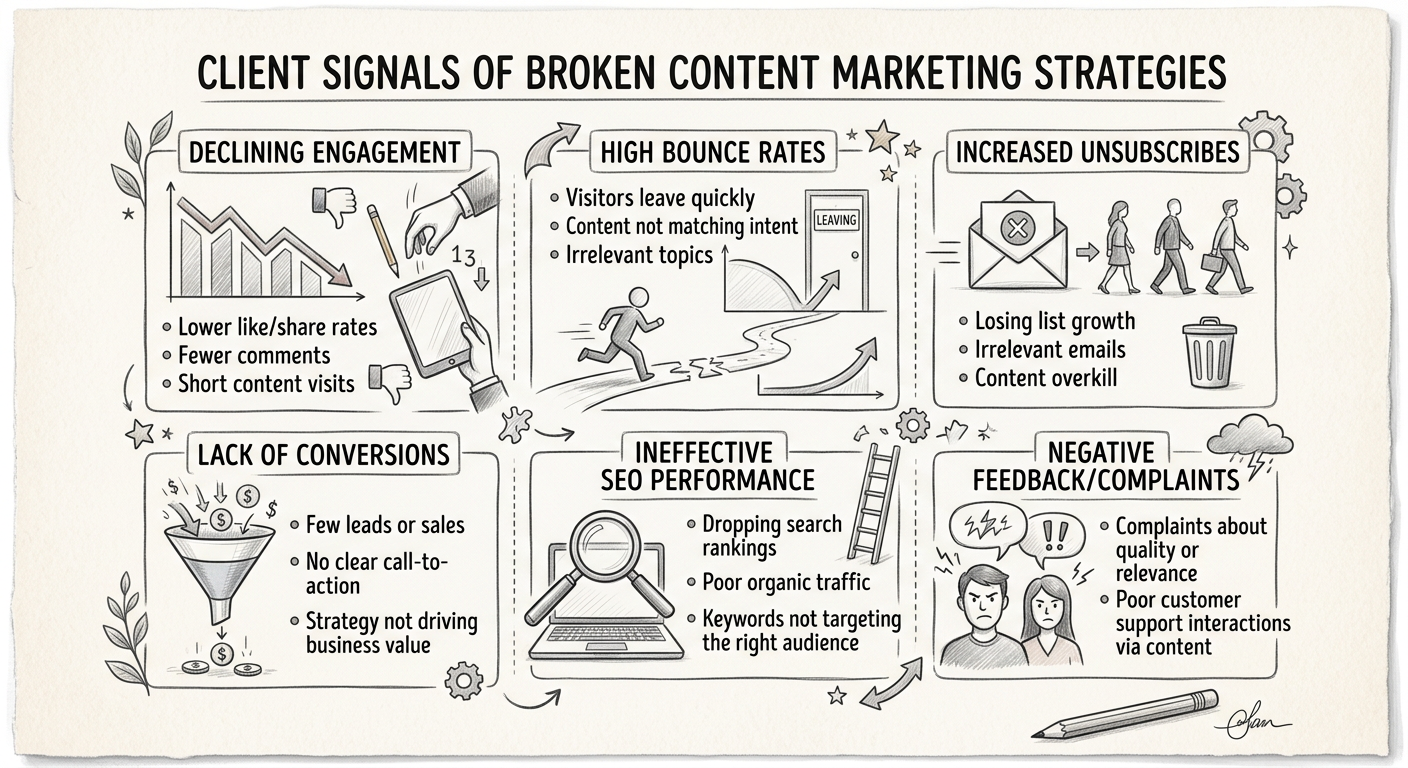
Content marketing leads are often prospects who recognize that content is a long-term asset but struggle with execution — they lack the strategy, resources, or expertise to produce consistent, high-quality content that drives results. These leads tend to be thoughtful buyers who understand the investment required and are looking for a strategic partner, not just a content mill. To generate content marketing leads, demonstrate your strategic thinking through editorial strategy documents and content frameworks; publish your own content marketing results transparently; and offer content audits or strategy sessions as a low-friction way to demonstrate value. Because content marketing is an inherently trust-based purchase, the agencies that win these leads are the ones that lead with expertise and education rather than pricing.
PPC and Paid Advertising Leads
PPC leads come from two distinct categories: businesses running ads with no clear ROI tracking who need strategic help, and businesses with well-funded ad budgets looking for a team that can scale results. The first group needs education and auditing — show them what they’re missing. The second group needs proof of scale — demonstrate your ability to manage large budgets and drive strong ROAS. Both groups respond well to detailed case studies that show actual ad account metrics, before/after performance data, and strategic thinking around budget allocation.
Building a Scalable Outreach System
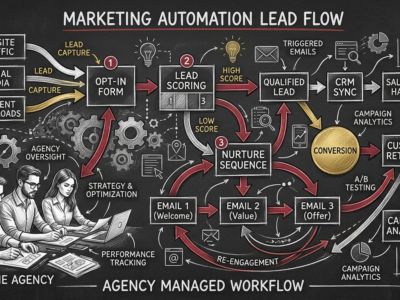
Lead generation only delivers consistency when it operates as a system, not a sporadic effort. The difference between agencies that occasionally land a big client and agencies that close deals month after month is systematic execution. Building this system requires three components: a defined outreach cadence, a CRM or pipeline tracking tool, and a feedback loop that improves your approach over time.
Outreach Cadence and Process
Consistency beats intensity. A team that spends 30 minutes every day on outbound prospecting will outperform a team that spends eight hours on outreach once a month. Build a weekly outreach rhythm that allocates specific time blocks for research, personalization, and follow-up. Track your response rates by outreach type, personalization level, and prospect segment. Use this data to continuously refine your approach — if personalized LinkedIn messages convert at 8% while cold emails convert at 2%, shift your resources accordingly.
Pipeline Management and Forecasting
Your CRM should be more than a contact list — it’s the nervous system of your lead generation operation. Track every lead from first touch through close, noting where they came from, what content or outreach influenced them, and why they converted or didn’t. Over time, this data reveals which channels, messages, and tactics are most effective for each service line, allowing you to allocate resources intelligently. A pipeline with 50 qualified opportunities across various stages provides much more predictable forecasting than a pipeline with 15 opportunities and no clear qualification criteria.
Measuring What Matters
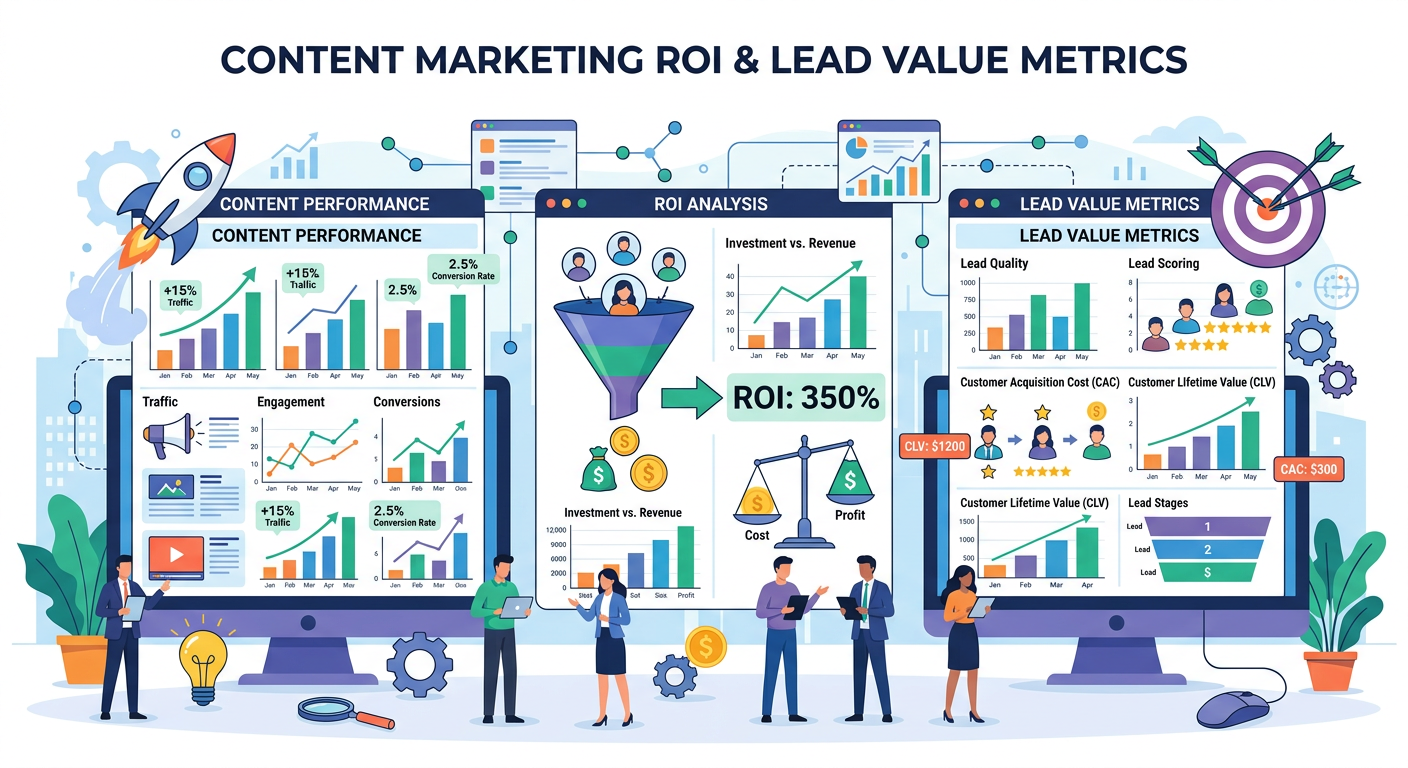
Lead generation for agencies is not a set-it-and-forget-it operation. The market shifts, algorithms change, and prospect behavior evolves. The agencies that maintain consistent lead generation are the ones that measure the right metrics, review them regularly, and adapt their approach accordingly.
Key Metrics to Track
Track these core metrics to understand your lead generation health: total leads generated per month by channel and service line, lead-to-call conversion rate (what percentage of leads schedule a discovery call), call-to-client conversion rate (what percentage of discovery calls become paying clients), average deal value by service line, cost per lead by channel, and client lifetime value segmented by lead source. Together, these metrics tell you not just how many leads you’re generating, but how good those leads are, which channels deserve more investment, and where your sales process has bottlenecks.
Optimizing for Quality Over Quantity
It’s better to have 10 highly qualified leads per month than 100 unqualified inquiries that waste your team’s time. Quality leads convert faster, stay clients longer, and refer more business. If your volume is high but your close rate is low, your targeting or qualification criteria likely need adjustment. Agencies that focus on lead quality over lead quantity consistently report higher profit margins and better client retention because they’re working with companies that are genuinely ready for their services.
Ready to Fill Your Agency’s Pipeline With Qualified Leads?
Stop relying on referrals and feast-or-famine cycles. LeadPot delivers verified, qualified marketing leads matched to your agency’s services — so you can focus on what you do best: delivering exceptional results for your clients.
Putting It All Together: A 90-Day Action Plan
The strategies outlined in this guide are most effective when implemented systematically rather than all at once. Here’s a practical 90-day action plan to build your agency’s consistent lead generation:
Days 1-30: Foundation
Start by clearly defining your Ideal Client Profile with your team. Document industry verticals, company sizes, budget ranges, and decision-maker roles. Audit your current lead generation across all channels — what’s working, what’s not, and where the biggest gaps are. Set up or refine your CRM to track leads from first touch through close. Create or update your core sales assets: case studies, service pages, and a discovery call framework.
Days 31-60: Channel Activation
Launch or optimize 2-3 primary lead generation channels based on your ICP and current strengths. If SEO is a gap, begin publishing one optimized article per week targeting commercial keywords. If LinkedIn is underutilized, assign one team member to build a consistent posting and engagement routine. If outbound is new, start with 20 personalized outreach messages per week to carefully researched prospects. Measure everything and adjust your approach based on early results.
Days 61-90: Scaling and Optimization
Focus on the channels showing the best results. If content marketing is driving qualified inquiries, increase publishing frequency. If referrals are your highest-converting source, formalize a referral program with incentives. Analyze which lead sources produce the highest-quality clients and shift resources accordingly. By day 90, you should have a functioning multi-channel system generating a consistent flow of qualified leads — and the data to continuously improve it.
Common Mistakes Agencies Make With Lead Generation
Even with the right strategy, agencies frequently undermine their own lead generation efforts with avoidable mistakes. Understanding these pitfalls — and actively avoiding them — can dramatically improve your results.
The first common mistake is chasing every lead instead of focusing on ICP alignment. When a prospect inquires who doesn’t match your ideal client profile, many agencies take the call anyway, hoping it might work out. This wastes your team’s time and often leads to bad-fit clients who are harder to serve, less profitable, and less likely to refer business. Develop the discipline to politely disqualify prospects who don’t fit.
The second mistake is neglecting follow-up. Studies consistently show that the majority of sales happen after multiple follow-ups, yet most agencies give up after one or two attempts. Build a structured follow-up sequence that provides value at each touchpoint — sharing relevant content, offering insights, or simply checking in. The prospect who doesn’t respond today may be ready to engage next month.
The third mistake is failing to systematize. The agencies with the most consistent lead generation treat it like any other core business function: they have documented processes, assigned responsibilities, regular reviews, and continuous improvement cycles. If lead generation only happens when someone has time or remembers to do it, it will remain inconsistent by definition.
Ready to Accelerate Your Agency’s Growth?
LeadPot’s verified, qualified marketing leads are matched to your agency’s specific services. Whether you’re focused on SEO leads, social media marketing leads, or content marketing leads, we connect you with prospects actively looking for an agency partner. Stop the feast-or-famine cycle — start building your predictable pipeline today.