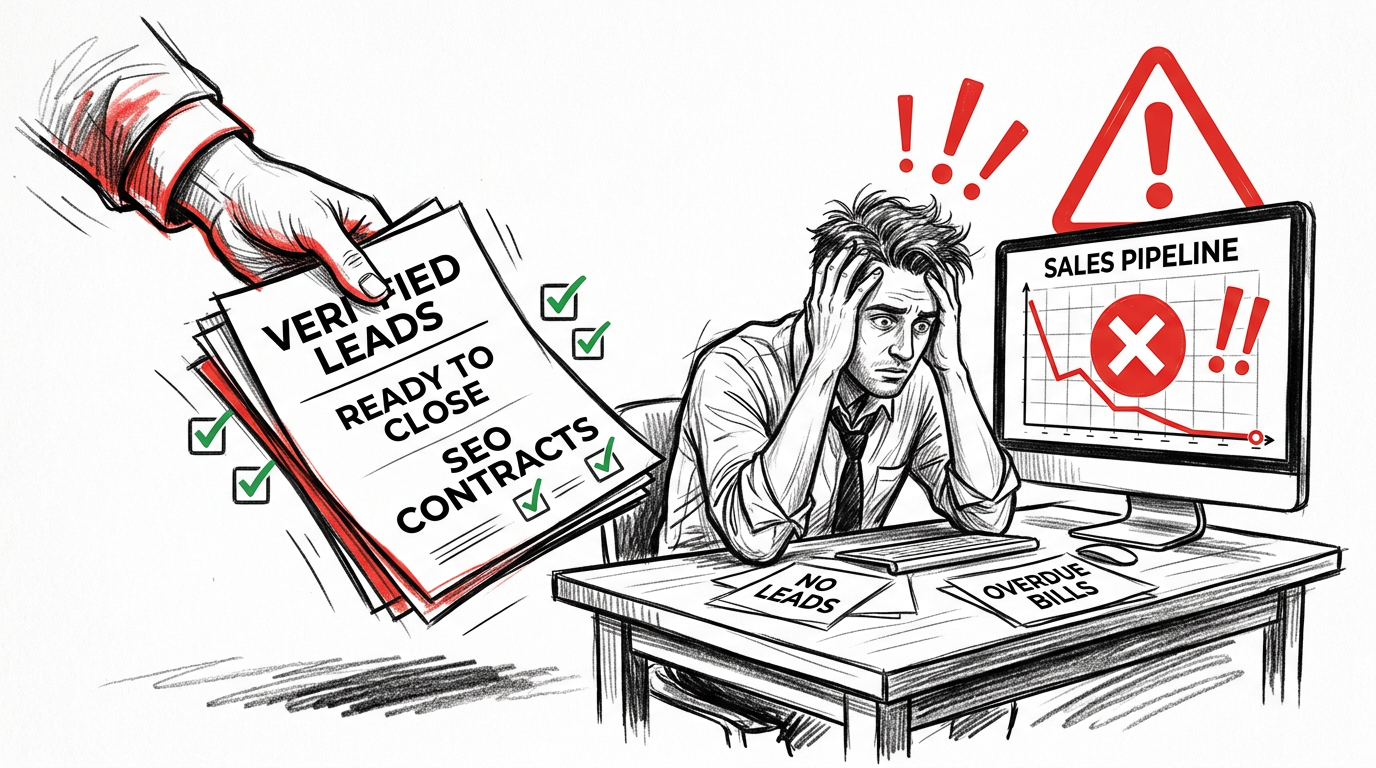
Your agency has capacity. Your team is good. But the pipeline is empty – again. Three months ago a big referral landed and everything felt safe. That project wrapped up last week. Now you are staring at a spreadsheet with two discovery calls and a desperate afternoon of cold outreach to businesses that have never heard of you.
This is the moment most SEO agencies know well. The question is not whether the pipeline will fill again. It is how long the anxiety will last before it does.
The fastest answer is buying SEO leads – but only if you know what kind. The lead buying market has two completely different products, and most agencies accidentally buy the wrong one. This guide tells you exactly what to look for, how the two models work, and why internet-verified exclusive leads are the only option that consistently converts. If you are building an outbound pipeline, our guide to outbound sales strategies complements the lead buying approach well.

What “Buying SEO Leads” Actually Means in 2026
The old model: why list brokers waste your budget
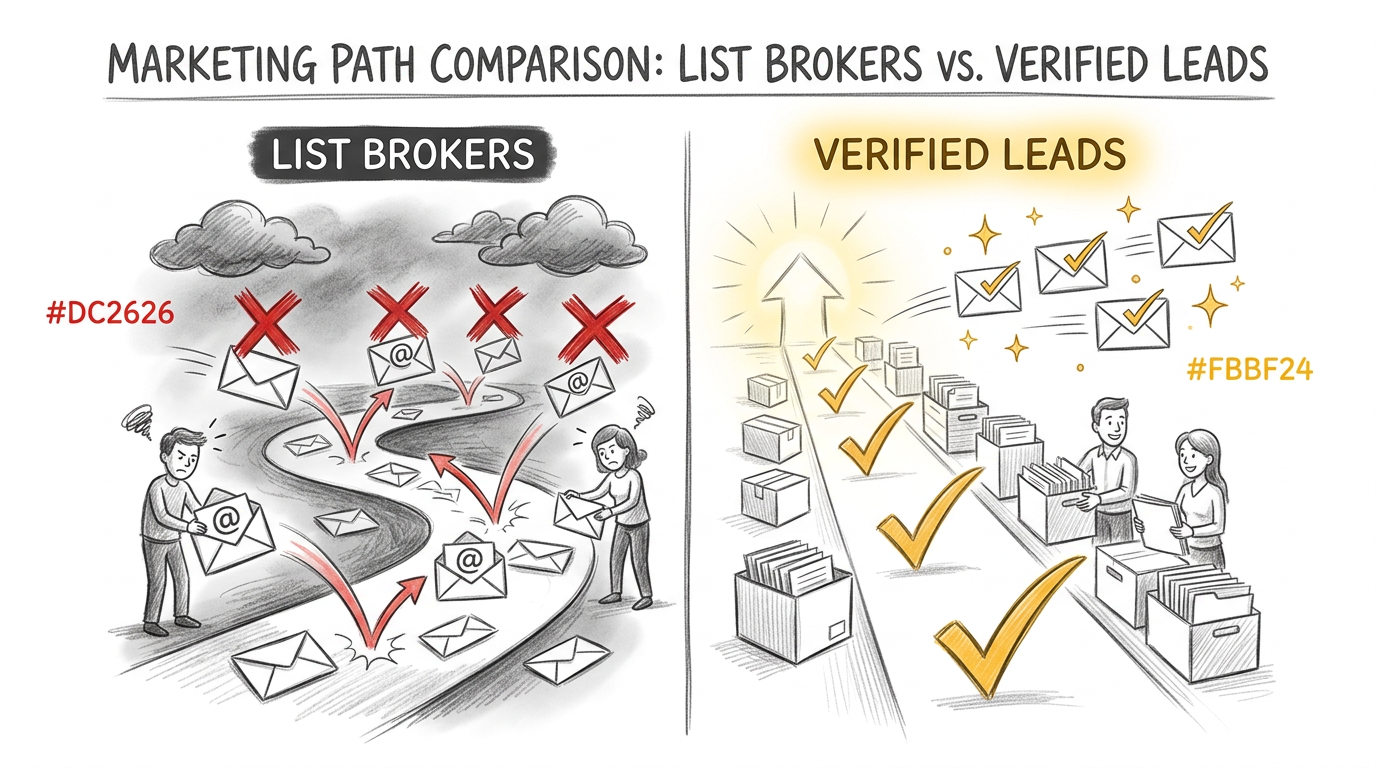
The traditional lead buying market was built on a simple transaction: buy a database, apply filters, resell contacts. A broker would scrape business directories, filter for “marketing managers” or “company websites,” and sell you a spreadsheet with names, emails, and phone numbers.
The problem is not the data quality – though that is often poor. The problem is that every contact in that list has told you nothing about their willingness to buy SEO services. They are names, not leads. And because list brokers sell the same list to ten agencies, you are competing with nine other pitches the moment you press send.
Agencies that buy from list brokers report a consistent pattern: 60-80% bounce rates, response rates below 1%, and a close rate so low that the effective cost per client is higher than almost any other acquisition channel.
The new model: internet-verified exclusive leads
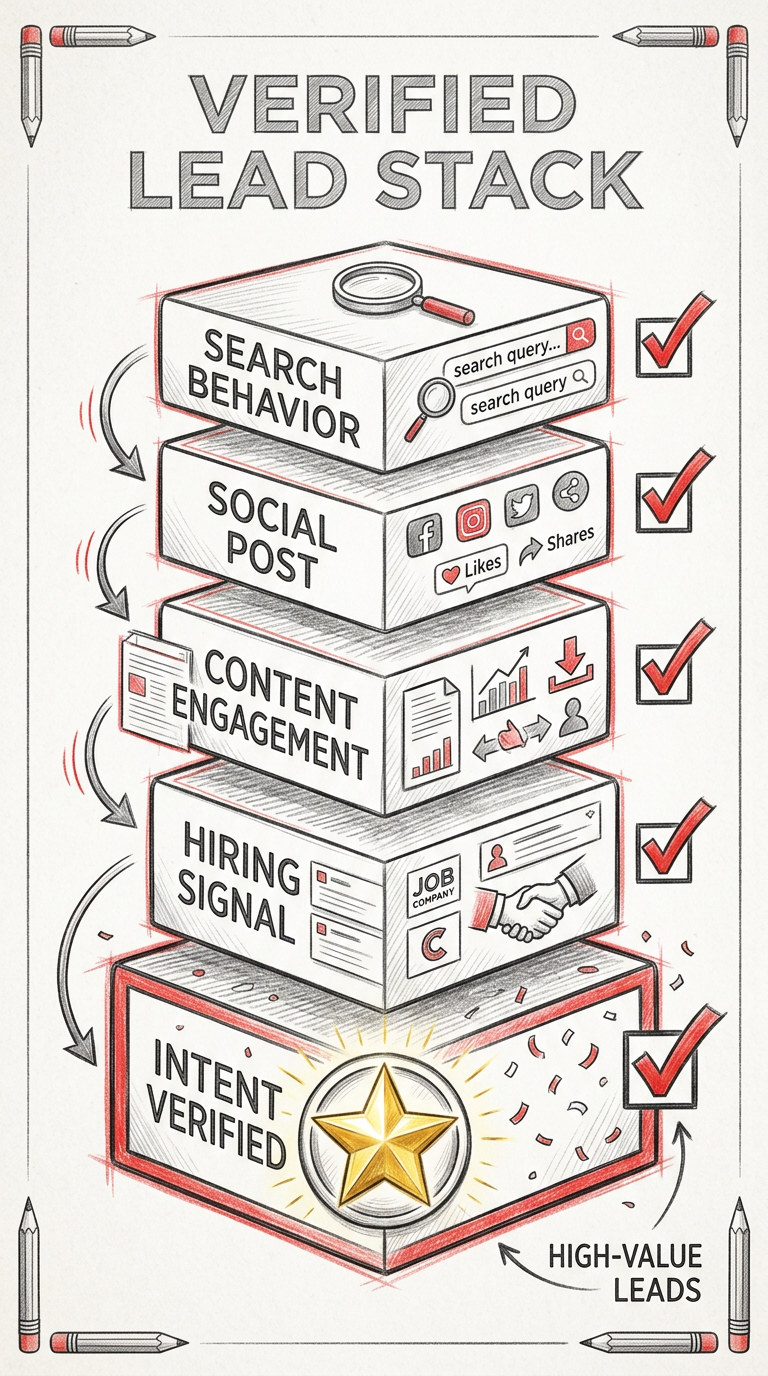
Modern SEO lead generation works on a fundamentally different premise. Instead of buying a list and hoping someone is ready to buy, the provider identifies accounts that have already told the internet they need SEO services – through search behaviour, content engagement, social signals, or hiring activity.
Each account is then verified against those signals before it is delivered to you. The result is a list of prospects who are not random contacts but real businesses with a documented, current need for SEO – sold exclusively to your agency.
What “internet-verified” means – and why it matters
Internet verification is not a background check on a name. It is a signal audit on an account. The provider looks for documented online behaviour that proves a genuine, current need for SEO services.
Strong verification signals include: the company or its decision-maker searched for SEO services or SEO agency pricing in the last 30-60 days; they downloaded an SEO guide, pricing sheet, or comparison article; they posted or commented about organic traffic problems, ranking drops, or SEO frustrations on LinkedIn, X, or Reddit; they posted a job listing for an in-house SEO specialist, which is a reliable signal that they are scaling organic traffic investment; they engaged with SEO tools, platforms, or industry communities.
A provider who can document the specific signal behind each account gives you confidence that the lead is real – and that the conversation you are about to have is not cold.
What Complete Lead Information Looks Like
A verified SEO lead should arrive with enough context to start a meaningful first conversation from the moment you open it. At minimum:
- Decision-maker full name, verified email address, and verified phone number
- Company domain, company size, industry vertical, and geographic location
- The specific SEO pain point the account was actively researching
- The internet signal that verified the lead’s intent
- The date of the most recent intent signal (freshness matters)
Without the pain point and the signal, you have a contact. With them, you have a conversation starter. The difference in response rate is not marginal – personalised outreach to an account with documented intent converts at 5-10x the rate of cold outreach to a list.
Two Models: DIY and DFY
Most lead providers sell one model. The best providers offer both because different agencies have different capacities, different processes, and different priorities. Knowing which model to choose is one of the most important decisions you will make about your pipeline.
Model 1: DIY – Verified Accounts, Your Outreach
In the DIY model, the provider delivers a list of internet-verified, exclusive SEO leads to your agency. Each lead arrives with complete account information. From that point, your team owns the entire outreach process.
You decide the messaging, the sequences, the channels (email, LinkedIn, social selling, phone), the timing, and the follow-up. The provider’s job ends at delivering verified accounts with real intent. Your job is to convert them.
Who DIY is built for: agencies that have an in-house business development team, established outbound processes, and the discipline to run consistent campaigns over time. If your agency already does cold outreach and you know what messaging resonates, DIY gives you the best verified accounts to apply your process to.
What you are really buying: your team’s time freed from list-building. Instead of spending two days scraping LinkedIn and cleaning a purchased list, your team opens a verified list and starts outreach the same afternoon.
What DIY costs relative to the alternative: less than DFY in direct spend, but your team’s time is the real cost. Make sure you factor that in when comparing models.
Model 2: DFY – Provider Runs the Campaign, You Get Booked Conversations
In the DFY (Done-For-You) model, the provider runs the entire campaign on your behalf. The minimum commitment is 3 months because cold outreach requires sustained volume and consistent messaging to convert prospects who are not yet familiar with your agency.
During the campaign, the provider handles everything: social selling on LinkedIn, X, Instagram, and Reddit, targeted email campaigns, and educational content creation that acts as a lead magnet. The content is not generic. It is built for your target audience – specific niches, specific SEO pain points, specific regions. If you are targeting SaaS companies in North America that need technical SEO, the outreach messaging and content are built around that exact challenge.
The result is booked conversations delivered directly into your calendar. Pre-qualified, intent-verified, niche-targeted prospects who are ready to talk about SEO with your agency.
Who DFY is built for: agencies that want to focus on client delivery rather than prospecting; agencies entering a new niche or geography where they do not yet have brand presence; agencies without the time or infrastructure to run consistent outbound campaigns; agencies that have tried DIY and want to scale without hiring more BD staff.
What you are really buying: pipeline consistency without the operational overhead. Your team shows up to booked calls and closes. The provider handles everything upstream.
What DFY costs relative to the alternative: more in direct spend than DIY, but the time saved on campaign management, content creation, and list-building is significant for most agencies. The real comparison is cost per booked conversation, not cost per lead.
How Verification Creates Leads That Actually Convert
The signal stack behind every lead
Verification is not a one-time check. It is a layered assessment of the account’s current internet behaviour. The best providers look for multiple signals before marking an account as a verified lead, because one signal (a search from three months ago) is weaker than three signals (a search this week, a social post this month, engagement with SEO content this week).
Freshness is one of the most important factors in lead quality. A lead generated from a signal that is 90 days old is not the same as a lead generated from a signal that is 7 days old. The prospect’s need may have changed, they may have already chosen an agency, or they may no longer be in a decision-making role.
Why complete lead information changes your response rate
When your outreach references the specific SEO pain point the account was researching and the signal that verified the lead, the response rate changes dramatically. A generic message – “we do SEO, want to talk?” – gets ignored. A personalised message – “I saw you posted in the SaaS founders group about organic traffic dropping after a Google update – we helped three SaaS companies recover and then grow organic traffic by 50% in six months. Worth a conversation?” – gets responses.
The difference is not just personalisation. It is evidence that you have done basic research and that you understand the prospect’s specific situation before you pitch anything.
What to Look for in a Lead Provider
1. Can they show you the verification signal?
Ask for a sample lead. Look for the pain point, the source, the date of the signal, and how it was matched to the account. If the provider cannot show you the signal, the leads are not verified – they are a list with a marketing label.
2. Do they offer both DIY and DFY?
A provider with both models can grow with your agency. You can start DIY while you are building your outbound process and switch to DFY when you want to free up capacity or scale into a new niche.
3. Can they target your specific niche and geography?
Generic SEO leads are not as valuable as niche-targeted leads. “SEO leads” produces conversations with businesses that may not be a fit. “SEO leads for SaaS companies in North America” produces conversations with businesses that match your ideal client profile from the first message.
4. Do they create content as part of the campaign?
In the DFY model, the provider should create educational content – guides, checklists, benchmark reports – that builds trust before the first sales conversation. Ask to see examples. Good content teaches the prospect something valuable. Bad content is a thinly disguised pitch that the prospect can see through immediately.
5. Is the lead truly exclusive?
Exclusive means one agency only. Not “one agency per lead type.” Not “one agency per region.” One agency, period. If the provider cannot commit to that, the leads are shared in practice regardless of what the sales page says.
DIY vs DFY: Which Model Fits Your Agency Right Now
Choose DIY if:
- You have a business development team or a dedicated person doing outbound
- You have an established outreach process that produces results
- You want full control over messaging, timing, and channel mix
- You are testing a new niche and want to learn what resonates before investing in a full campaign
Choose DFY if:
- Your team is focused on client delivery and does not have bandwidth for consistent outbound
- You need a predictable pipeline within 60-90 days, not six months
- You are entering a new niche or geography where you do not have brand presence
- You have tried DIY and the results were inconsistent because outreach execution was patchy
- You want the provider to handle the full campaign – messaging, social selling, email, content, lead magnets – while you focus on closing
Use both if:
You have a base of DIY leads your team works consistently, and you add DFY to fill top-of-funnel volume in new niches or during busy periods when your team cannot sustain outreach volume.
Why Exclusivity Changes the Economics of Lead Buying
The shared lead trap
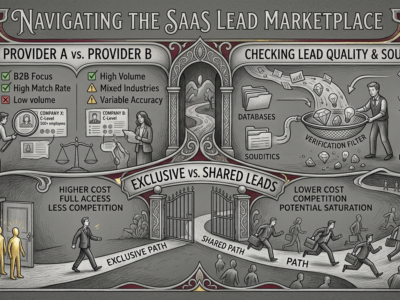
Shared SEO leads are sold to multiple agencies simultaneously. Here is what that looks like in practice: you buy a lead for $40. Four other agencies buy the same lead for $40. Five agencies email the same prospect in the same week.
One agency gets the response. The other four wasted their outreach budget, their follow-up sequences, and their team’s time. And the prospect – the one person who actually needed SEO help – now has a dim view of SEO agencies because five of them pitched them at once.
The effective cost per close on shared leads is not the price you paid. It is the price you paid multiplied by the number of agencies that received the same lead. If five agencies bought the same lead, your effective cost is five times higher than the sticker price.
The exclusive lead advantage
With exclusive leads, the conversation is yours. The prospect receives one outreach sequence from one agency. Trust builds from the first touch. The close rate reflects that.
Industry benchmarks show exclusive leads converting at 6-12%, compared to 1-3% for shared leads. When the average SEO monthly retainer is $1,500 and the average client stays 12+ months, the difference between a 2% close rate and an 8% close rate is not a few thousand dollars. It is the difference between a pipeline that bleeds money and a pipeline that compounds it.
What to Do After You Receive the Leads
Speed to lead
Contact verified SEO leads within 24 hours of delivery. The signal that verified them is fresh. The prospect is actively thinking about their SEO problem. Waiting three days means competing with a cooler prospect who has already moved on to other priorities.
The first message
Reference the specific pain point and the verification signal. “I saw your post about organic traffic dropping after the last Google update – we helped a SaaS company in a similar situation recover and grow organic traffic by 50% in six months.” This is not a template. It is a response to something the prospect actually said or did.
The qualification call
The first call is not a pitch. It is a conversation about the prospect’s situation. Ask about their current organic traffic, their past experiences with SEO agencies, their budget, and their timeline. The prospects who are a good fit will tell you in the first 10 minutes.
The proposal
Lead with outcomes. “We will increase your organic traffic by 50% and your organic MQLs by 30% within six months.” Support that promise with a clear methodology and specific milestones. Activities (4 blog posts per month, 10 backlinks per month) are supporting details. Outcomes are the headline.
The Cost of Bad SEO Leads
Unverified contacts waste your team’s time
Bounced emails, disconnected phone numbers, and contacts who left the company six months ago are the most common complaint about lead providers. Internet-verified leads solve this because verification is ongoing – the signal that confirmed the lead is recent, not a one-time database scrub from six months ago.
Shared leads destroy your close rate economics
As outlined above, shared leads are a treadmill. The more you buy, the more you waste on prospects who have already been contacted by competing agencies.
Leads without intent context force cold outreach
A name and an email address without the pain point or the verification signal means your team is starting every conversation from scratch. With verified leads, every conversation starts with context – and context converts.
FAQs
What does internet-verified mean for SEO leads?
The account has shown documented online behaviour – a search, a social post, content engagement, a hiring signal – that proves a genuine, current need for SEO services.
What is the difference between DIY and DFY?
DIY delivers the verified accounts to you. You run the outreach. DFY runs the full campaign – social selling, email, content – on your behalf and books conversations into your calendar.
How much do exclusive SEO leads cost?
Pricing varies by model, niche, and geography. DIY is typically per-lead or per-list. DFY is a monthly retainer with a 3-month minimum.
Are SEO leads worth it?
When the leads are internet-verified and exclusive, yes. The response rates and close rates are significantly higher than list-based or shared leads.
Can I target specific niches and regions?
Yes. The best providers build campaigns around your specific niche and geography. The more specific the brief, the more qualified the conversations.
How fast can I expect results from bought SEO leads?
With DIY, outreach can start the same day leads arrive. With DFY, expect the first booked conversations within 30-60 days as the campaign builds momentum.
Conclusion
Buying SEO leads is not about finding the cheapest option. It is about finding internet-verified, exclusive accounts with documented buyer intent – delivered through a model that fits your agency’s capacity.
The DIY model gives you control. The DFY model gives you time back. Both models produce better results than any list broker or shared lead marketplace because the underlying product is different: these are leads that have told the internet they need your service, sold exclusively to your agency.
The agencies that build the best SEO pipelines combine both approaches. Verified leads fill the pipeline now. Organic content and case studies keep it full over time.
Want to see what internet-verified, exclusive SEO leads could look like for your agency? Ask us for a sample – no pressure, just a look at how the verification model works.
Frequently Asked Questions
How do agencies get SEO clients?
Agencies acquire SEO clients through content marketing, case studies, cold outreach, SEO audits as lead magnets, referrals, and demonstrating expertise through rankings on competitive keywords.
What SEO services sell best to clients?
High-demand SEO services include technical SEO audits, local SEO, E-E-A-T optimization, content strategy, and AI search visibility. Clients pay premium for measurable organic growth.
How do you pitch SEO services to businesses?
Lead with a free SEO audit showing current gaps, demonstrate quick wins with technical fixes, present a roadmap with projected traffic and revenue impact, and show social proof through case studies.