
# How to Buy Web Design Leads: The Practical guide for Agencies in 2026
Your agency has the talent. Your portfolio is strong. You know responsive design, UX principles, and conversion optimization better than most. But the pipeline keeps running dry and you are spending more time prospecting than designing.
That frustration is exactly why so many agencies now buy web design leads instead of relying solely on cold outreach and referrals. The right leads – verified, exclusive, and intent-ready – can transform an agency’s growth trajectory.
This guide covers everything: what web design leads actually are, how to verify them, the two models available (DIY and DFY), buyer intent signals to look for, common mistakes to avoid, and how to choose the right provider.

What Buying Web Design Leads Actually Means
Buying web design leads means paying a provider to deliver pre-qualified prospects who have explicitly shown interest in web design services. These are not random business listings pulled from a directory. They are real decision-makers – founders, marketing directors, operations managers – who actively searched for web design, requested quotes, or engaged with web design content in the last 14 days.
The web design market is intensely competitive. Thousands of agencies worldwide compete for the same pool of small and medium businesses that need a new website or redesign. Cold outreach response rates sit between 1-3%. Referrals are unpredictable and depend entirely on your existing client base. Content marketing takes 6-12 months to show results.
Lead buying shortcuts that timeline by giving you immediate access to prospects who are already interested.
The Critical Distinction: Verified Versus Unverified
A verified web design lead has digital footprints that prove genuine intent. An unverified lead is just a business name from a purchased list with no evidence the company is actually looking for design services.
Verification methods include:
- Search behavior: The prospect searched for “web design services,” “website redesign,” “responsive web design,” or related terms in the last 7-14 days
- Content engagement: The prospect downloaded a design brief template, watched a portfolio video, or attended a webinar about web design trends
- Social signals: The prospect posted about needing a new website, asked for recommendations on LinkedIn, or engaged with design content on social platforms
- Direct inquiry: The prospect submitted a contact form, requested a quote, or asked for a portfolio review
Providers who skip verification are selling recycled contact data. These leads have typically been called by 5-10 other agencies already, or the inquiry is months old and the prospect has moved on.
What Complete Lead Information Looks Like
A quality web design lead package includes more than a name and email address. Here is the full data you should receive:
Account information: Business name, current website URL, industry vertical, approximate company size, and geographic location. This context helps you tailor your outreach and pricing.
Decision-maker contact: Full name, job title, direct email address, phone number, and LinkedIn profile of the person who actually approves web design budgets. A generic info@ address is not a lead.
Intent signals: What specifically triggered their interest – a search for “ecommerce web design,” a visit to your pricing page, or engagement with a portfolio show. This lets you personalize your opening message.
Timing context: When did the signal occur? A lead from this week is worth 10 times more than one from three months ago. Recency is the single biggest predictor of conversion.
Budget indicators: Any signals about their willingness to invest – enterprise inquiries carry different value than startup exploration. Company size and industry often provide clues.
Two Models: DIY and DFY
The lead buying market has two different products. Understanding the difference prevents costly mistakes.
Model 1: DIY – Verified Accounts, Your Outreach
In the DIY model, the provider delivers a list of internet-verified, exclusive web design leads to your agency. Each lead arrives with complete account information. Your team handles all outreach through LinkedIn, email, or phone.
This model works best for agencies with a dedicated business development person, established outbound processes, and the discipline to run consistent campaigns. You control the messaging, the timing, and the relationship from first contact to close.
Model 2: DFY – Provider Runs the Campaign, You Get Booked Conversations
In the DFY model, the provider runs the entire campaign on your behalf. They use social selling on LinkedIn, cold email sequences, and educational content to nurture leads until they book a discovery call with you. You only engage when the prospect is ready to talk.
This model works best for agencies that want to focus purely on design and delivery. If you have tried DIY and want consistent results without managing outreach, DFY removes the friction. Most providers require a 3-month minimum commitment for campaign setup and optimization.
How Verification Creates Leads That Actually Convert
Verification is not just a buzzword. It is the operational difference between leads that call you back and leads that waste your team’s time.
Search behavior verification: The prospect performed web design-related searches within the last 7-14 days. This is active, current intent – not historical browsing behavior. Someone who searched for “website redesign services” yesterday is actively evaluating agencies right now.
Content engagement verification: The prospect engaged with web design content – watched a portfolio show video, downloaded a “Website Redesign Checklist” template, or attended a webinar on 2026 design trends. This signals serious evaluation, not casual browsing.
Social proof verification: The prospect mentioned web design needs on LinkedIn, asked for recommendations in a Facebook group, or posted about their current website problems. This is unsolicited intent that no list broker can manufacture.
Inquiry verification: The prospect submitted a contact form on a design resource site, requested a quote comparison, or asked for a portfolio review. This is the strongest signal – they are actively evaluating agencies and want to see your work.
What to Look for in a Lead Provider
Not all lead providers are equal. Use this checklist when evaluating:
- Do they verify every lead through internet behavior? If they cannot explain their verification methodology, walk away.
- Are leads exclusive or shared? Shared leads mean 3-5 agencies compete for the same prospect within hours. Exclusivity gives you the first-mover advantage.
- Do they include decision-maker contact information? A generic company email is not a qualified lead.
- What is the minimum commitment? Legitimate providers require at least a monthly commitment. One-off lead purchases are almost always recycled data.
- Do they offer both DIY and DFY options? Providers with only one model may be pushing what works for their business, not yours.
- What is their replacement policy? Quality providers replace leads that do not convert within a specified period.
Common Mistakes When Buying Web Design Leads
Buying on price alone. Cheap leads are cheap for a reason. They are old, shared, or unverified. You will waste more time calling dead-end prospects than you would save on cost.
Skipping verification questions. If a provider cannot explain exactly how they verify leads, they are not verifying them. Ask for specific methods before buying.
Treating all leads equally. A lead that searched for web design yesterday is worth 10x more than one that inquired six months ago. Prioritize recency and specific intent signals.
No follow-up system. Even verified leads need consistent follow-up. Have a process in place before you buy leads, not after.
Ignoring exclusivity. Shared leads mean multiple agencies call the same prospect within hours of delivery. Exclusivity ensures your outreach is the first – and often the only – one the prospect responds to.
The ROI Case for Verified Leads
Agencies using internet-verified web design leads consistently report conversion rates of 3-5% on outreach, compared to 0.5-1% for shared or unverified lists. At those rates, a list of 100 verified leads delivers 3-5 clients. The same list of unverified shared leads might deliver zero.
When you factor in the cost of your team’s time on dead-end prospects, the real ROI difference is even larger. Every hour spent on an unverified lead is an hour not spent on a prospect who actually wants to talk.
Ready to Fill Your Web Design Pipeline?
Get internet-verified, exclusive web design leads delivered to your agency. No shared lists. No recycled data. Just ready-to-talk prospects.
Channels That Deliver the Best Web Design Leads
Not all channels produce the same quality of web design leads. Here is what works:
LinkedIn social selling: Many business owners and marketing directors research web design agencies on LinkedIn. Engaging with design-related posts, sharing portfolio work, and running targeted outreach to decision-makers in industries that frequently need websites (real estate, restaurants, professional services) produces consistent results.
Email outreach with personalization: Cold email still works for web design leads when it is personalized. Reference a specific element of their current website – a broken layout, slow load times, or a missing mobile experience. Generic templates get deleted.
Educational content lead magnets: Offering a free “Website Redesign Checklist” or “2026 Web Design Trends Report” in exchange for an email address builds a list of prospects who have explicitly expressed interest in web design services.
Review platform outreach: Platforms like Clutch, G2, and Upwork have thousands of businesses actively searching for web design agencies. Responding to RFPs and optimizing your profile on these platforms puts you in front of ready-to-buy prospects.
Referral partnerships: Partnering with complementary service providers – SEO agencies, digital marketing firms, hosting companies – creates a steady stream of warm referrals. These leads come pre-qualified because someone they trust recommended you.
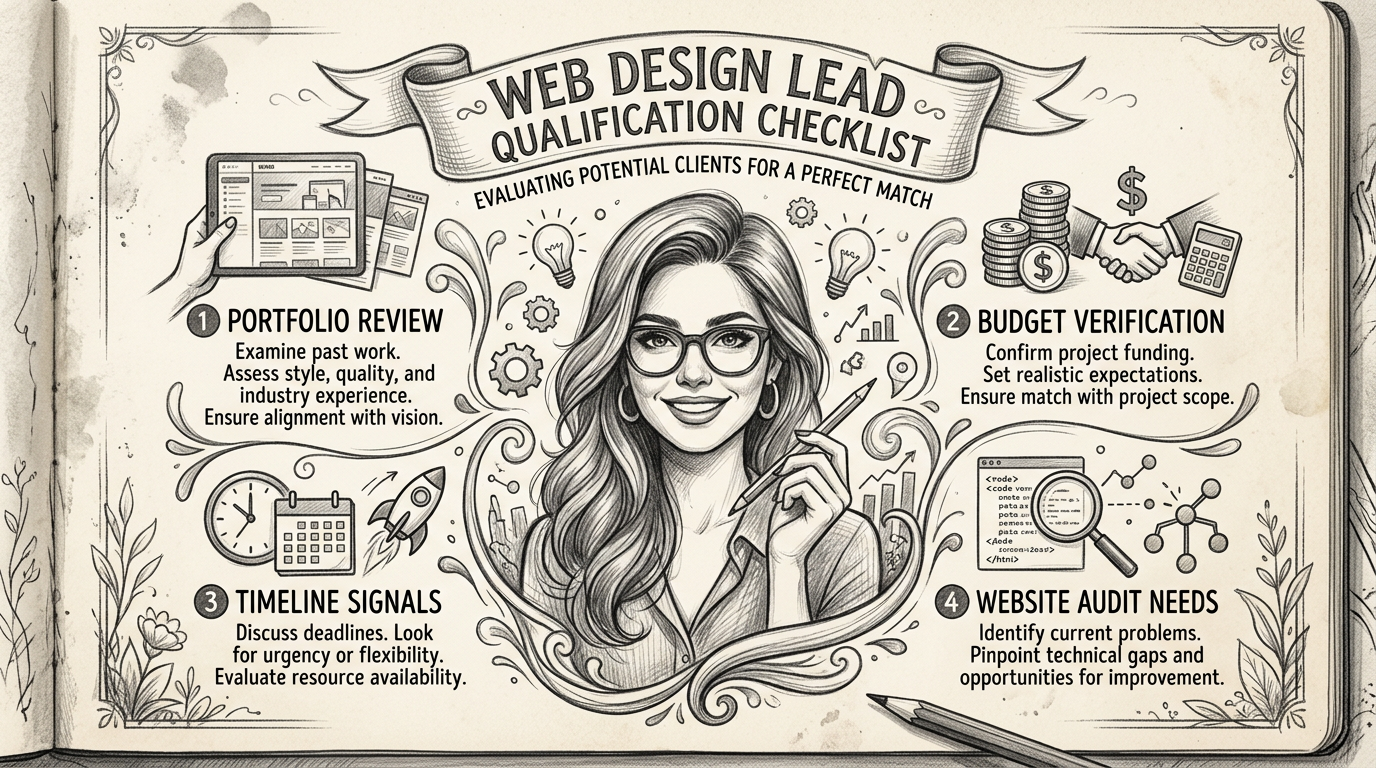
How to Qualify Web Design Leads Before You Invest Time
Not every web design lead is worth pursuing. Here is how to qualify them quickly:
Budget fit: Do they have a realistic budget for web design? A small local restaurant with a $500 budget is not the same as an e-commerce brand planning a $50,000 investment.
Timeline urgency: Are they ready to start now, or just exploring options? Leads with a specific launch timeline convert at 5x the rate of leads who are “just thinking about it.”
Decision authority: Are you talking to the person who approves web design budgets? If you are speaking to a marketing coordinator who needs approval from a VP, your sales cycle just got longer.
Current website state: Is their existing website broken, outdated, or non-existent? A broken website is an immediate pain point. A site that “works fine” is a harder sell.
Competition: Who else are they evaluating? If they are comparing you to 5 other agencies, your chances drop significantly. If you are the only agency they have contacted, you are in the driver’s seat.
The Verification Checklist: Before You Buy
Use this checklist before purchasing any web design lead package:
- Ask for a sample lead – verify the data yourself before committing
- Confirm the lead searched for web design within the last 14 days
- Verify the decision-maker contact is direct, not a generic inbox
- Check that the lead has not been sold to competing agencies
- Confirm the replacement policy for leads that do not convert
- Ask about the verification methodology – search data, content engagement, social signals
- Start with a small package to test quality before scaling
Why Internet-Verified Leads Are the Only Sustainable Option
The lead buying market has two products that look similar on the surface but deliver completely different results.
Shared leads from list brokers cost less upfront but convert at 0.5-1%. You are competing with 3-5 other agencies for the same prospect. By the time you call, they have already spoken to two competitors and lost interest.
Internet-verified exclusive leads cost more per lead but convert at 3-5%. The lead is yours alone. The intent is proven through recent search behavior and content engagement. The contact information is current and direct.
When you calculate the real cost – your team’s time, opportunity cost of missed clients, and the lifetime value of a web design client – verified exclusive leads are actually cheaper per close.
If you are ready to move beyond random cold outreach, internet-verified exclusive leads offer a different approach. The leads arrive ready to talk, the intent is proven through real digital behavior, and you own the relationship exclusively from first contact.
What the Best Web Design Agencies Do Differently
Top-performing web design agencies do not rely on a single lead source. They build a diversified pipeline that combines bought leads with organic inbound and referral partnerships.
The agencies that scale fastest use verified leads as their foundation – the predictable, repeatable input that fills the pipeline regardless of season or algorithm changes. They layer content marketing and SEO on top to capture organic demand. And they build referral partnerships to capture warm introductions.
This three-channel approach eliminates the feast-or-famine cycle that traps most agencies. When one channel slows down, the others keep the pipeline full.
The predictable pipeline: With 50-100 verified leads per month, you know exactly how many discovery calls you will have. That predictability lets you plan hiring, project capacity, and revenue targets with confidence.
The quality advantage: Verified leads convert at 3-5x the rate of unverified lists. Fewer leads, more clients, better margins. The math works in your favor even at a higher per-lead cost.
The exclusivity benefit: When you own the lead exclusively, you are not competing with other agencies for the same prospect. Your outreach is the first and often the only communication they receive. That first-mover advantage determines who gets the client.
Setting Up Your Lead Follow-Up Process
Buying leads is only half the equation. How you follow up determines whether those leads become clients or wasted opportunities.
First response within 1 hour: Verified leads are hot. The prospect is actively evaluating agencies right now. A delayed response signals that you are not hungry for their business.
Personalized opening message: Reference something specific from their intent data. “I saw you were researching ecommerce web design platforms last week” performs dramatically better than generic templates.
Multi-channel follow-up sequence: Combine email, LinkedIn, and phone calls over a 10-14 day period. Single-channel outreach gets ignored. Multi-channel sequences get responses.
Value-first approach: Share a relevant resource before asking for a call. A free website audit, a design trend report, or a portfolio example in their industry builds trust faster than a sales pitch.
Clear next steps: Every message should have one clear call-to-action. Schedule a call, view a case study, or download a resource. Vague “let us stay in touch” messages get no response.
Measuring Lead Quality Over Time
Track these metrics to continuously improve your lead buying decisions:
- Response rate: What percentage of leads respond to your first outreach? Below 10% suggests the leads are not well-verified.
- Discovery call rate: What percentage of responses turn into scheduled calls? This measures the quality of your messaging and the lead’s actual interest level.
- Close rate: What percentage of calls become paying clients? Below 3% suggests either poor lead quality or a closing process that needs work.
- Cost per client: Total lead cost divided by number of new clients. Track this monthly to ensure your ROI is improving as you optimize.
- Lead recency impact: Compare close rates for leads contacted within 24 hours versus 7 days. This data justifies your investment in fast response times.
Conclusion: Buy Web Design Leads the Right Way
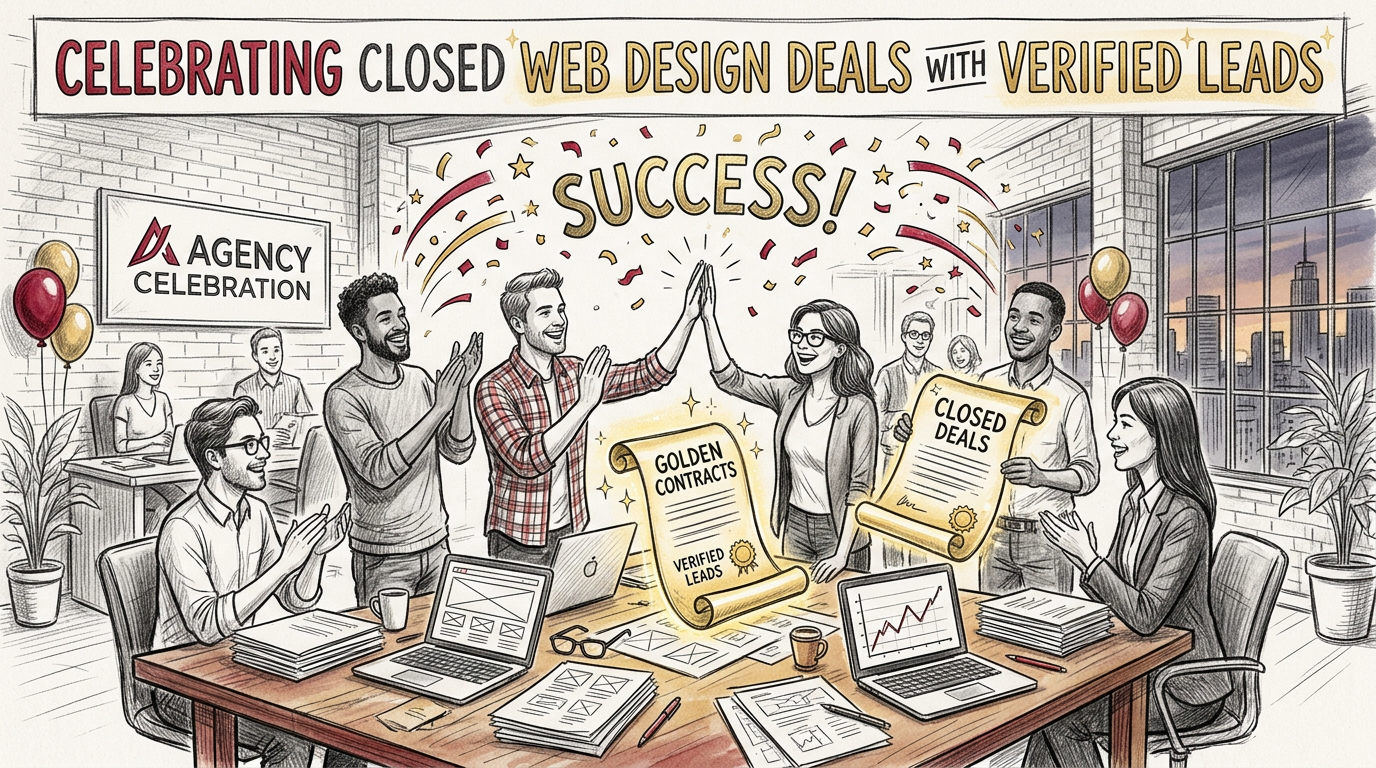
Web design leads are not all created equal. The difference between a recycled list broker lead and an internet-verified exclusive lead is the difference between wasted hours and new client revenue.
If your agency is ready to stop competing for attention and start talking to prospects who are already looking for your services, buying SEO leads with full verification data gives your team the edge. Or if you want to focus purely on design work, the DFY model handles the outreach, nurturing, and booking – you just show up to the conversation ready to win the client.
Frequently Asked Questions
How do web design agencies find clients?
Web design agencies find clients through portfolio showing, design contest platforms, Dribbble/Behance, cold outreach to businesses with outdated sites, referrals, and local business networking.
What makes a web design lead qualified?
A qualified lead has a clear project scope, allocated budget ($3000+ minimum), decision-maker access, realistic timeline, and genuine need—not just a ‘someday’ website project.
How do you price web design projects?
Pricing models include flat project fee, hourly rate ($75-200/hour), retainer for ongoing work, or value-based pricing tied to business outcomes. Always qualify budget before scoping.