CRM Integration Lead Generation for Agencies: Finding Clients With Broken Tech Stacks
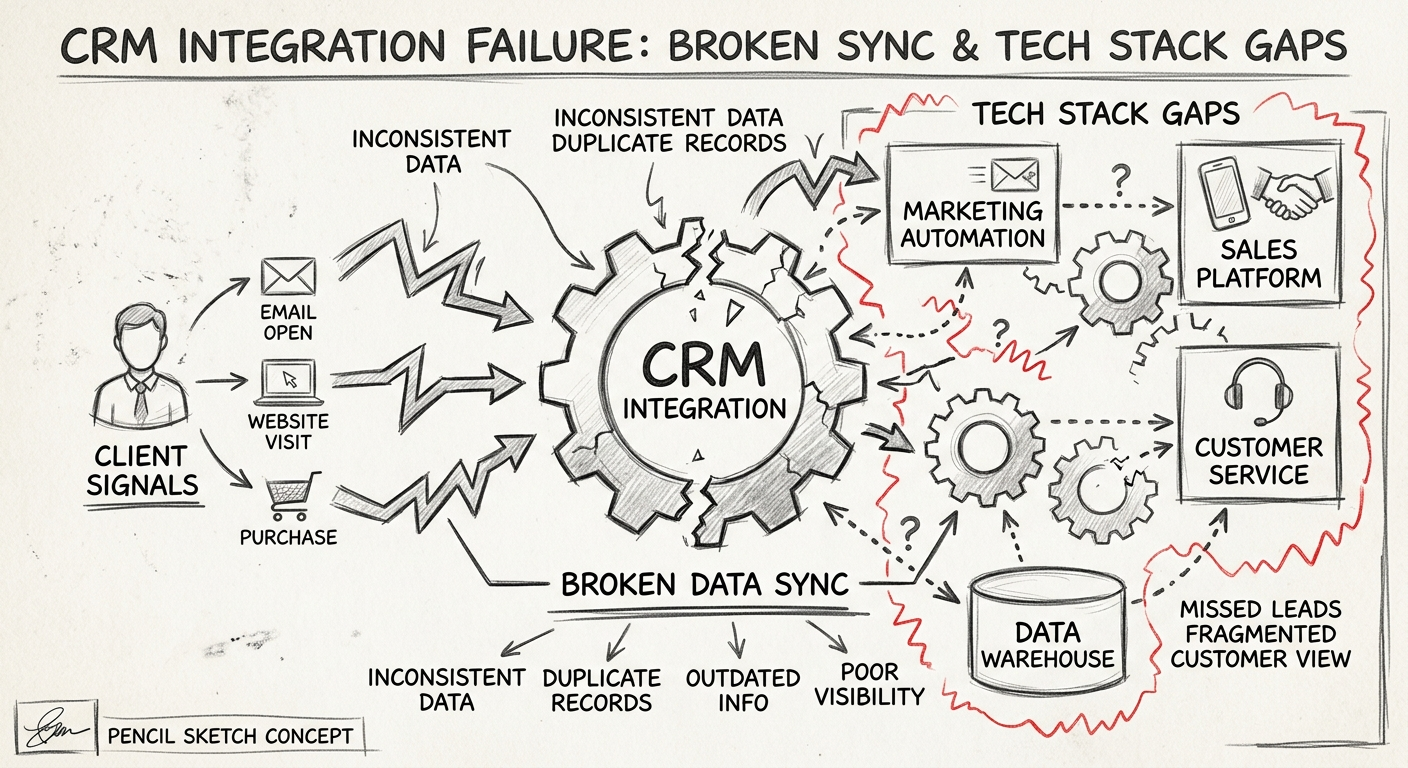
CRM integration agencies occupy a unique position in the agency landscape. The service they sell is infrastructure. They do not generate leads or create content or run ads. They connect the systems that other agencies and businesses rely on to do those things. When a CRM integration is broken, the entire revenue pipeline slows down. Sales teams lose data. Marketing automation stops triggering. Customer support cannot see the full customer history. The business does not always realize that the root cause is a CRM integration problem. They know something is wrong. They know leads are falling through the cracks. They know their sales team is frustrated. But they do not know that the fix is in the integration layer, not in the sales team or the marketing strategy.
The agencies that fill their pipeline with CRM integration clients consistently do not compete on the channels their prospects are already using. They identify businesses that are showing evidence of CRM integration problems, and they reach those businesses with a message that demonstrates they understand the specific technical gap. That message lands because it is based on observable evidence, not a generic pitch about CRM optimization.
This guide covers the specific signals that indicate a business needs CRM integration help, where to find those businesses at scale, the outreach approach that gets responses from technology directors and operations leaders, and the qualification framework that ensures you are talking to companies with both the problem and the budget to fix it.

Why CRM Integration Agencies Struggle With Lead Generation
Learn more about Lead Generation for Agencies.
Learn more about Lead Generation for Agencies.
CRM integration agencies struggle with lead generation for one consistent reason. The buyers who need CRM integration help are often not the people who search for CRM integration services. The person who feels the pain of a broken CRM integration is the sales manager who is manually entering data because the CRM is not syncing with the lead source. The person who searches for CRM integration services is the IT manager or operations director who may not fully understand the business impact of the integration gap. That mismatch means the person who needs your service is not the person who reaches out to you.
The second reason is the invisible problem. A broken CRM integration does not create a visible symptom like a crashed website or a blank landing page. It creates slow, subtle problems: data that does not transfer, automations that do not trigger, reports that do not match. The business owner may not connect these symptoms to a CRM integration problem. They blame the sales team for not following up. They blame the marketing team for generating bad leads. They blame the CRM vendor for a bad product. The agency that can diagnose the real root cause has a powerful story to tell.
The third reason is timing. A business does not wake up and decide to hire a CRM integration agency because their data is slightly messy. Something triggers that decision. They switch CRM platforms and realize their integrations do not work with the new system. They add a new marketing automation tool and discover it does not sync with their CRM. They hire a new sales director who expects real-time data and finds out the CRM is 30 days behind. The agencies that reach the prospect at the moment of that trigger convert at five to ten times the rate of agencies that reach them during the research phase.
The Signals That Mean a Business Needs CRM Integration Help
Learn more about Marketing Automation Leads.
Learn more about Marketing Automation Leads.
Their Sales and Marketing Data Do Not Match
A business where the sales team’s numbers do not match the marketing team’s numbers has a CRM integration problem. The marketing team reports 500 leads generated this month. The sales team reports 300 leads in the CRM. One hundred leads are missing. The gap is usually caused by a broken integration between the marketing automation platform and the CRM. Leads are generated but not synced. Forms are submitted but not recorded. The result is mistrust between teams and missed revenue opportunities.
You can identify this problem by reviewing a business’s public-facing lead generation activity and comparing it to the data in their CRM if you have access, or by asking about the lead flow during outreach. A business that cannot reconcile their marketing and sales numbers has an integration problem. That is a warm lead because the problem is costly and the fix is usually straightforward.
Their Marketing Automation Is Not Triggering Follow-Up Actions
A business whose marketing automation platform is not triggering follow-up actions in the CRM has a broken integration. The marketing team sets up a campaign that should create a task for the sales team when a lead reaches a certain score. The task is never created. The lead goes uncontacted. The revenue opportunity is lost.
You can identify this problem by monitoring a business’s marketing activity and comparing it to their follow-up behavior. If a business runs a campaign and you do not receive a follow-up message within 48 hours, the automation is broken. That is a warm lead because the business has invested in automation infrastructure and is not getting the return.
They Recently Switched CRM Platforms
A business that recently switched CRM platforms is almost guaranteed to have integration problems. The new CRM has a different API structure, different data fields, and different webhook configurations. Every integration that worked with the old CRM needs to be rebuilt for the new one. That process is complex, and most businesses underestimate the scope.
You can identify CRM platform switches by monitoring technology changes using tools like BuiltWith or Wappalyzer. When a business changes their CRM technology, check whether their integrations are working. If their marketing automation is not syncing, their email platform is not communicating, and their lead forms are not populating the new CRM, they are a warm lead. The outreach message is straightforward: “I noticed you switched to Salesforce last month. Here are the integrations that usually break during a migration and how to fix them.”
Their Sales Team Complains About Data Quality
A business whose sales team regularly complains about data quality has a CRM integration problem. The sales team receives leads with missing phone numbers, incorrect company names, or duplicate entries. They spend time cleaning data instead of selling. That frustration is a buying signal.
You can identify this problem by listening to sales team communications on LinkedIn, in job postings, and in company reviews. When a sales team complains about CRM data quality, the root cause is almost always an integration problem. The marketing automation tool is passing incomplete data to the CRM. The form tool is not capturing all fields. The API is dropping records. The agency that fixes the integration fixes the data quality problem and the sales team’s frustration at the same time.
Where to Find CRM Integration Clients
Learn more about B2B Lead Generation Strategies.
Learn more about B2B Lead Generation Strategies.
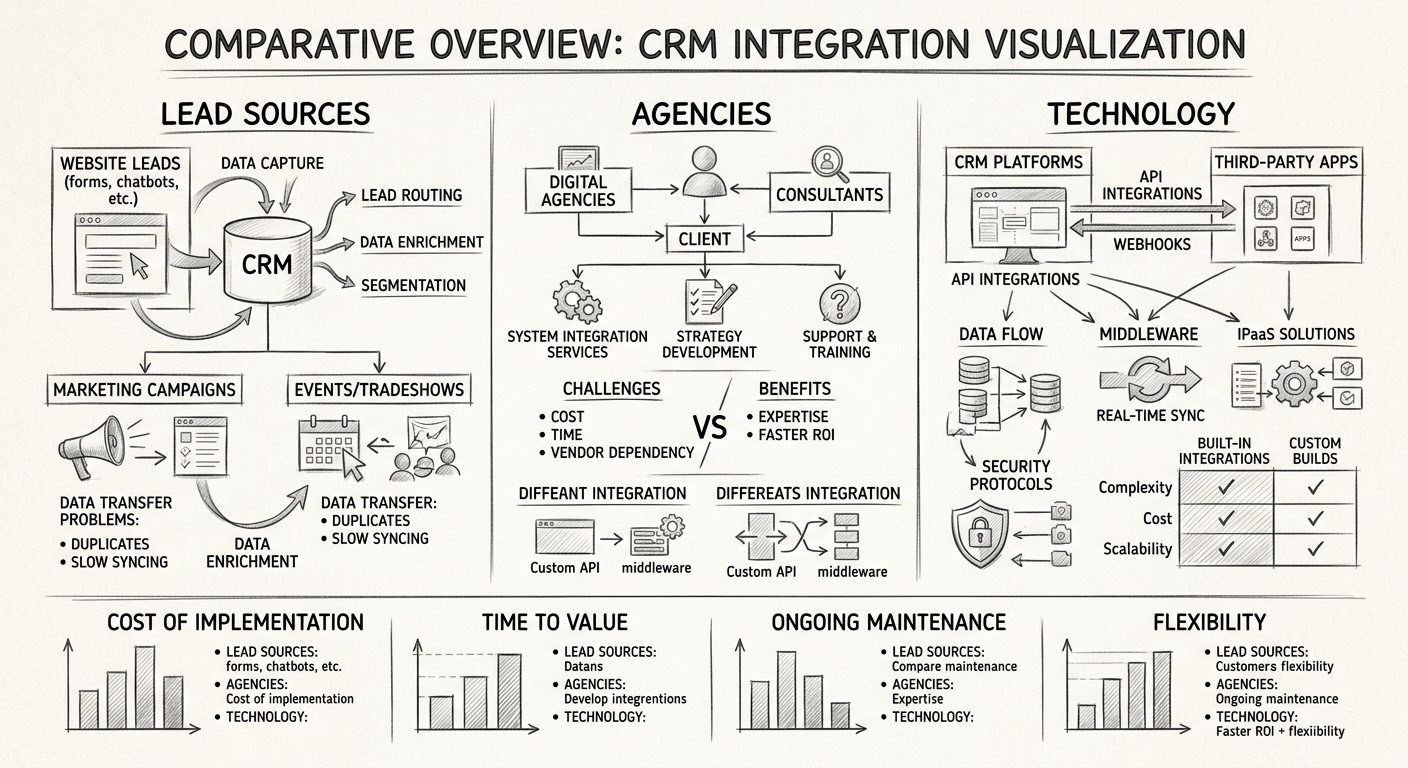
Businesses Using Multiple SaaS Tools Without Native Integrations
Businesses that use multiple SaaS tools without native integrations are creating manual work for their teams. They use a marketing automation tool, an email platform, a customer support tool, and a CRM, and none of them talk to each other. The result is data that sits in silos, manual data entry, and missed opportunities.
You can identify these businesses using technology profiling tools. When you see a business using HubSpot for marketing automation, Zendesk for customer support, and Salesforce for CRM, and there is no native integration between them, you have found a warm lead. The outreach message is: “I analyzed your tech stack. You are using five tools that do not talk to each other. Here is how much that is costing you in manual work and lost data.”
Businesses With Complex Sales Processes
Businesses with complex sales processes need CRM integrations that most off-the-shelf CRMs do not provide out of the box. A business that sells through a combination of direct sales, channel partners, self-service, and inside sales needs a CRM that tracks all of those channels and syncs data between them. Most CRMs handle one channel well and require customization for the others.
Complex sales processes are a warm lead because the business has already outgrown the basic CRM setup. They need custom integrations, and they need an agency that can build and maintain them. The outreach message is: “Your sales process spans three channels, but your CRM only tracks one. Here is how to connect the others.”
Businesses That Recently Added a New Sales Channel
A business that recently added a new sales channel (e-commerce, marketplace, partner channel, self-service portal) has a CRM integration problem. The new channel generates leads and sales, but the data from that channel is not syncing with the CRM. The sales team does not see the new leads. The marketing team cannot track attribution. The finance team cannot reconcile sales data.
New sales channels are a warm lead because the business has already made the investment in the new channel and is now discovering the integration gap. The timing is right for a conversation about CRM integration. The outreach message is: “I see you launched a Shopify store last month. Your Shopify orders are not syncing with your CRM. Here is how to fix that and why it matters for your sales team.”
The Outreach Approach for CRM Integration Leads
Lead With a Technical Observation
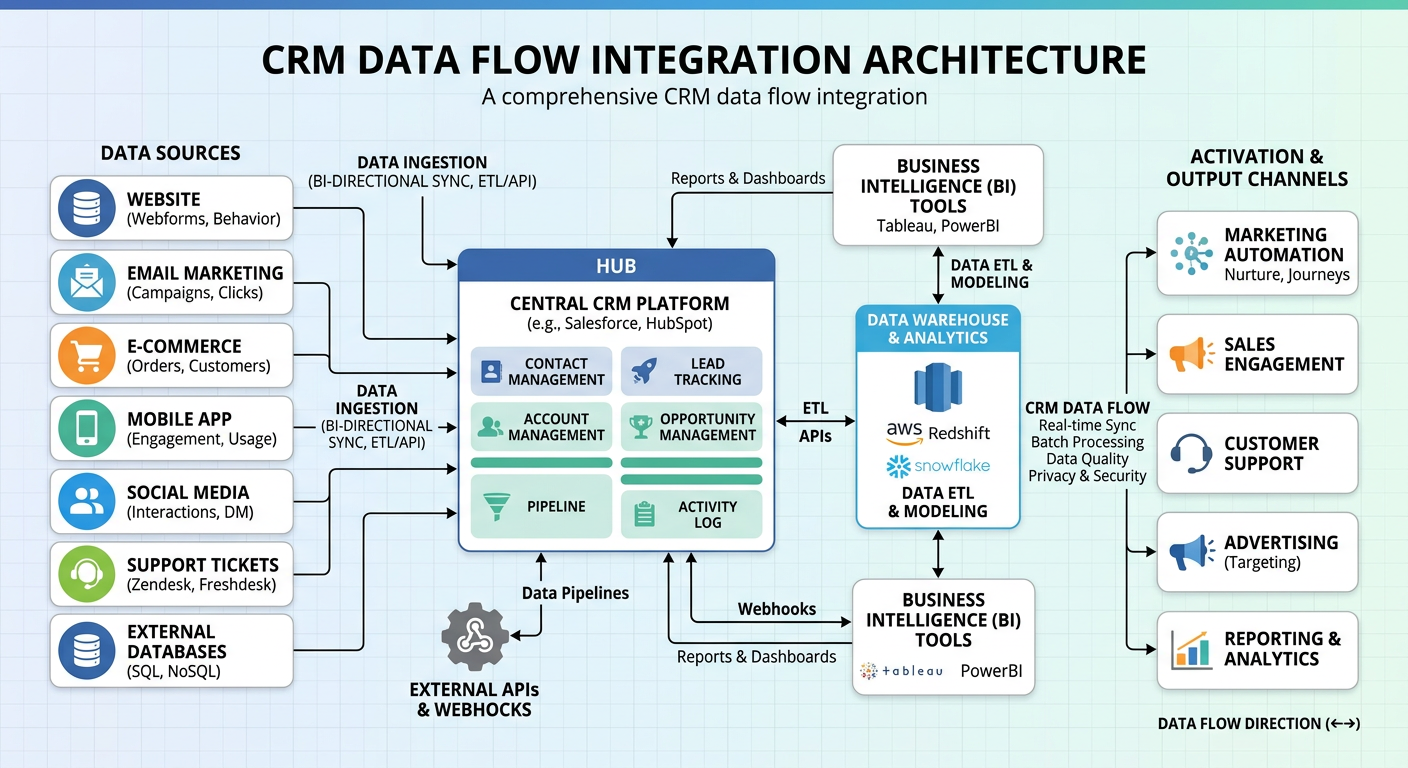
The most effective outreach message for CRM integration leads references a specific technical observation. “I looked at your tech stack and noticed your HubSpot integration is using an outdated API version. That is causing 15 percent of your leads to drop silently.” That message is useful immediately. It gives the prospect actionable information, whether or not they hire you.
Technical observations work because they prove expertise. When a technology director receives an email that references a specific API version or integration configuration, they know the sender has done real technical analysis. That is a differentiator in a market where most agency outreach is generic.
Show the Business Impact
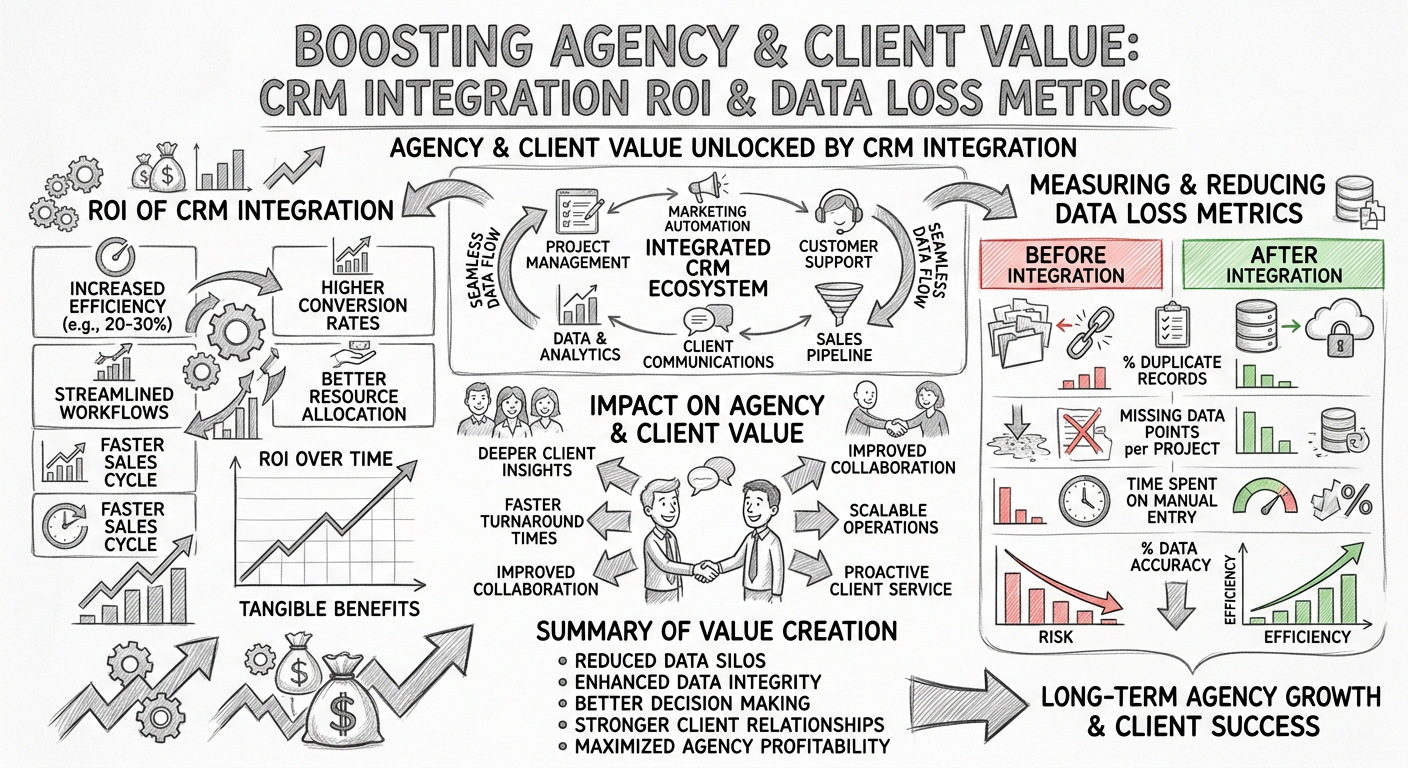
CRM integration issues have a direct impact on revenue. Frame your outreach around the business outcome, not the technical fix. “Your broken HubSpot-to-Salesforce sync is costing you approximately 50 leads per month. At your average deal size, that is $25,000 per month in lost revenue.” Numbers make the case. Technical jargon does not.
Offer a Free Integration Audit
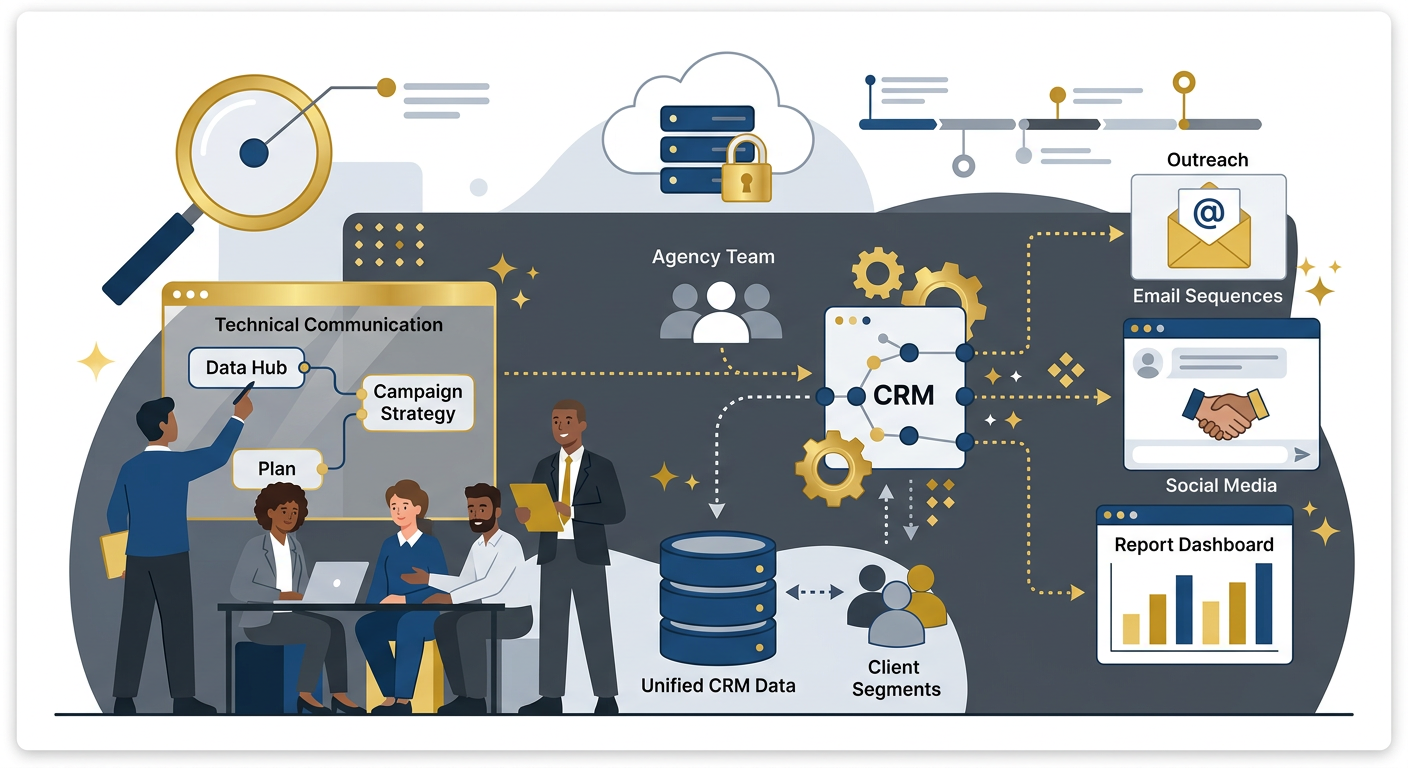
A free integration audit is the most effective first touch for CRM integration leads. The audit reviews their current tech stack, identifies broken integrations, estimates the data loss, and provides a prioritized fix list. When you deliver value before asking for anything, you position yourself as an expert who has already started helping. That is a much stronger starting position than a proposal for integration services.
How to Qualify CRM Integration Leads
Tech Stack Complexity
A business with a simple tech stack (CRM plus email) has limited integration needs. A business with a complex tech stack (CRM plus marketing automation plus customer support plus e-commerce plus analytics) has significant integration needs. Qualify for tech stack complexity early. The businesses with the most complex stacks are the ones that need your help the most and are willing to pay the most for it.
Integration Budget
CRM integration projects typically range from $5,000 for a simple two-system integration to $50,000 or more for a full tech stack overhaul. A business that cannot allocate that budget is not a real lead. Ask about integration budget early. If they do not have one, they are not ready. Move on.
Decision-Maker Access
CRM integration decisions are usually made by technology directors, operations directors, or founders. In smaller companies, the founder makes the decision. In larger companies, it is a VP of Engineering or an IT director. You need access to the person who can approve the integration budget and coordinate the technical implementation.
Comparing CRM Integration Lead Sources
Inbound From Technical Content
Publishing technical content about CRM integrations attracts inbound leads from technology directors and operations leaders who are actively researching solutions. These leads are usually well-qualified because they are already aware of the problem and are looking for an expert who can solve it.
The downside is that technical content takes time to build authority and generate inbound leads. You need consistent publishing for six to twelve months before inbound becomes reliable. But the leads you get from technical content are the highest-converting leads in the market because they have already consumed your expertise and chosen to reach out.
Referrals From Existing Clients
Existing CRM integration clients who have seen results are your strongest source of new leads. A client whose sales team productivity increased after a CRM integration overhaul will refer other technology directors in their network. That referral carries the credibility of results, which is more powerful than any pitch.
Buying Verified CRM Integration Leads
Buying CRM integration leads from a signal-based provider gives you immediate access to businesses with broken or incomplete CRM integrations. The leads come with context: which integrations are broken, what their tech stack looks like, and why the integration gap is costing them money. That context lets you write outreach that is useful from the first sentence.
Signal-based CRM integration leads convert at higher rates than generic business contact lists because the prospect has already demonstrated the behavior that precedes a CRM integration decision. A business that recently switched CRM platforms or added a new sales channel is already in the market for integration help. You are reaching them at the right time.
FAQ
How do I find CRM integration clients that are ready to hire?
Look for businesses with mismatched sales and marketing data, broken marketing automation, recent CRM platform switches, and complex multi-tool tech stacks. Those signals indicate companies that have already outgrown their current integration setup.
What is the best outreach message for CRM integration leads?
Reference a specific technical gap in their integration setup: an outdated API, a broken sync, or a missing connection between tools. Offer a free integration audit that shows them exactly what is broken and what it is costing them. Lead with technical credibility, not a pitch.
How many CRM integration leads do I need per month?
Ten to twenty qualified leads per month will sustain a CRM integration agency. CRM integration deals have longer sales cycles and higher deal values, so fewer leads are needed to hit revenue targets.
Should I buy CRM integration leads or build my own pipeline?
Buying leads gives you immediate access to businesses with broken CRM integrations that need fixing. Building your own pipeline through technical content and referrals takes six to twelve months. Buy leads for immediate pipeline while building organic channels for long-term compounding.
What makes a CRM integration lead high quality?
A high-quality CRM integration lead has a complex tech stack with multiple tools that need syncing, a visible data loss problem, a budget for integration work, and a technology decision-maker who can approve the engagement. If three or more of these criteria are met, the lead is worth investing time in.
—
CRM integration agencies that find clients through signals instead of cold outreach build pipelines that are faster, more consistent, and higher value. The businesses that need your help are already using multiple SaaS tools, already losing data between systems, and already frustrated by manual workarounds. You just need to reach them with a message that shows you see the integration gap and know how to close it. That is where the best CRM integration agencies win.
Frequently Asked Questions
How do agencies find CRM implementation clients?
Find clients by auditing their current CRM setup, offering free CRM health checks, demonstrating integrations expertise, and networking with sales operations professionals.
What CRM services do agencies offer?
Services include CRM selection consulting, implementation (HubSpot, Salesforce, Pipedrive), data migration, automation workflows, custom integrations, and team training.