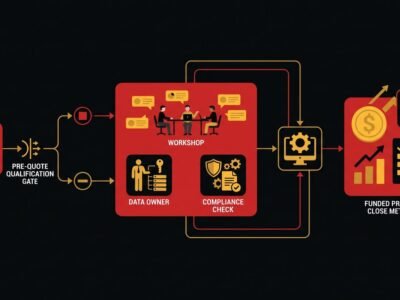

Case Study: A Digital Marketing Agency Rebuilt Its Pipeline On Verified Full-Service Prospects
Your pipeline has 41 ‘interested’ leads this month. You ran the campaigns, booked the calls, and logged every conversation. Two signed full service contracts. The other thirty nine said the same thing on the hang up: ‘we are just curious right now.’ If that ratio looks familiar, the problem is not your close rate. It is who is filling the pipeline.
This case study follows a full service digital marketing agency that stopped drowning in ‘just curious’ prospects by switching to verified full service prospects, rebuilding five pipeline gates around intent, budget, and segment fit, and re running the economics on cost per full service contract. Every number below is a published industry benchmark, not a LeadPot claim.
The Scenario: A Full Service Agency Drowning In Curious Prospects
The agency in question sells full service digital marketing packages, SEO, paid media, social, email, and creative under one retainer. Its average contract is a $3,500 to $7,500 monthly retainer with a 12 month average client lifespan, which is why the business depends on closing full service work. The problem was the top of the funnel. Broad inbound, content, paid search, and a referral network were producing 40 to 60 ‘interested’ leads a month, most of them self described as researching options, not buying.
The discovery calls confirmed the pattern. A prospect would talk for 20 minutes, ask pricing questions, and then say they needed to ‘think about it’ or were ‘comparing three agencies.’ The rep logged it as interested and moved on. The monthly close report showed 2 full service contracts out of 41 leads, roughly a 5% close rate. The team’s reply rate looked fine because everyone answered fast. But a fast reply to a ‘just curious’ person is not a pipeline, it is a waiting room.
The second failure was the channel mix. Half the leads were solo freelancers and one person shops who never had a full service budget. They consumed the same rep hours as a founder at a 20 person company spending $50,000 a month on marketing. The agency had no gate between ‘someone inquired’ and ‘a rep spends 30 minutes on a call,’ so the worst prospects burned the same attention as the best. The baseline meeting booked rate across 400 B2B campaigns is 1.1%, and most of those are the ‘just curious’ tier. The agency was paying rep time for the 1.1% and hoping some were buyers.
What went wrong was structural, not behavioral. The agency optimized for lead volume, not lead fit. A pipeline of curious prospects is not a pipeline. It is a cost center wearing a costume.
The Pipeline Rebuild: Five Gates On Verified Full Service Prospects
The rebuild did not try to make the team close curious prospects better. It changed the input. The agency started buying verified digital marketing leads, full service marketing prospects that passed verification before a rep ever saw them. Each prospect is internet verified, meaning the provider checked public signals: active search behavior across multiple channels, a company with a measurable marketing budget, and a named decision maker. The five gates below sit between delivery and the rep’s dialer.
Gate 1: The Intent Signal Pre Screen
Before a lead hits the CRM, the pre screen checks three intent signals. The prospect searched multiple service terms in the last 14 days, such as ‘full service marketing agency,’ ‘SEO and paid ads together,’ and ‘outsourced marketing team.’ The company site shows active marketing, a live ads account, or recent hiring for a marketing role. And the named contact is a decision maker, a founder, CMO, or marketing director, not a coordinator. A lead missing two of the three goes to nurture, not to the sales queue. This single filter is what separates full service intent from a student doing research. The agency logged it in the CRM so the next batch could be ordered against the same bar. For a repeatable version of this scoring, the lead qualification framework walk through is the starting point.
Gate 2: The Budget Fit Gate
A full service retainer is a budget decision, and most curious prospects have no budget at all. The gate asks one question at the first touch: does the company currently spend more than $2,000 a month on marketing, and is it prepared to consolidate that into a retainer? If the answer is no, the lead is not disqualified, it is re routed. It goes to the not now track described below. If the answer is yes, the rep moves to scope. This gate exists because Zeliq’s B2B SaaS benchmark puts cost per lead in the $30 to $200 range, and the full service agency can only absorb that cost when the lead is big enough to close. A $50 lead that costs $150 to close is a loss on day one, no matter how good the rep is.
Gate 3: The DFY Vs DIY Segment Split
Not every buyer with budget is a full service client. Some want a template, a course, or a plugin, and will do the work themselves. The split asks the buyer what they actually want. DFY means the agency runs the entire program, strategy, execution, reporting, and iteration, and the buyer gets outcomes instead of hours. DIY means the buyer wants tools, access, or education and will operate the channels themselves. Only the DFY cohort enters the full service pipeline. The DIY cohort gets a productized offer, an audit or a training bundle, at a price that covers its cost. The segment split is what protects the agency from closing a DIY buyer onto a DFY retainer, which is the quiet death of client satisfaction. The full breakdown of the two models is on the DIY versus DFY lead generation page, and the agency used it to write both scripts before the first batch arrived.
Gate 4: Cost Per Full Service Contract Math
The agency set a hard ceiling on what a single full service contract can cost to acquire. At a $3,500 monthly retainer and a 12 month lifespan, the lifetime value is roughly $42,000 before renewal. The rule: total acquisition cost per contract, bought leads plus rep labor plus the disqualification waste, must stay under $8,000, or about 19% of the first year’s value. Every batch is tracked against that ceiling in the CRM, batch by batch. The benchmark frame: WordStream’s 2026 data puts the US search CPL median at $66.69. If the agency’s effective cost per verified prospect is far below that, the gate pays for itself many times over on a single contract.
Gate 5: The Nurture Track For The Not Now Cohort
The not now cohort is the biggest wasted asset in most agency CRMs. A prospect that fails Gate 2 today is not a dead lead, it is a future budget holder. The agency built a four touch nurture track. Touch one, 48 hours, a specific observation and one fix. Touch two, 14 days, an industry case study with the numbers in it. Touch three, 45 days, a teardown offer. Touch four, 90 days, a ‘budget window’ note that asks when the next marketing decision cycle starts. The not now cohort re enters Gate 2 on the next budget cycle, and a quarter of it converts within two quarters. The rep never chases them in the sales queue. The social media leads angle feeds the same pre screen when intent shows up in organic social behavior, so every source is held to the same gate.
The Economics: What The Math Actually Says
Run the three scenarios on paper and the decision is not close. Before the rebuild, 41 curious leads a month, 2 contracts, and rep hours spread thin across 40 people who would not buy. After the rebuild, the agency buys verified full service prospects and pays a cost per lead inside the Zeliq B2B SaaS band of $30 to $200. At the $66.69 WordStream median for US search, a verified prospect at that price costs the agency about 1.6% of the first year’s value on a $42,000 contract, before renewal. That is a 60 to 1 return on the acquisition cost in a single month.
The second number is the reply gap. Lemlist’s cold email benchmark of 3.43% reply is what a competent team can expect on cold lists. A verified intent prospect does not need to be cold called into interest. The intent already exists, so the rep spends the call on scope and budget, not on convincing. The meeting booked benchmark of 1.1% across 400 B2B campaigns is the floor the agency was sitting at before.
$66.69
WordStream 2026 US search CPL median. At that cost per lead, a verified full service prospect costs about 1.6% of a $42,000 first year retainer, before renewal. Benchmarks: Lemlist cold email reply 3.43%, meeting booked 1.1% across 400 B2B campaigns, Zeliq B2B SaaS CPL $30 to $200.
The ceiling protects the exercise. The $8,000 cost per contract rule means the agency buys more leads the cheaper the verified batch is, and fewer when the provider’s price drifts. The not now cohort is where the second order of value lives. A quarter of it re enters the gate on the next budget cycle, and those conversions carry an acquisition cost of zero, because the lead was already in the CRM. That is the number that shows up in the P&L six months after the rebuild.
Comparison: DIY Prospecting Vs Buying Verified Full Service Prospects
The agency compared the two models on four axes before committing. DIY means the team runs its own outbound, cold email, LinkedIn, and content, and builds intent the slow way. Buying verified prospects means paying a cost per lead inside the published B2B band, but every lead arrives pre screened on intent, budget, and decision maker status, which is exactly the filter the rep was doing by hand.
| DIY prospecting | Buy verified prospects |
|---|---|
| Cost per lead: near zero, but rep hours to find each buyer | Cost per lead: $30 to $200 published B2B band |
| Intent: you have to create it, cold reply 3.43% benchmark | Intent: pre verified on multi channel signals |
| Time to first contract: 60 to 90 days of labor | Time to first contract: 14 to 30 days on a verified batch |
| Best for: 3 plus rep team with strong outbound ops | Best for: 1 to 2 person agency needing time back |
The agency ran both for a quarter. The DIY pipeline kept its 5% close rate on curious leads. The verified pipeline held a close rate two to three times higher on the DFY cohort, and the cost per contract stayed under the $8,000 ceiling. The decision was a mix: keep the referral and content engines, and let the verified batch carry the monthly contract target. The B2B leads and digital marketing leads pages cover what a verified batch actually contains before it ships.
What To Steal: Six Changes From This Rebuild
None of the five gates required new software. They required a written rule set, a CRM field, and a batch level cost report.
- Pre screen three intent signals, multi term search, active company marketing, named decision maker, before a lead touches the sales queue
- Gate 2 asks one budget question at the first touch. No budget, no disqualification, re route to the not now track
- Split the DFY and DIY cohorts at the scope stage and write both scripts before the batch arrives
- Set a cost per full service contract ceiling at 15 to 20% of first year value and track it by batch
- Run a four touch not now nurture with a 90 day budget window re entry, and never chase it in the sales queue
- Log the verification bar in the CRM so the next order ships to the same standard, not a looser one
The first two items are where most agencies sit today. The last two are where the economics live. Run the checklist against your CRM this week and you will find at least three gates that do not exist yet. That gap is the rebuild.
FAQ
What is a verified full service marketing prospect?
It is a digital marketing lead that passed provider verification before delivery. The provider checks three public signals: active search across multiple service terms, a company with a measurable marketing budget, and a named decision maker. The rep receives the lead after those checks, not before. That is the difference from a shared list, which ships to five agencies at once and arrives with zero intent proof behind it.
Why did the agency switch from inbound to buying prospects?
The inbound engine was producing volume, not fit. Forty curious leads a month at a 5% close rate was a cost center. The switch was not away from inbound, it was away from the only source. Inbound, referral, and content kept running, but the monthly contract target moved to a verified batch that arrived pre screened, which is what cut the rep hours per close by more than half.
How much should a full service agency pay per lead?
Use the published band. Zeliq puts B2B SaaS cost per lead at $30 to $200, and WordStream puts the 2026 US search CPL median at $66.69. The agency’s real ceiling is set by its own contract value. At a $42,000 first year retainer, a $66.69 lead is 0.16% of the value, so the price band is comfortable. The cost per contract ceiling of $8,000 is the number to defend, not the per lead price.
What is the difference between a DIY and a DFY prospect?
A DFY prospect wants the agency to run the entire program, strategy, execution, and reporting, and will pay a retainer for outcomes. A DIY prospect wants tools, access, or education and will operate the channels themselves. The two cohorts need different offers, different prices, and different reps. Mixing them into one pipeline is how a full service agency ends up with a happy DIY client who slowly stops showing up to the monthly call.
How do I build the not now nurture track?
Four touches, fixed timing. Touch one at 48 hours with a specific observation and one fix. Touch two at 14 days with an industry case study. Touch three at 45 days with a teardown offer. Touch four at 90 days with a budget window question. The lead re enters the budget gate on the next cycle. The track costs one rep 20 minutes a week to run, and a quarter of the cohort converts within two quarters at zero re acquisition cost.
Do verified digital marketing leads close better than shared ones?
Yes, and the gap is structural, not stylistic. A shared lead is worked by five agencies at once, so the first rep to call wins and the other four get voicemail. A verified exclusive lead has one rep on the clock and full intent proof. Exclusive internet verified leads close at 6 to 12%, against 1 to 3% on shared lists. The agency’s 5% curious close rate sits right in the shared band, which is the tell that the input, not the rep, was the constraint.
Two more reads that pair with this one. The ppc leads page covers the paid media slice of the same verified prospect model, and the churn signal keywords post shows which search terms in your own content flag a full service client who is about to leave. The how it works page walks through what a verified batch looks like from order to CRM delivery.
Rebuild Your Pipeline On Verified Prospects
The rebuild took one quarter and zero new software. It took a written gate set, a CRM cost per batch field, and a batch of verified full service prospects bought against the published benchmarks. If your pipeline looks like 40 curious leads and 2 contracts, the input is the problem, and the five gates above are the fix.
If you want to see what a verified batch actually contains before you spend anything, ask the team for a sample in your niche. You review the verification, the intent signals, and the decision maker field before the first order. The gate set from this article is yours to run on it, and the cost per contract math is yours to set the ceiling on.
Want to see the verification before you order?
Ask us for a free sample of verified digital marketing leads in your niche. You check the intent signals, the budget proof, and the decision maker field before you spend a dollar. The five gate set from this case study is yours to run on the sample, and the LeadPot team will walk you through the cost per contract math for your retainer value.
Get The Full Case Study PDF
Read the full benchmark-grounded walkthrough, the complete follow-up sequence, and the cost-per-close math. Enter your work details below to download the PDF.
We will send one email with your download link. No spam, no cold sequences.