Why Generating SEO Leads Is Different From Other Client Acquisition
Every agency owner eventually hits the same wall. Your current clients pay the bills, referrals trickle in slowly, and cold outreach starts to feel like shouting into a void. Then you Google “how to generate SEO leads” and find a mountain of advice that ranges from vaguely useful to completely outdated.
The problem is that most advice treats SEO lead generation like any other form of lead gen. It is not. When you sell SEO services, your ideal client is actively researching the exact problem you solve. They are reading articles like this one. They are searching for terms that reveal their pain points in real time. That means the leads you generate through SEO are not just warm. They are actively looking for someone to help them.
That is the advantage you need to understand before we talk tactics. A lead generated through SEO has already signaled buying intent. They searched. They clicked. They read. Now they just need to trust you enough to reach out.
This guide covers 11 proven strategies that agency owners are using right now to generate SEO leads consistently. We will cover local SEO tactics, niche directory approaches, content marketing, LinkedIn outreach, and a few unconventional methods most agencies overlook. By the end, you will have a clear playbook you can start executing this week.
Start With a Lead Magnet That Matches What SEO Clients Actually Search For
Most agencies skip this step because it feels like extra work. Do not skip it. A lead magnet is the single most effective tool for converting visitors into leads, and for SEO agencies, the best lead magnets are the ones your prospects are already searching for.
Understanding the SEO Lead Generation Funnel
Before diving into individual tactics, it helps to understand how SEO lead generation works as a system. Every SEO lead moves through a funnel, and each stage of the funnel requires a different approach.
At the top of the funnel, prospects are aware they have a problem but have not yet defined it. They search broadly: “my website is not getting traffic,” “how does SEO help my business,” “what is organic search.” These visitors are not ready to buy, but they are forming impressions. The agency that provides the most helpful, accurate answers at this stage becomes the one they think of when they are ready to hire.
In the middle of the funnel, prospects have defined their problem and are evaluating solutions. They search more specifically: “SEO agency vs consultant,” “how much does SEO cost per month,” “what makes a good SEO strategy.” These prospects are comparing agencies. They are reading case studies, checking reviews, and looking for proof that your approach works.
At the bottom of the funnel, prospects are ready to buy. They search for terms that signal immediate intent: “buy SEO leads,” “hire SEO agency,” “SEO services for manufacturing,” “best SEO agency for e-commerce.” These are the leads that convert fastest, and they are the ones most likely to find you through targeted content and optimized landing pages.
The mistake most agencies make is focusing exclusively on the bottom of the funnel. They optimize for buying keywords and ignore the awareness and consideration stages. But the prospects who search for buying keywords found your site because they already know your name. They got there from the top and middle of your funnel. Neglect those stages and the bottom eventually dries up.
How to Qualify SEO Leads So You Are Not Wasting Time on Tire-Kickers
Not all SEO leads are created equal. A lead generated through a free audit form is warmer than one generated through a blog comment, but both require qualification before you invest time in a sales call. The qualification process should answer four questions: Does this prospect have a website that needs SEO? Do they have budget? Are they the decision-maker? Is their timeline realistic?
The fastest way to qualify leads is through a short questionnaire on your contact form. Ask about their current traffic levels, their biggest SEO challenge, their monthly budget for marketing, and their timeline for results. A prospect who answers all four questions thoughtfully is worth a call. A prospect who fills in “Not sure” on budget and timeline is probably not ready.
Once a lead fills out your form, the qualification continues in your follow-up email. Send a personalized message that references their specific challenge. Ask two or three qualifying questions. If they respond, schedule a call. If they do not respond within 48 hours, send a follow-up. If they still do not respond, move on. Your time is better spent on leads that engage.
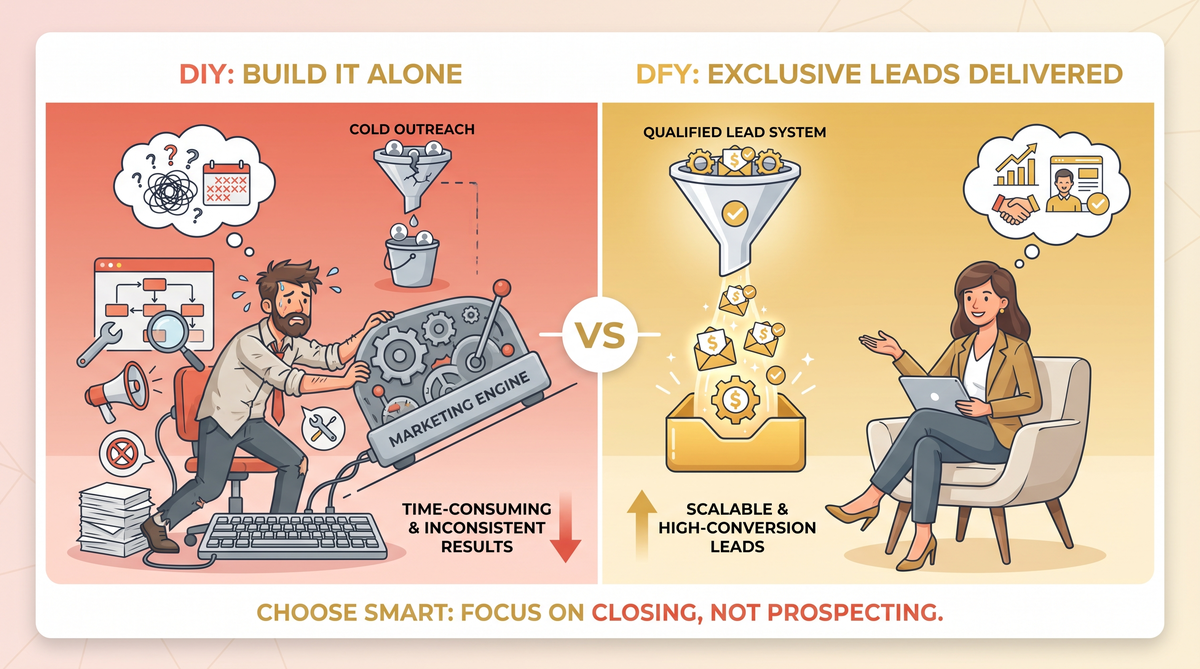
LeadPot handles this qualification process for you. Every lead we deliver has been pre-qualified for buying intent, contact accuracy, and freshness. When a LeadPot lead arrives in your inbox, you already know they are looking for an SEO agency, they have a budget, and they are ready to talk. That means you can skip the qualification stage entirely and move straight to the close.
The mistake agencies make is creating generic magnets: “Free SEO Audit” or “Download Our Guide.” Those work, but they attract tire-kickers, not ready-to-buy prospects. The magnets that convert are specific and tied to a painful moment in the buyer journey.
Think about what your prospect is Googling right now: “My website is not showing up on Google,” “Why is my organic traffic dropping,” “How long does SEO take to work,” “SEO pricing for small business.” Each of those searches is a moment of frustration. A lead magnet that addresses that frustration with a concrete answer converts at 3-5x the rate of generic offers. If you can deliver a downloadable PDF or a free mini-audit in exchange for an email, you have built the foundation of every other strategy in this guide.
Optimize Your Own Website for SEO Lead Generation Keywords
If you are not ranking for the terms your prospects use to find an SEO agency, you are leaving money on the table. This sounds obvious, but a surprising number of agencies neglect their own SEO while optimizing for clients. Do not be one of them.
The keywords that matter most for generating SEO leads fall into three categories. Awareness keywords are what prospects search when they first realize they have a problem. Consideration keywords signal that the prospect is evaluating options. Buying keywords are where the deal happens. Your content strategy needs to target all three categories. The mistake agencies make is focusing only on buying keywords and ignoring the top of the funnel.
Build Niche Landing Pages That Rank for Specific Industries
One of the most underused SEO lead generation tactics is creating landing pages optimized for specific industries. Instead of a generic “SEO Services” page, build pages like “SEO for Dental Practices,” “SEO for SaaS Companies,” or “SEO for E-commerce Stores.”
These pages convert better because they speak directly to the prospect’s world. The specificity signals expertise. It tells them: I understand your industry, and I have done this before. From an SEO perspective, niche landing pages also reduce competition. “SEO for dental practices in Chicago” competes with maybe a dozen agencies. “SEO services” competes with every agency on the planet.
Use Local SEO to Capture Prospects in Your Target Markets
Local SEO is not just for restaurants and plumbers. Agencies that serve specific geographic markets can use local SEO to generate high-intent leads with very little competition. Start with your Google Business Profile: claim it, verify it, and fill out every field. Then optimize your local citations across Yelp, Clutch, and industry directories. Finally, generate local backlinks through sponsorships and community involvement.
Publish Content That Targets Your Ideal Client’s Questions
Content marketing is the slowest strategy and the one with the highest long-term return. A single well-written article can generate leads for years. The key is targeting the right questions at each stage of the buyer journey: awareness, consideration, and buying. The most effective structure is a content cluster: a pillar page on a core topic with supporting articles that link back to it. This tells Google your pillar page is the authoritative resource.
Leverage LinkedIn to Identify and Connect With Decision-Makers
LinkedIn is the most underrated channel for SEO lead generation. Optimize your headline to say what you do and who you serve. Publish 2-3 posts per week about SEO trends, case studies, and client results. Use LinkedIn Sales Navigator to find marketing directors and founders who have posted about website performance or organic traffic. Build rapport before pitching.
Participate in SEO Communities and Forums
Communities like Reddit’s r/SEO, Quora, and niche Slack groups are goldmines for lead generation. Contribute genuinely: answer questions thoroughly, share specific advice, and avoid aggressive self-promotion. The leads that come through this channel tend to be highly qualified because they have consumed multiple pieces of your content before reaching out.
Build a Referral Network With Complementary Service Providers
Web developers, content writers, PPC agencies, and marketing consultants all work with the same prospects you do. Build structured referral partnerships with these businesses. When they encounter a prospect who needs SEO help, they refer them to you. In return, you refer clients who need their services back to them. The best referral partners are not competitors. They are the people who encounter SEO needs every single week.
Run Targeted Paid Campaigns to Complement Organic Efforts
Paid advertising and organic SEO are strongest when used together. Run Google Ads on high-intent buying keywords like “buy SEO leads” and “SEO agency for [industry].” Use LinkedIn Ads with a lead magnet as the offer. Even 500 dollars per month in targeted paid spend can generate enough leads to justify the cost while your organic rankings build. Track cost per lead religiously.
Attend Industry Events and Networking Groups
Face-to-face networking remains one of the most effective ways to generate high-quality SEO leads. Attend digital marketing meetups, SaaS founder events, and local business networking groups. Do not lead with your pitch. Lead with curiosity. Ask about their biggest challenges. If they mention website traffic or organic growth, you have found a lead. Follow up within 48 hours while the connection is still warm.
Use Case Studies and Social Proof to Convert Visitors Into Leads
SEO is a service where trust is the primary barrier to purchase. Case studies and social proof build that trust. A case study should follow a specific structure: the client’s situation before you started, what you did, and the results. Include specific metrics and a client quote. Every page that generates leads should include social proof: client logos, ratings, and testimonials with full names and photos.
Offer a Free SEO Audit as Your Primary Lead Capture Tool
The free SEO audit converts because it demonstrates expertise before the prospect ever speaks to you. Offer a 10-point audit that covers the highest-impact issues. Your form should capture name, email, website URL, and biggest challenge. Deliver results within 48 hours with 3-5 specific recommendations. End with a clear next step: a free 30-minute call. This converts the audit into the start of a sales conversation.
Build Relationships With Marketing Publications and Podcasts
Guest posting and podcast appearances generate SEO leads in two ways: they put you in front of an established audience, and the backlinks improve your own site’s authority. Pitch editors and hosts with a specific topic their audience cares about. Keep pitches short: 3-4 sentences with one or two links to your best writing. A single guest post can generate leads for years through both direct traffic and improved organic rankings.
Scale What Works: Build a Repeatable Lead Generation System
The agencies that generate the most SEO leads are not the ones using the most strategies. They are the ones that pick two or three that work, execute them consistently, and measure results. Start with strategies that match your strengths. Execute for 90 days without adding new ones. Measure weekly. After 90 days, you will know where to double down and where to cut. This is how you generate SEO leads consistently instead of in bursts.
The Bottom Line
Generating SEO leads is not about finding a single hack. It is about building a system that connects your agency’s expertise with the prospects who need it most. The 11 strategies in this guide all work because they meet prospects at the moment of intent. Start with the strategies that match your strengths, execute them consistently, and scale what works. If you want to skip the lead generation work and focus on delivering great SEO results, LeadPot handles the outreach and qualification for you. We deliver exclusive, verified leads directly to your inbox. See how it works.